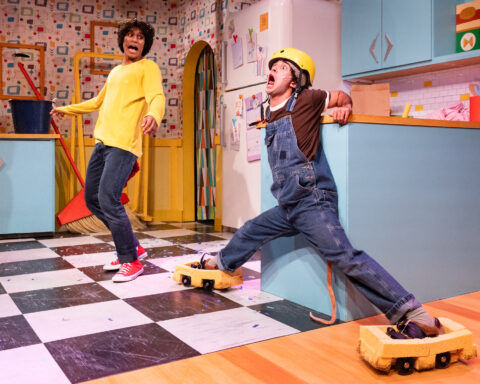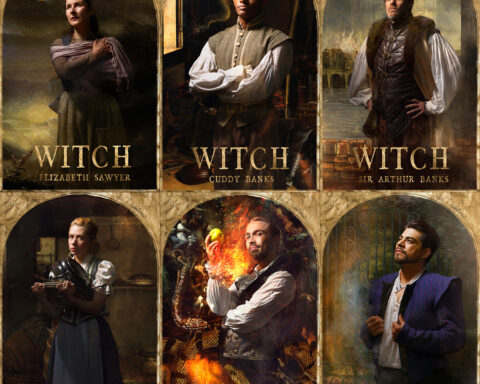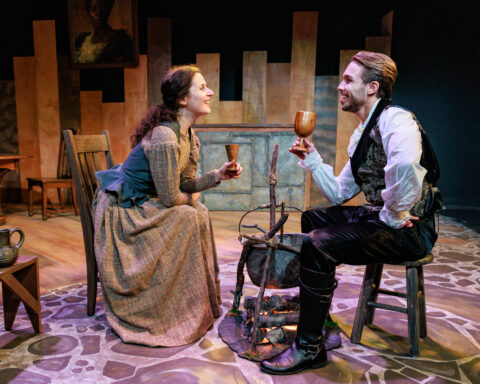
In summer 2025, Distant Era photographed Three of Cups Theatre Company’s inaugural production of Macbeth at the Den Theatre in Chicago. For their second production, Three of Cups presents God in a Hole, by Hannah Baker in collaboration with the ensemble, directed by Ashley Connell.
The show’s concept excited me, as I tend to enjoy dystopian weird future worlds, from Jack Vance’s The Dying Earth to Babes With Blades’s L’Imbecile to Terry Gilliam’s Brazil. This may have to do with watching the post-apocalyptic Saturday morning cartoon Thundarr the Barbarian as a child…
Here’s a summary of God in a Hole from Three of Cups:
God in a Hole is a dark absurdist comedy which tells the story of an isolated community, born from the ashes of a once great and familiar civilization. The town is led by a mysterious triumvirate, “The Misters,” who keep the sacred wisdom of the ancestors while maintaining order and tradition. As the people of this town gather to celebrate their most sacred rituals, the advent of a new “message” from their ancestors sends them careening towards a choice which will bring either salvation or obliteration. When ritual is divorced from meaning, and power from responsibility, what becomes of a people who have waited too long to ask necessary questions?
Summary of God in a Hole from the Three of Cups Theatre Company website.
Reintroducing Three of Cups
Three of Cups devised and produced God in a Hole over the course of a year. The company has its roots in both theatre and improvisation, so they approach their group work with a broad perspective. In their own words:
Three of Cups Theatre Company aims to create a dynamic community of artists of all types within the Chicago area. Drawing largely on both traditional theater training as well as improvisation, Three of Cups unites both disciplines to bring intention and community back to improvisation, while returning to the roots of improv to bring that values of play and discovery into theatrical works.
Three of Cups derives its name from the tarot card representing groups coming together to focus on a common emotional goal, and to create a community where others can have a space to rely on each other.
Three of Cups Theatre Company
I hesitate to quote the entire company website, but there’s a lot of good information here about Three of Cups’s considered perspective and approach to their work. Specific to God in a Hole, Three of Cups writes:
Three of Cups is a new theatre company, focusing on methodology-driven, ensemble-based work, inspired by theorists and practitioners such as Viola Spolin and Anne Bogart. This show was our first step in developing our practice and methodology, and the actors who participate in this process will have a huge impact on the identity of the company and its future process. Together, the cast will create, write, refine, rehearse, and perform an entirely devised show.
The concept for the show is drawn from the work and theories of Friedrich Durrenmatt, a Swiss playwright from the 20th century whose absurd, macabre plays reflected the world he lived in, one increasingly dominated by fascism and violence. Rather than tackle one of his plays directly, we have built own piece, rooted in (but not defined by) his theories, and reflected through our own complex world.
Three of Cups Theatre Company
Photography
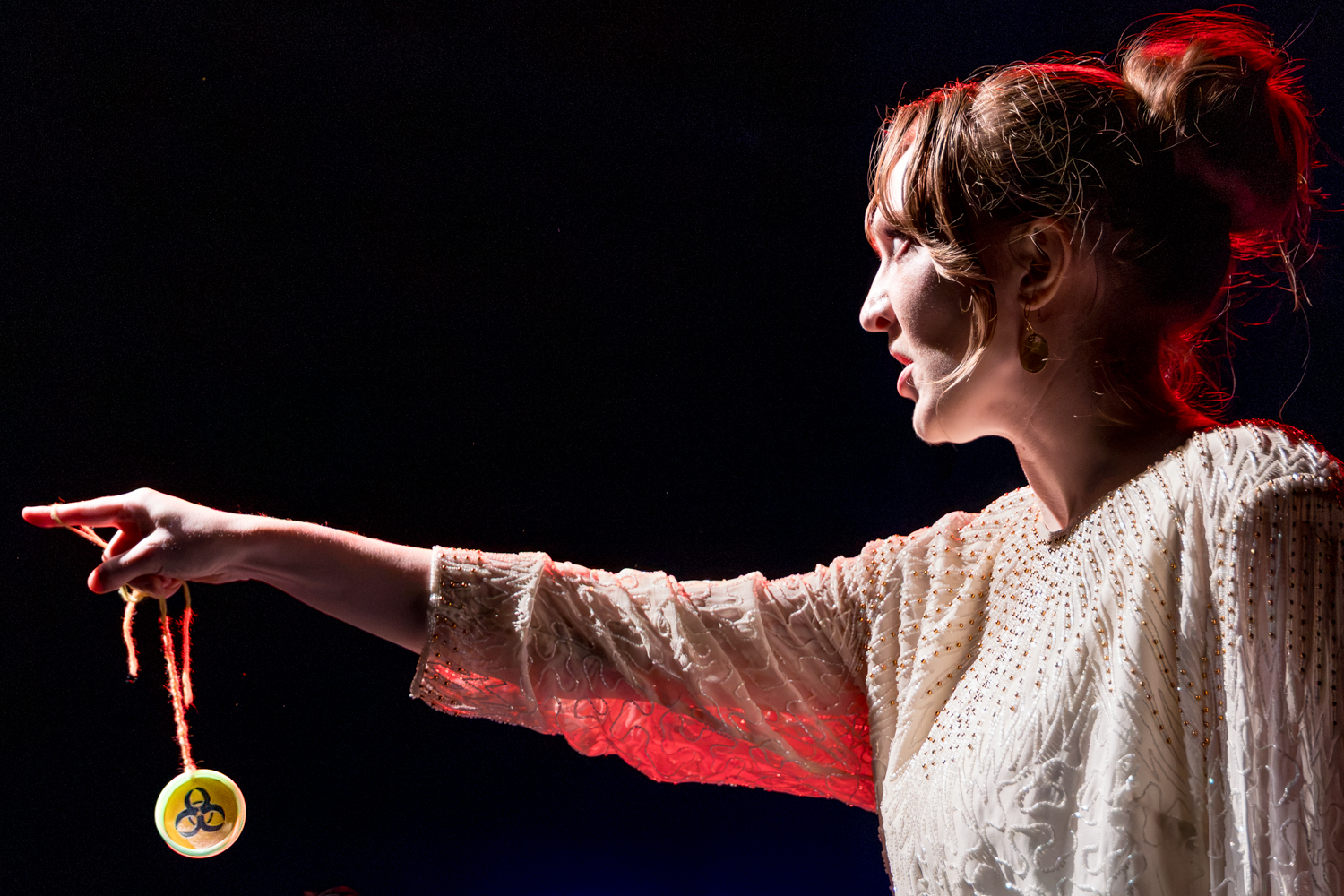
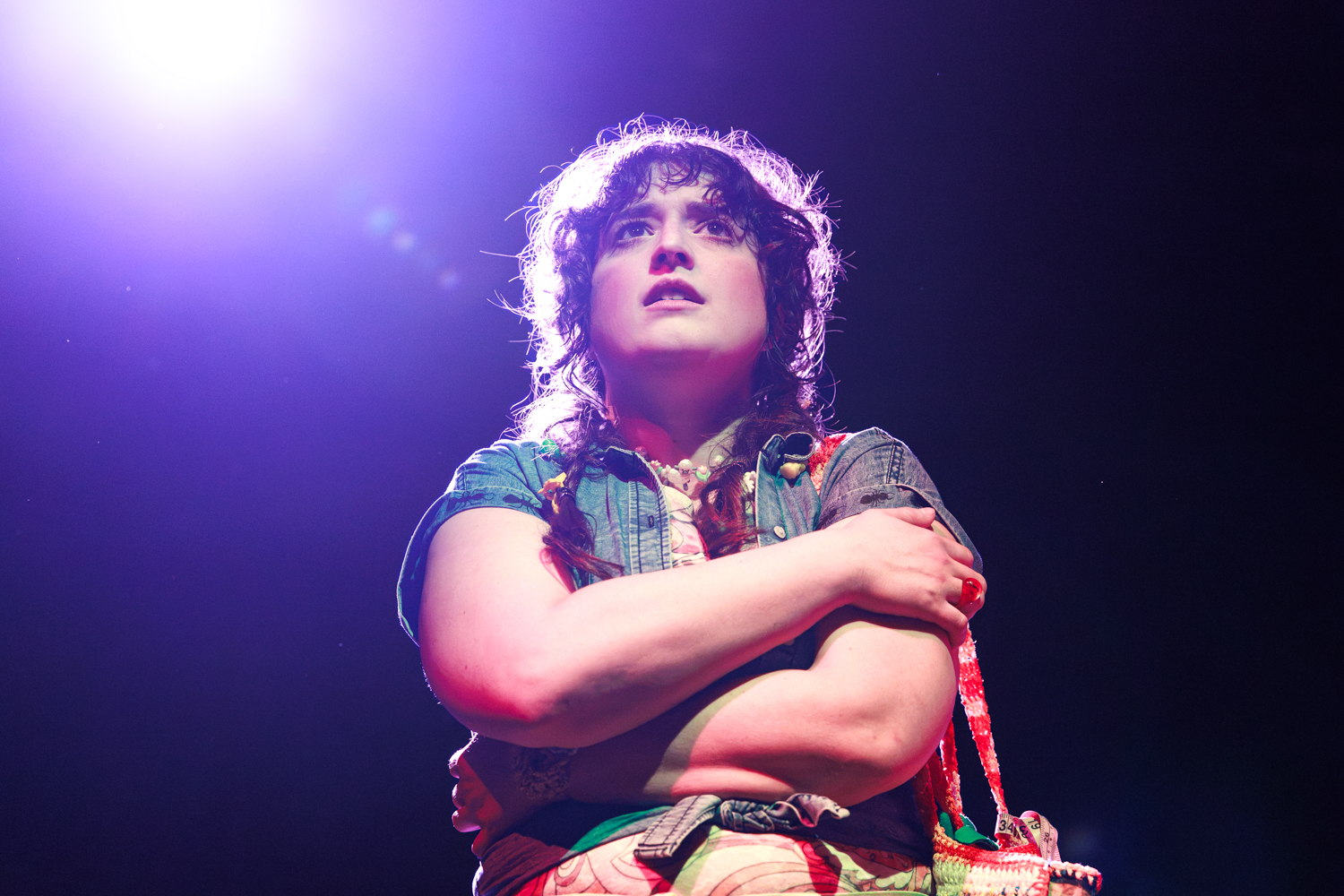
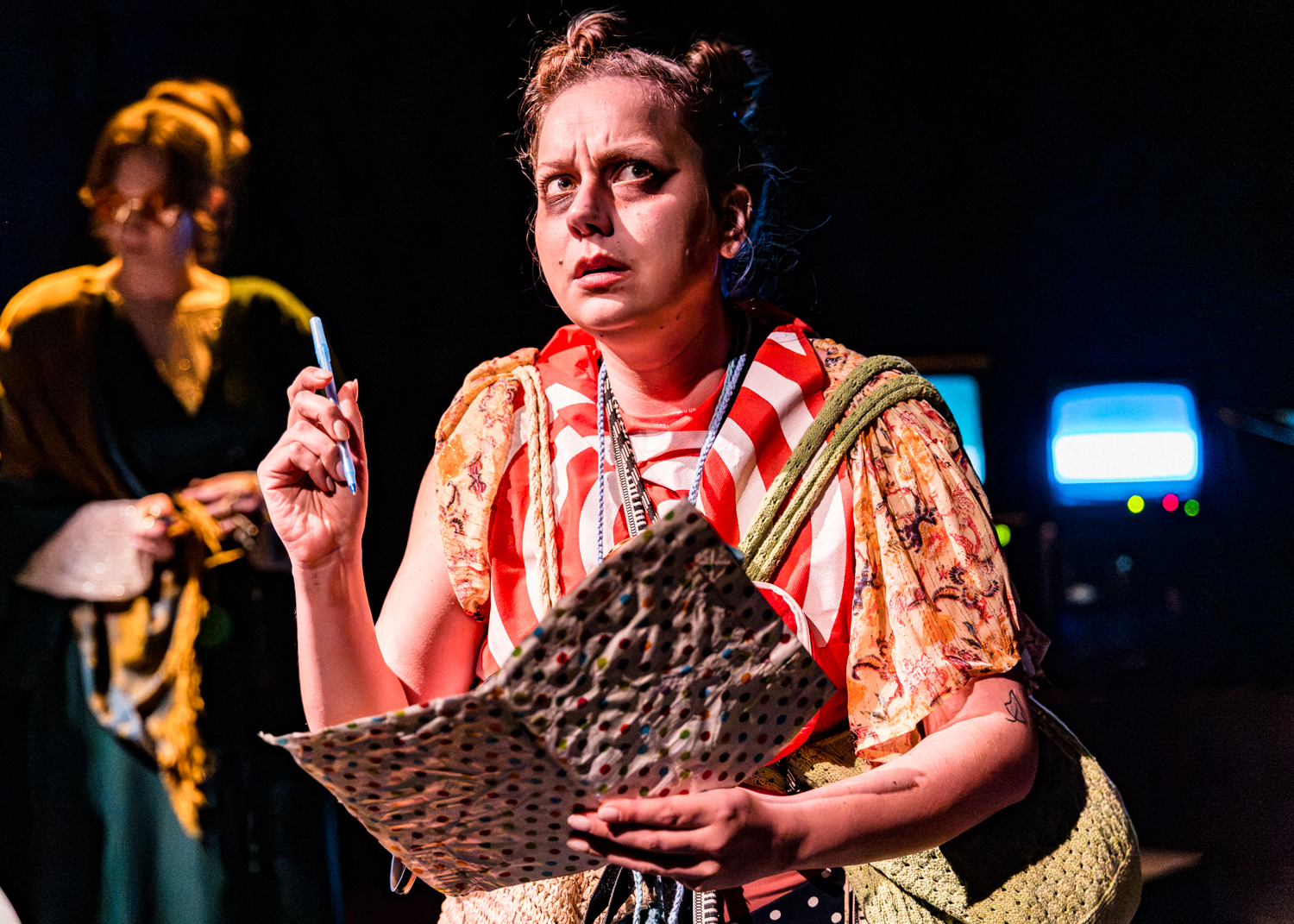
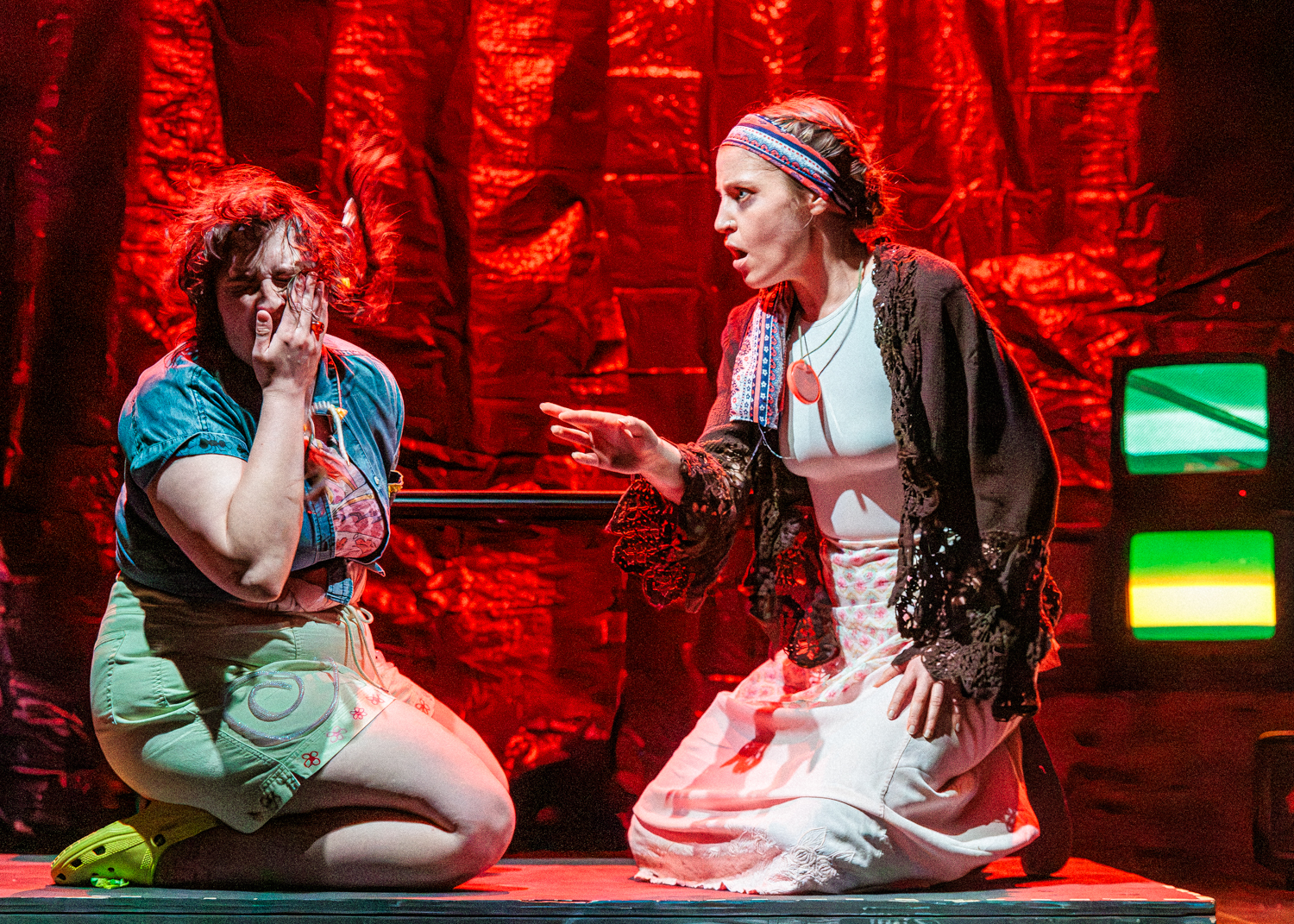
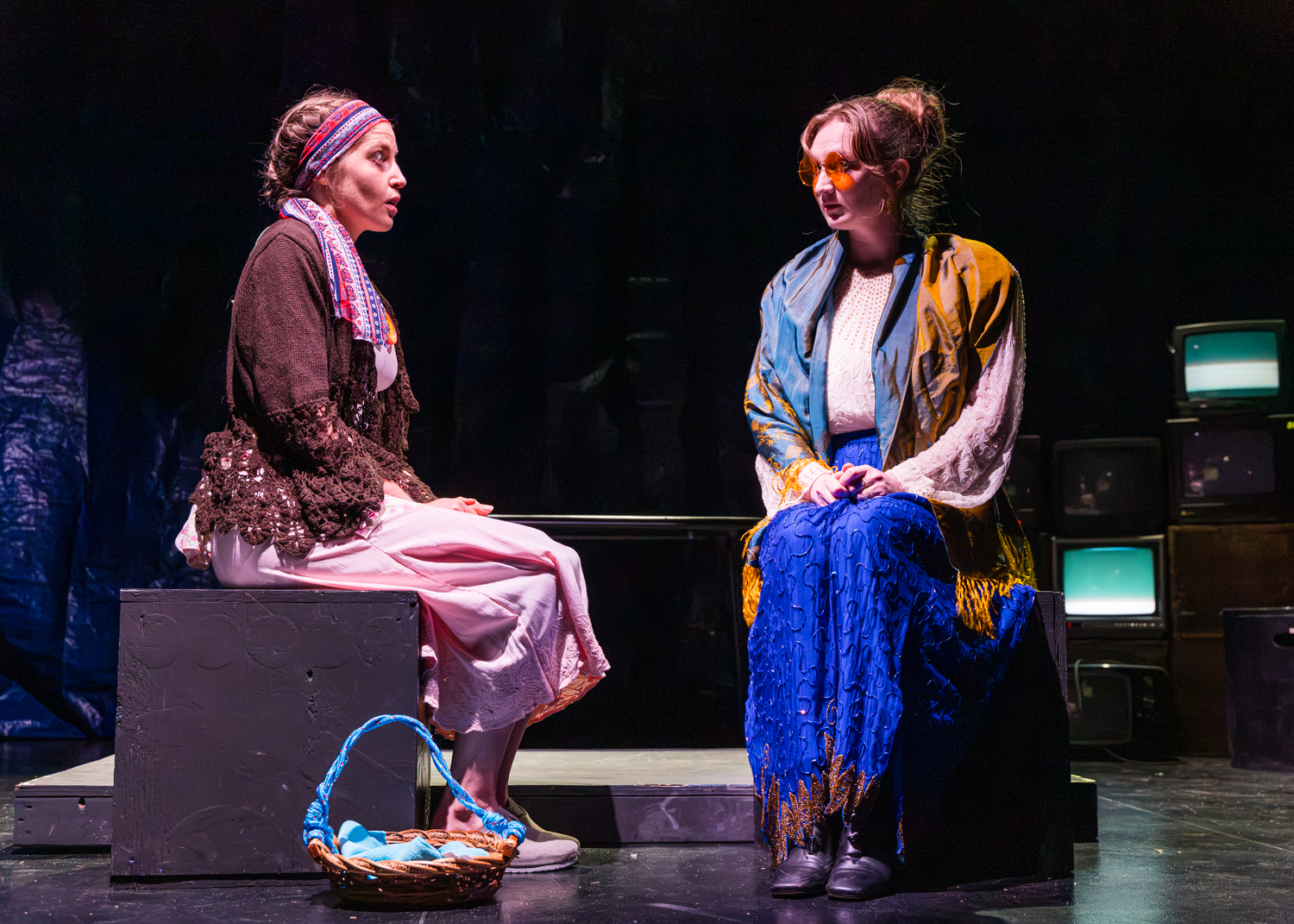
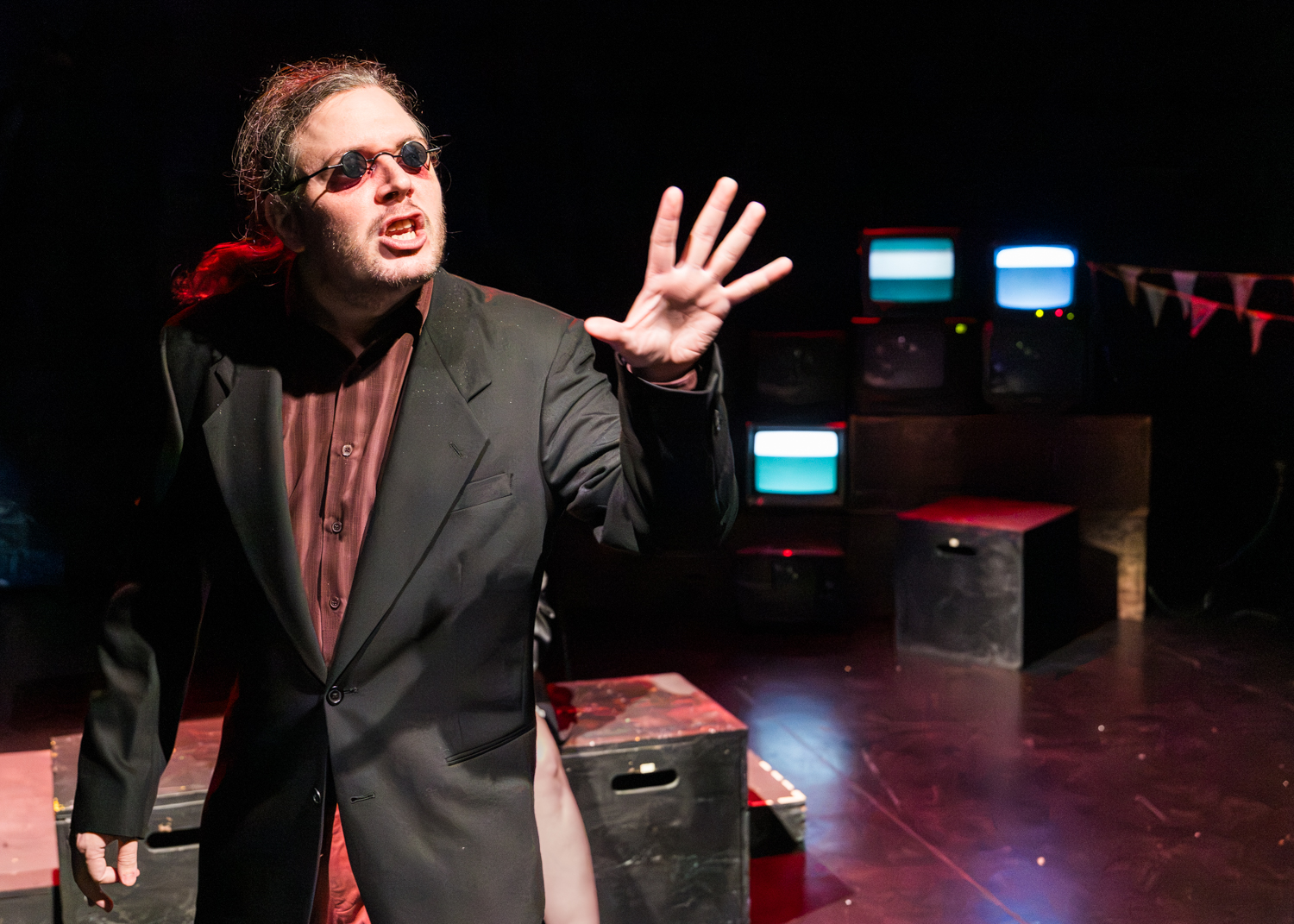
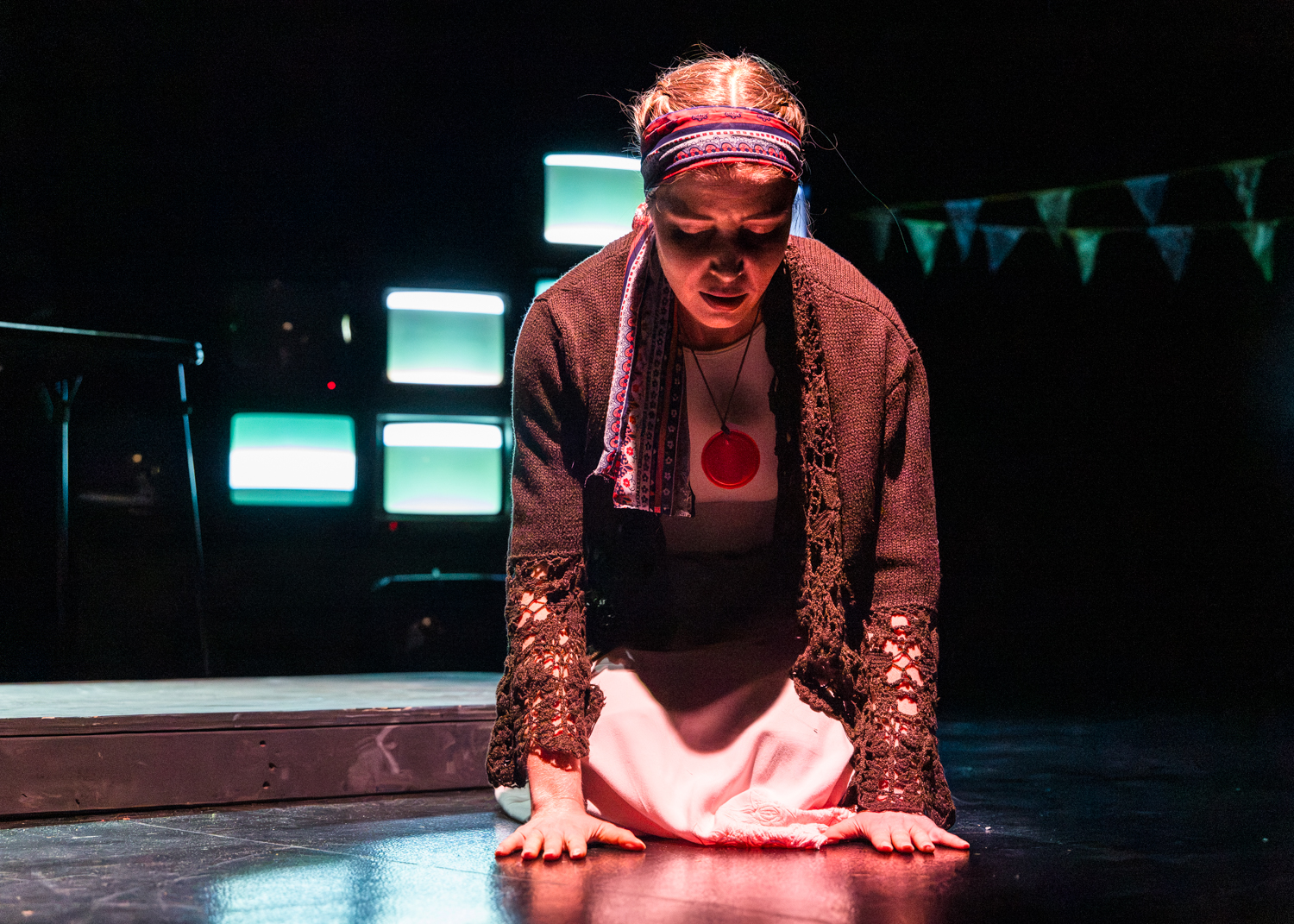
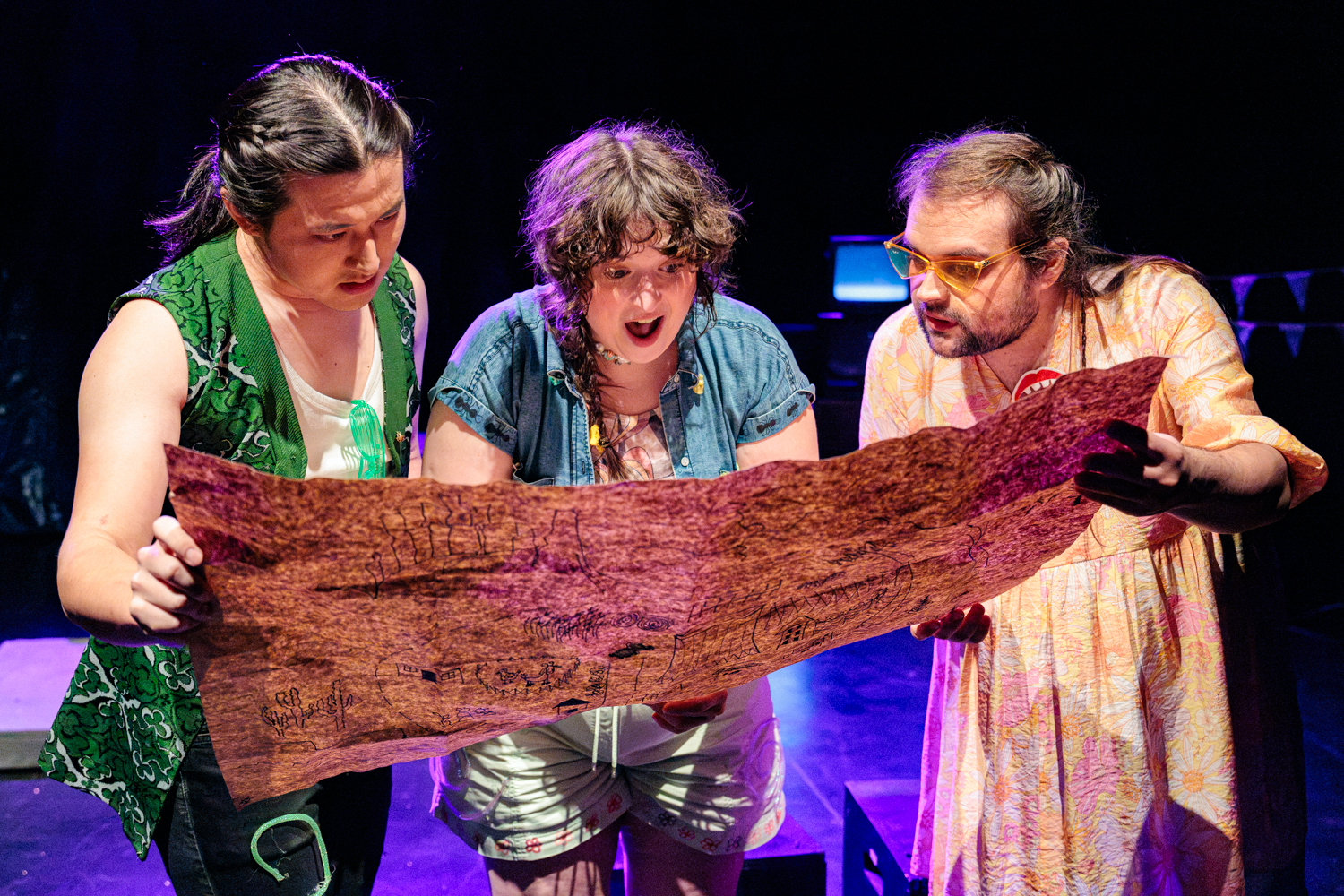
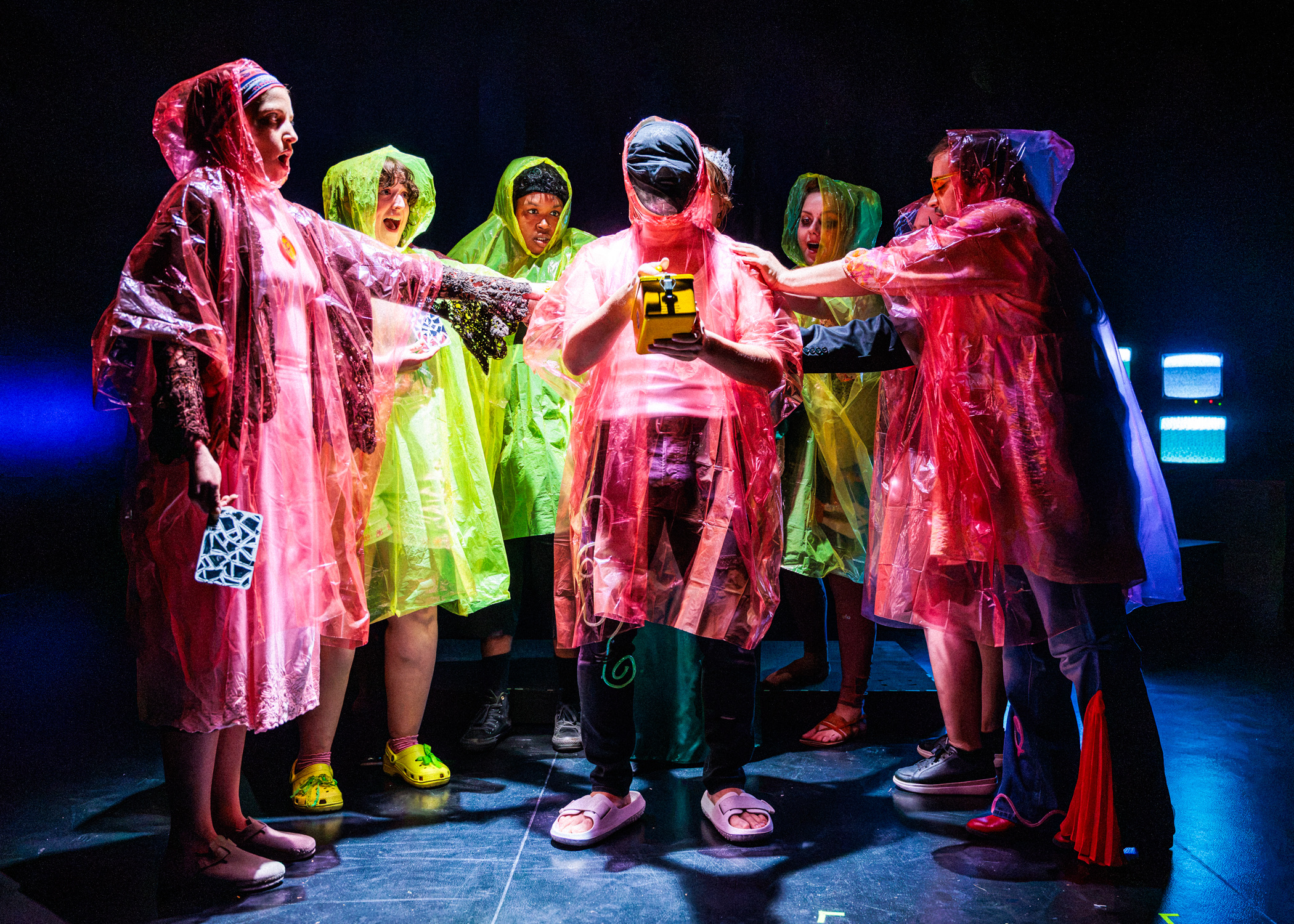
God in a Hole plays in a black box theatre space at the Bramble Arts Loft in the Andersonville neighborhood of Chicago. Three tiers of televisions rise to about chest height, stage left. A tarp forms the upstage background of the picture, changing colors with the light. Overall, stage lighting is high and directional, creating stark, defined shadows.
One of the challenges when photographing a black box space is to get as much light into the camera as possible. Black walls absorb light rather than bouncing it, so things can get dark pretty easily. In a theatrical performance, the actors sometimes move quickly, in a fight or a dance, for example, so the shutter speed must be moving fast enough to freeze action without blurring the subject, generally speaking.
Similarly, the lens’s aperture needs to be pretty open, allowing as much light in as possible, and yet not so wide open that the lens’s shallow depth of field blurs important elements—two characters speaking to one another, for instance.
Finally, today’s theatre lights are LEDs, which means they flicker at varying rates, which must be timed with the camera’s shutter or else horizontal bands may appear lengthwise across the images.
For God in the Hole, my settings were typically around 1/200, f/4, and ISO 12800.
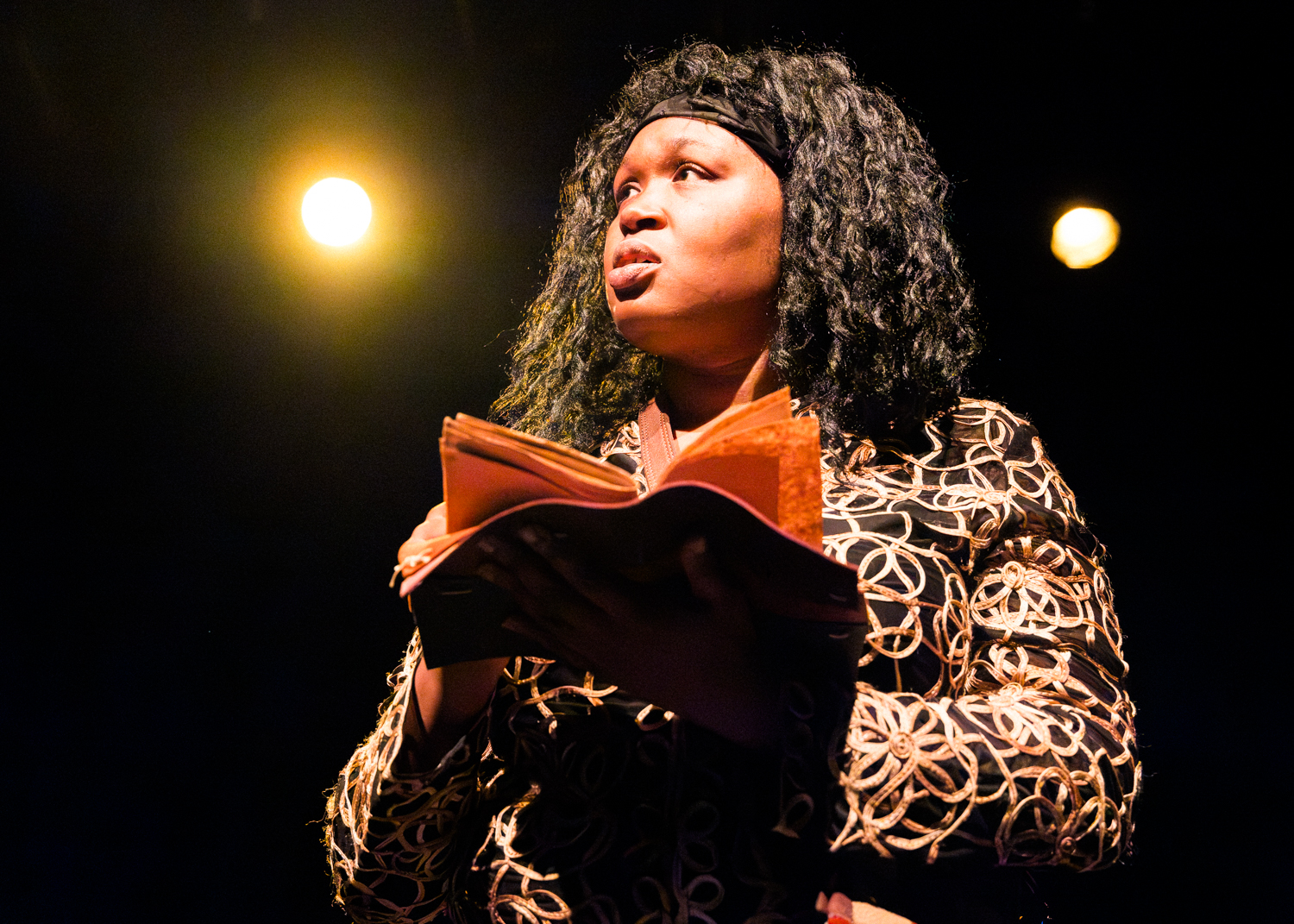
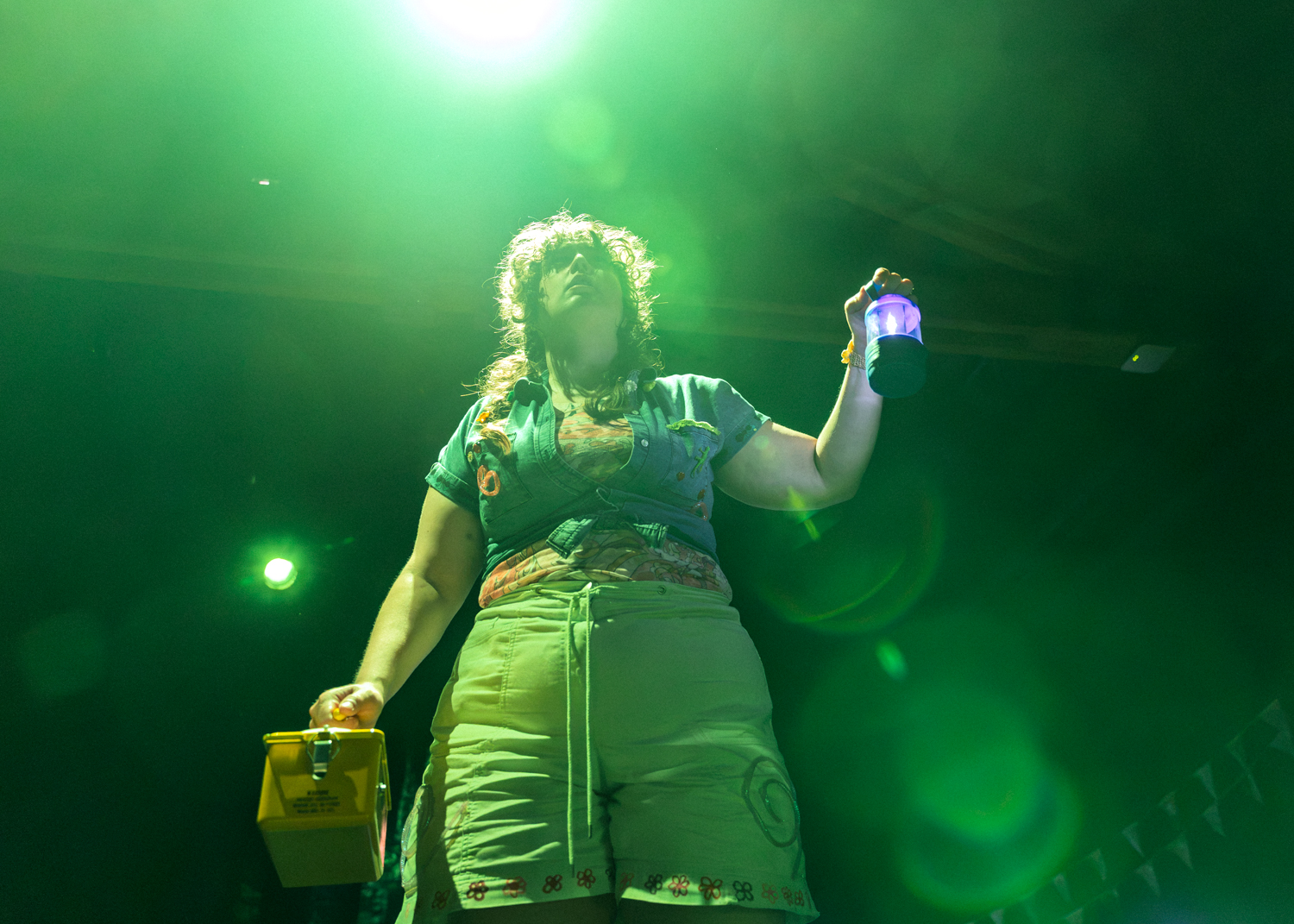
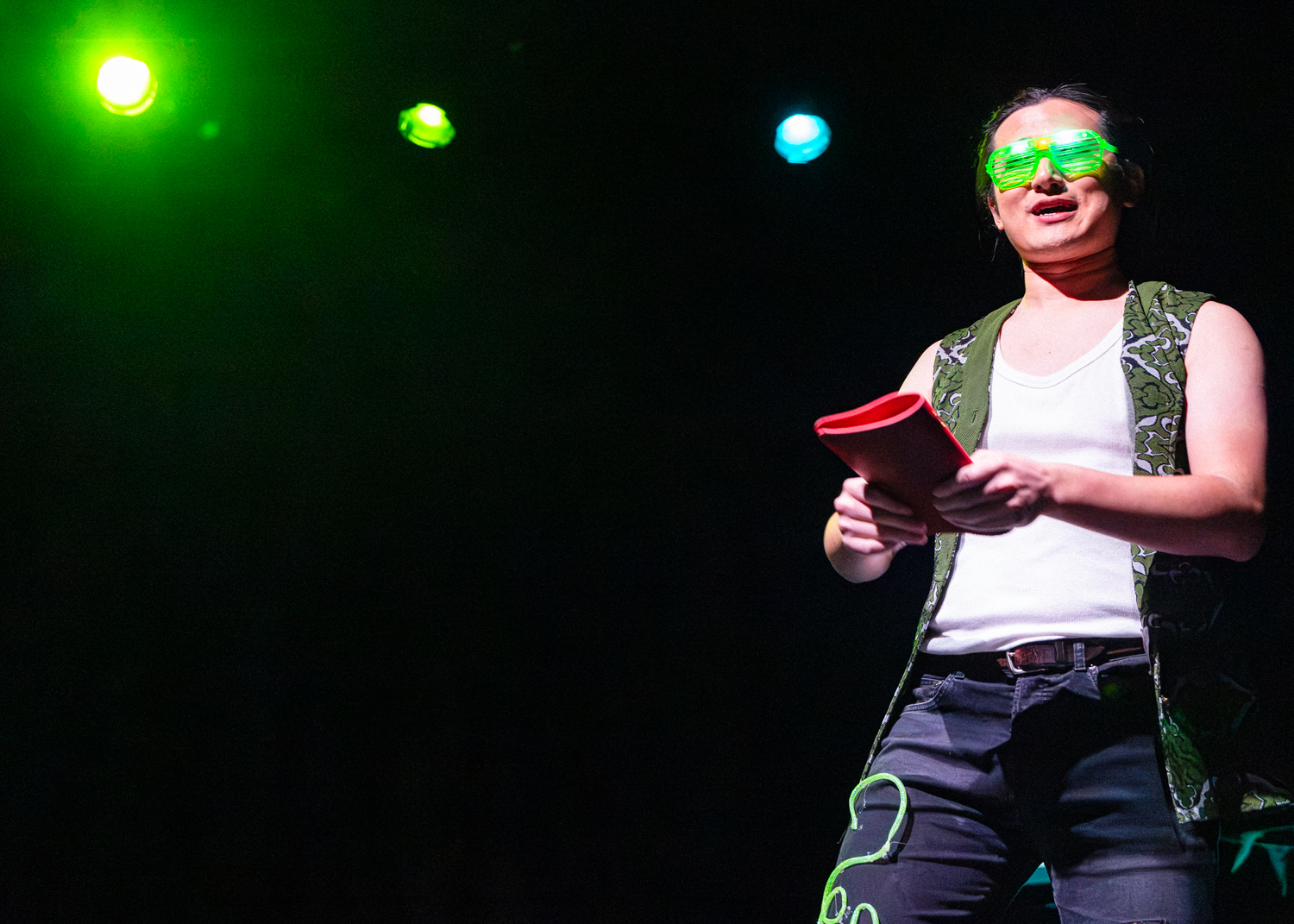
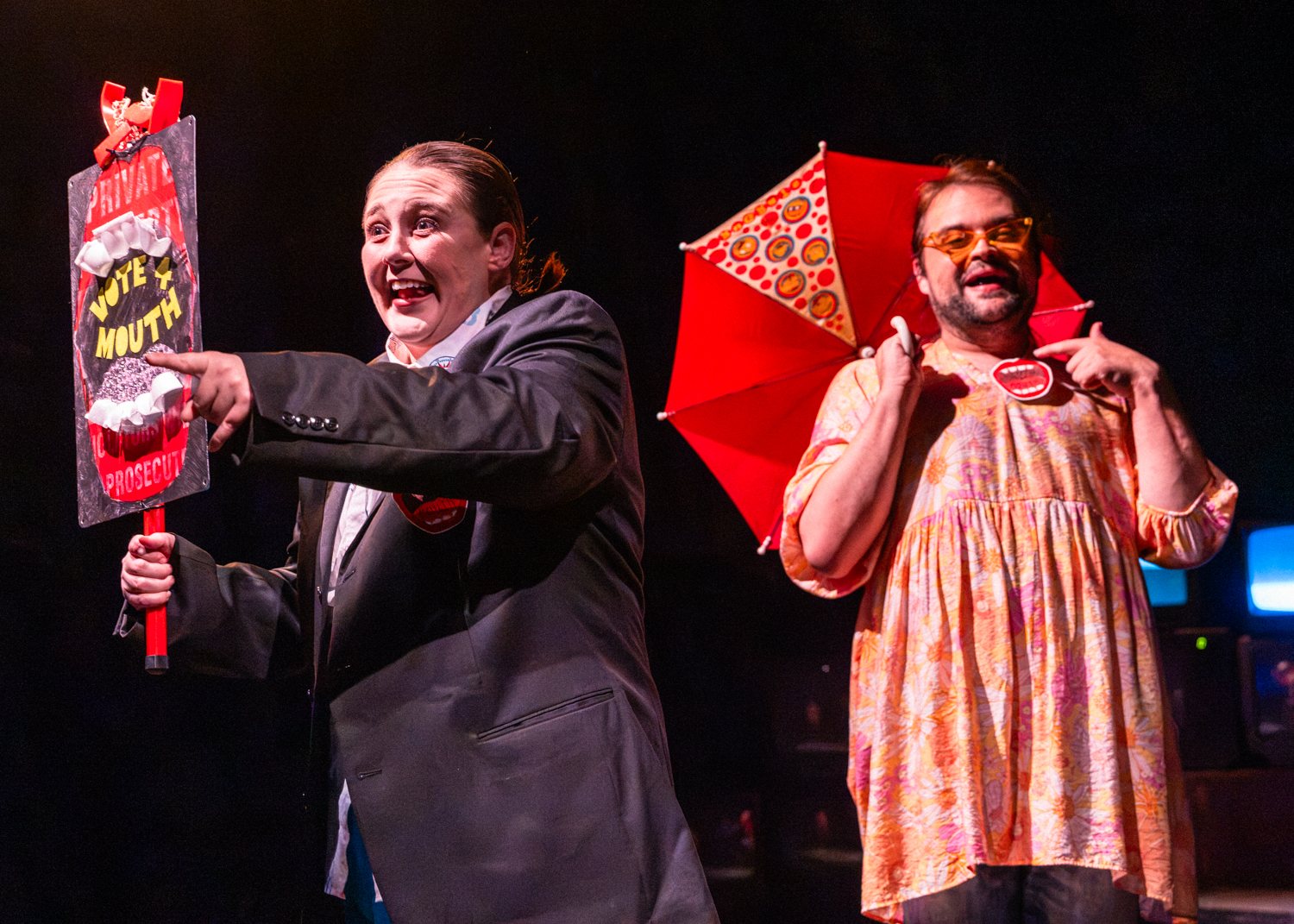
As I made my selections, I prioritized images that showed elements of Three of Cups’s set, dramatic moments or symbols from in the play, and images where the actors’ faces were well exposed in the light.
Experimental Portraits
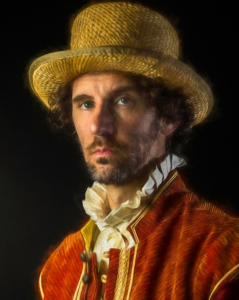
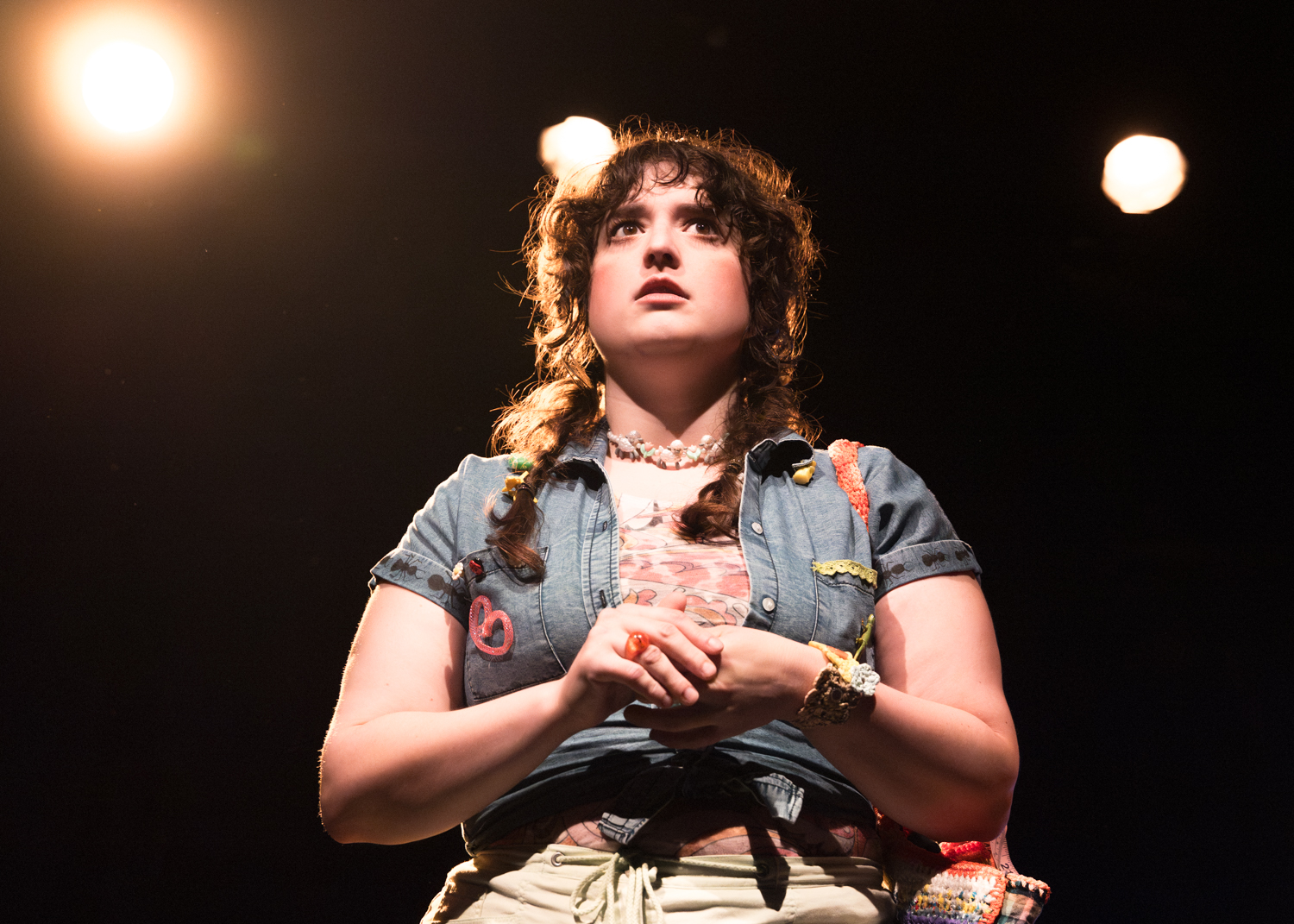
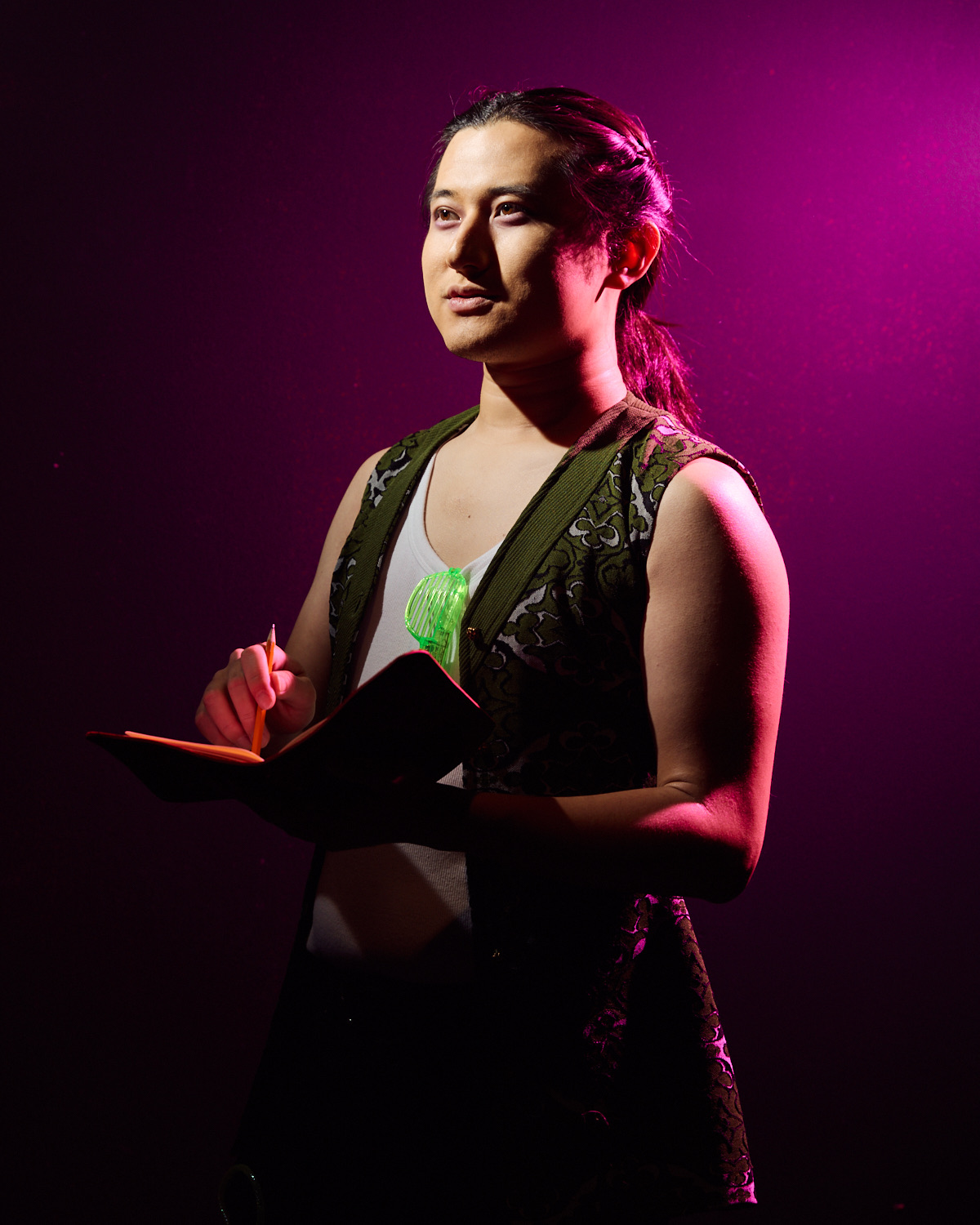
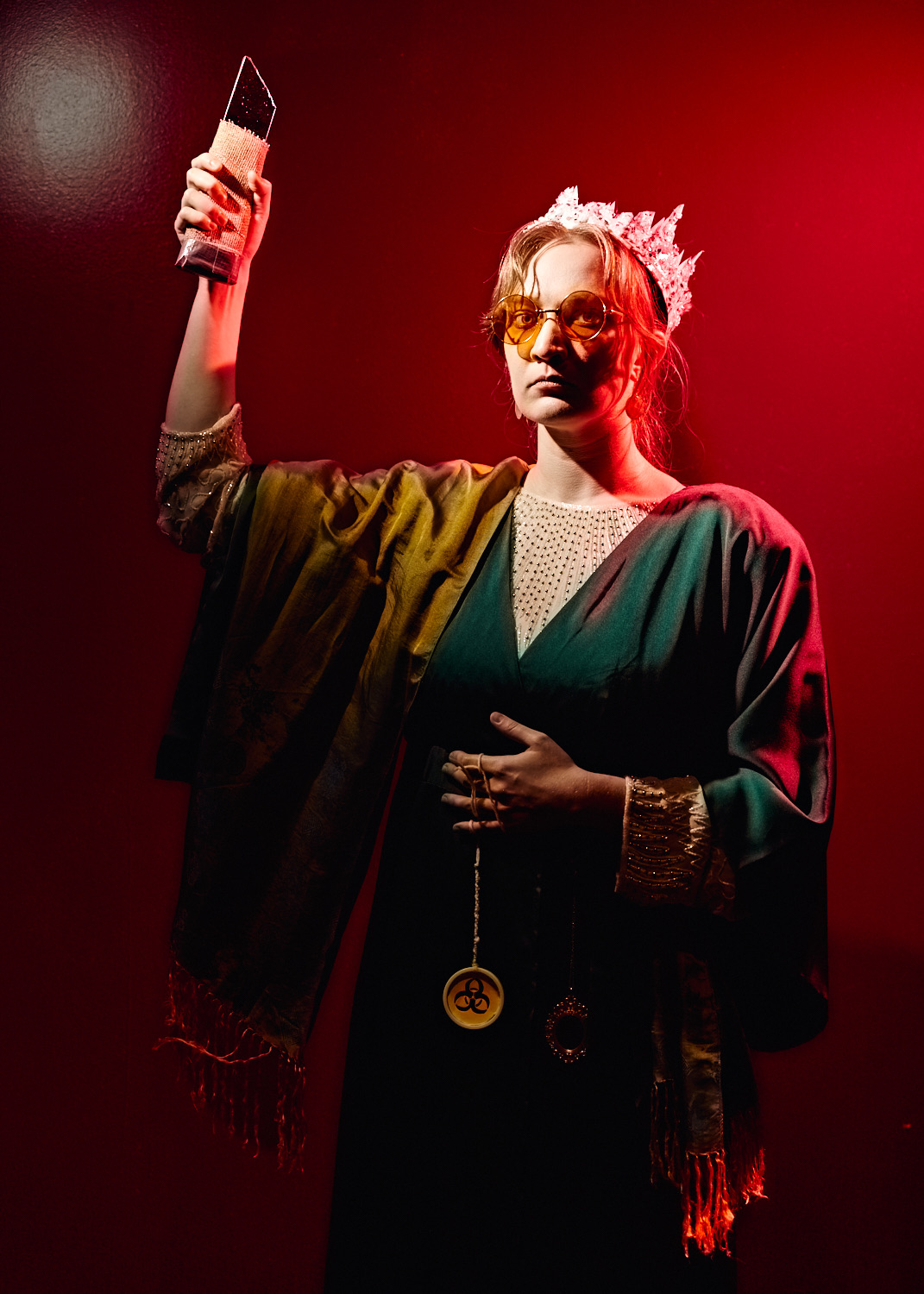
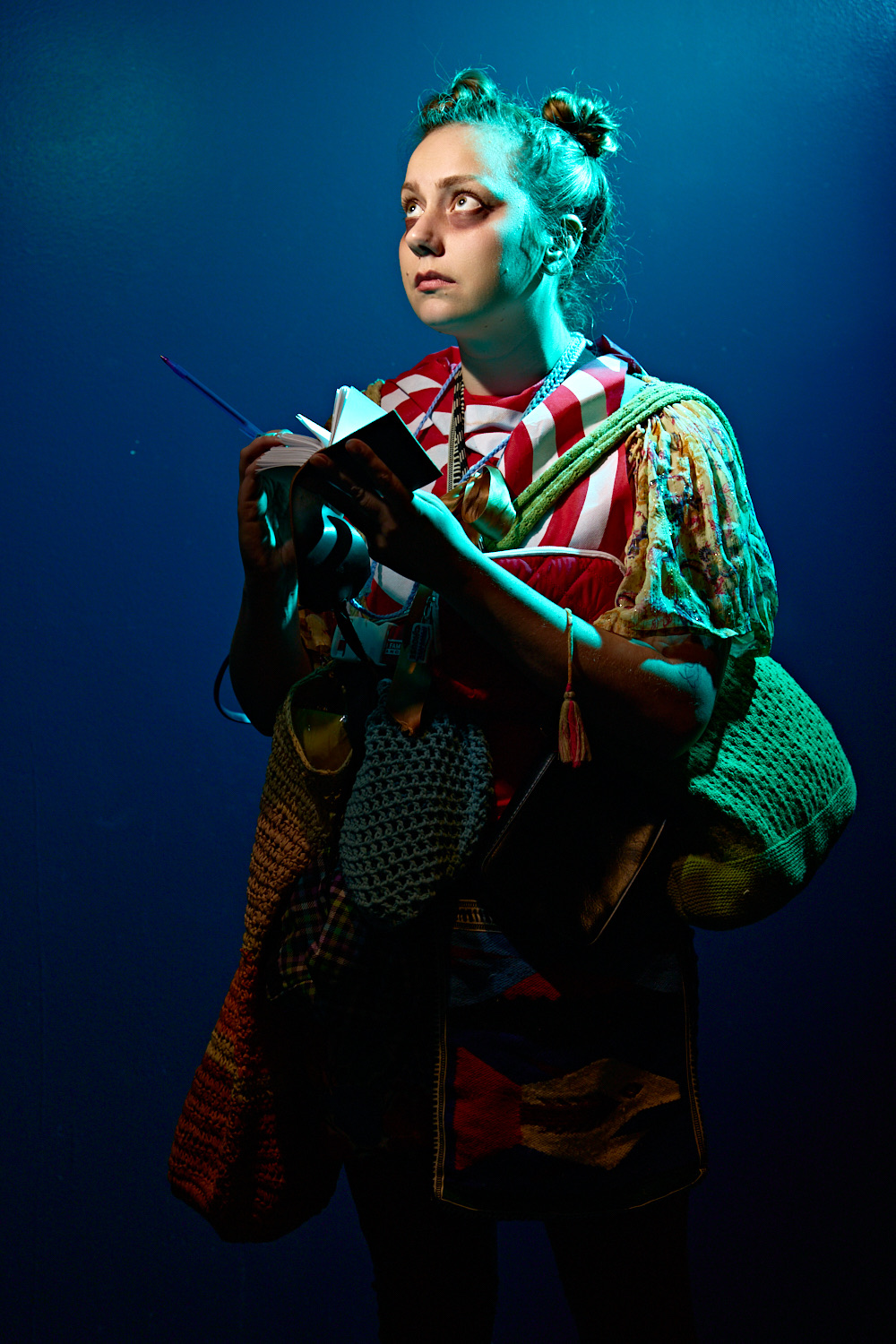
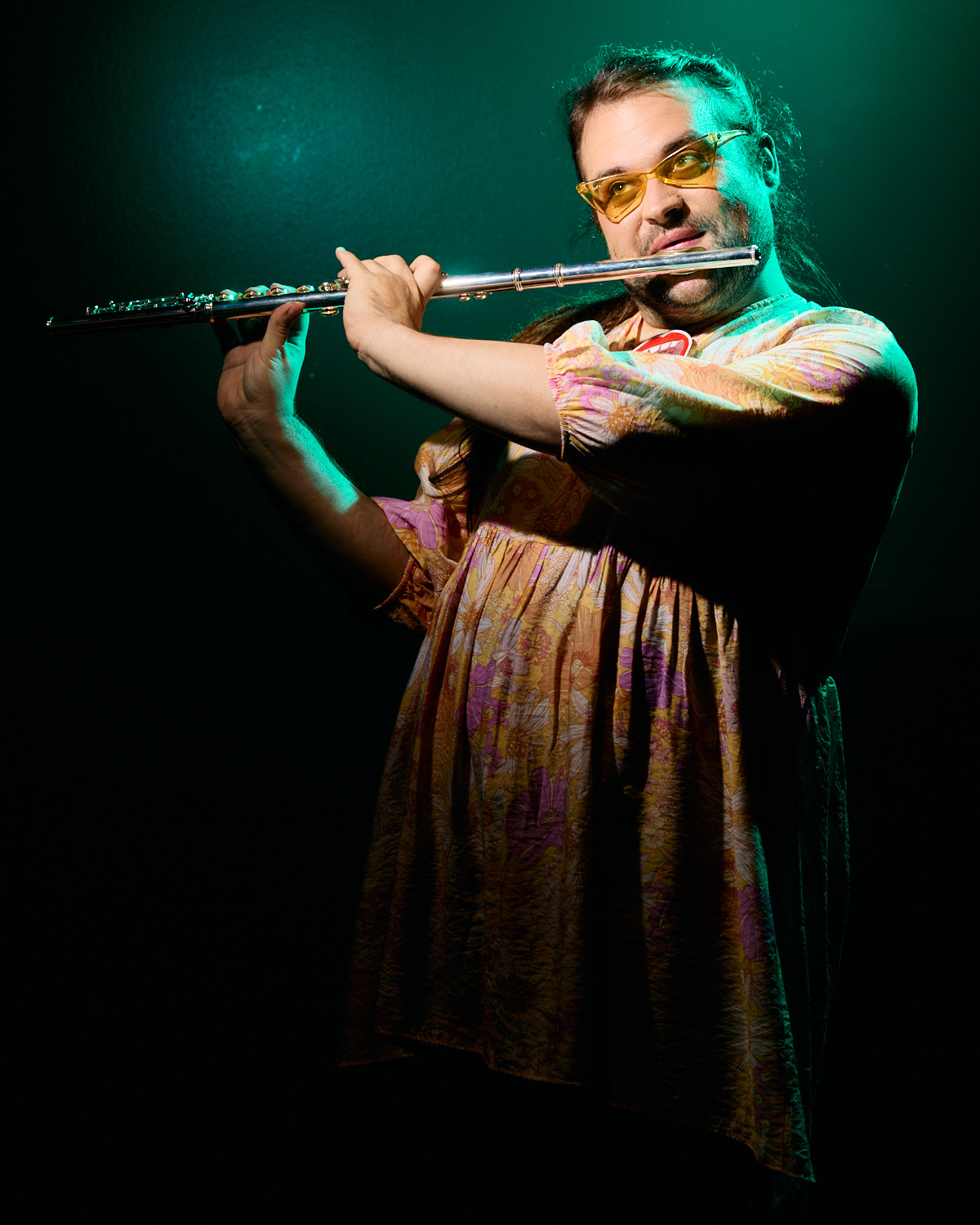
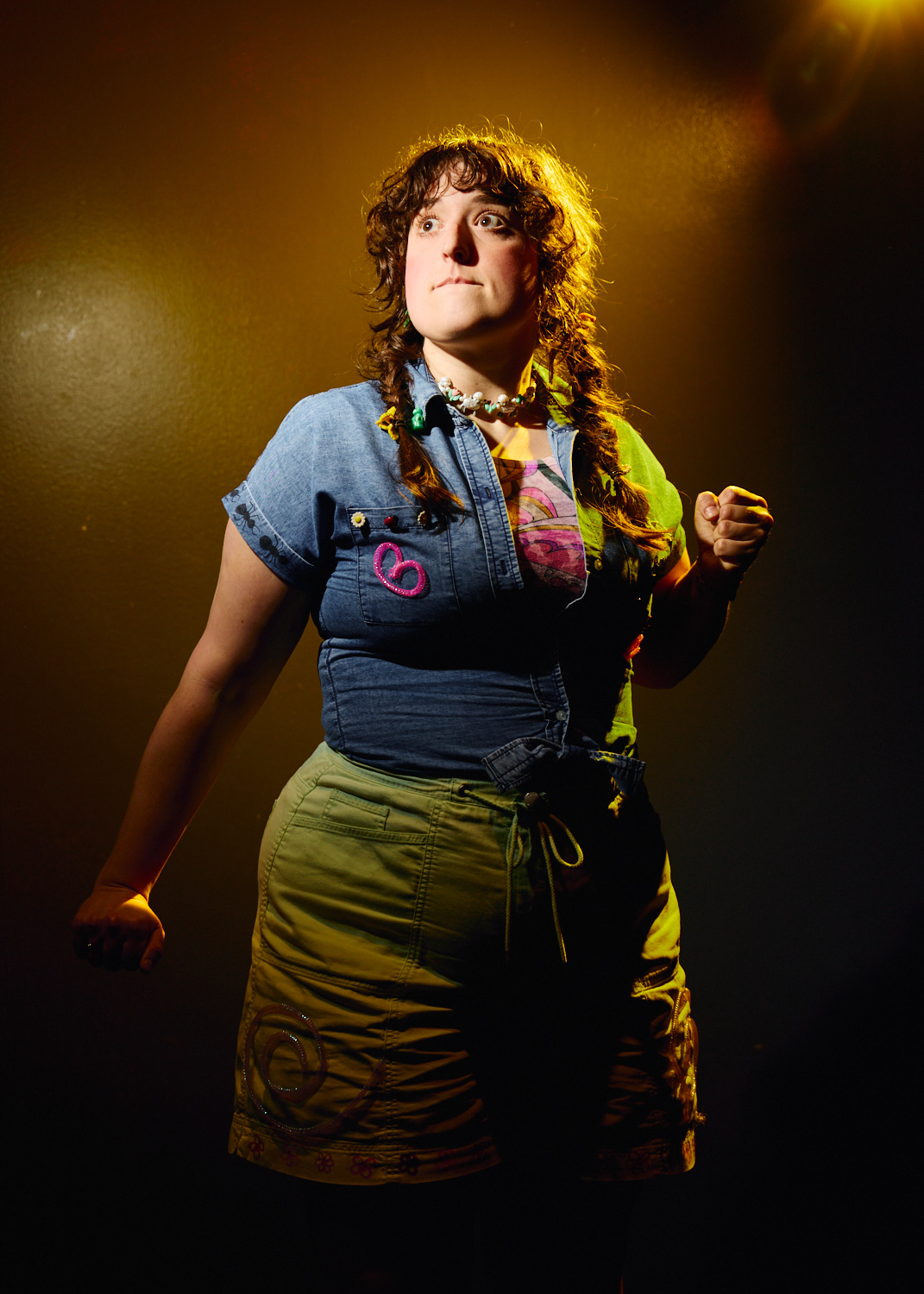
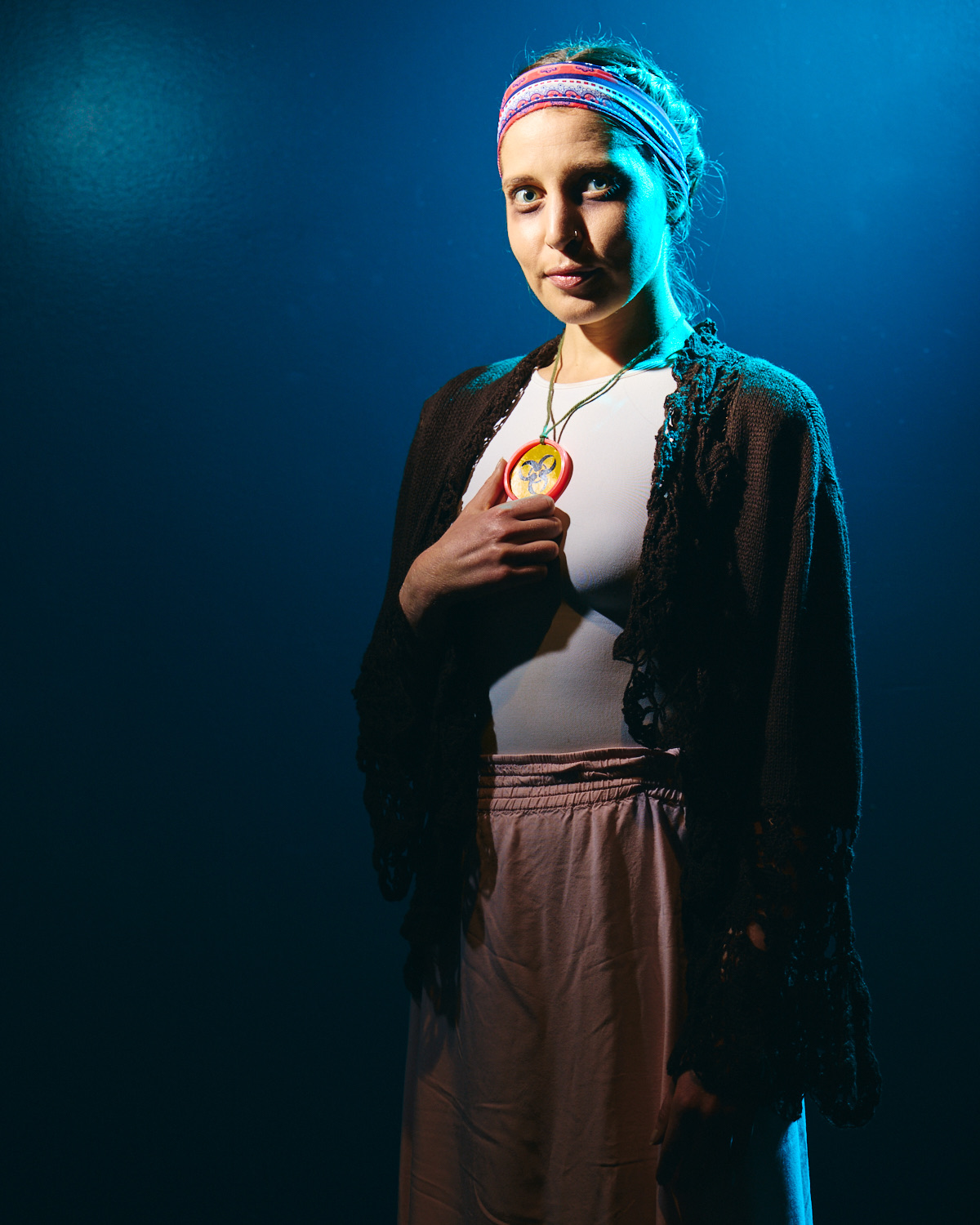
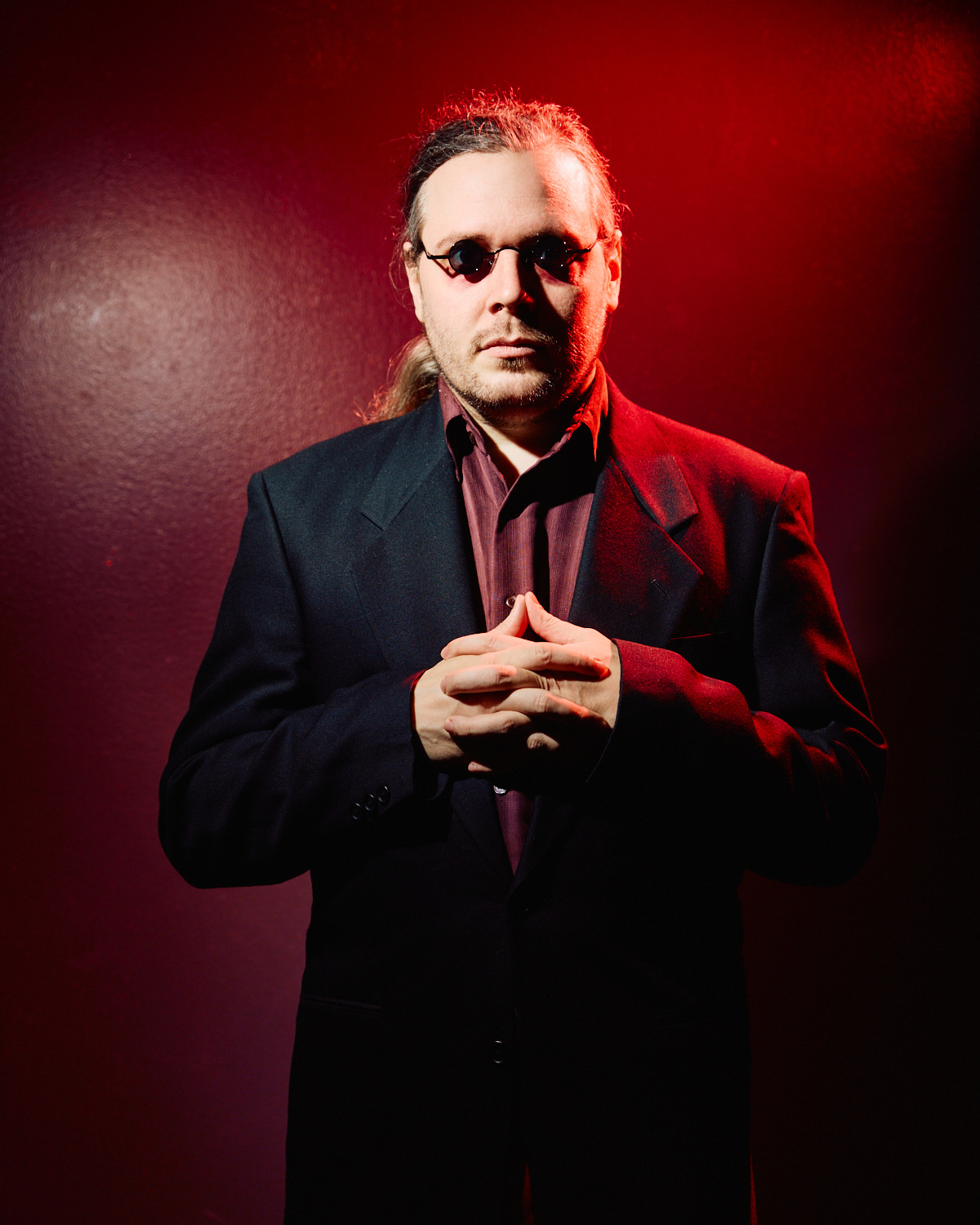
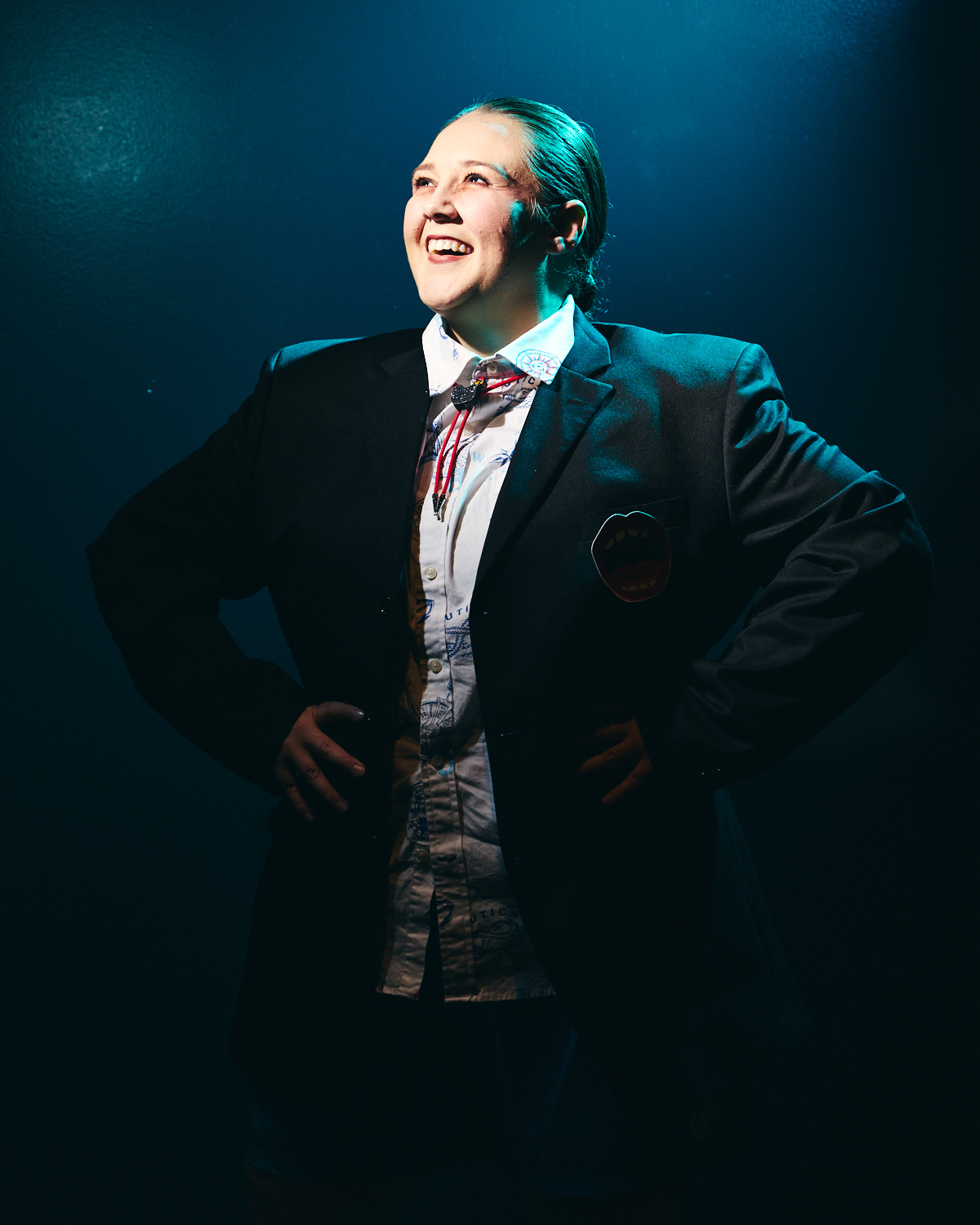
In other posts this year, I’ve mentioned the portable kit I’ve traveled with lately and how I’ve attempted to travel lighter and make portraits with less “stuff.” Last year’s Macbeth with Three of Cups was perhaps a first attempt to do this. For God in a Hole, I took another shot with a whole new (small) setup, this time with two small flashes and a gel kit that was easy to set up and take down in a couple minutes. My goal here is simply to get better at working fast, traveling light, and being flexible in situations where there is little extra time.
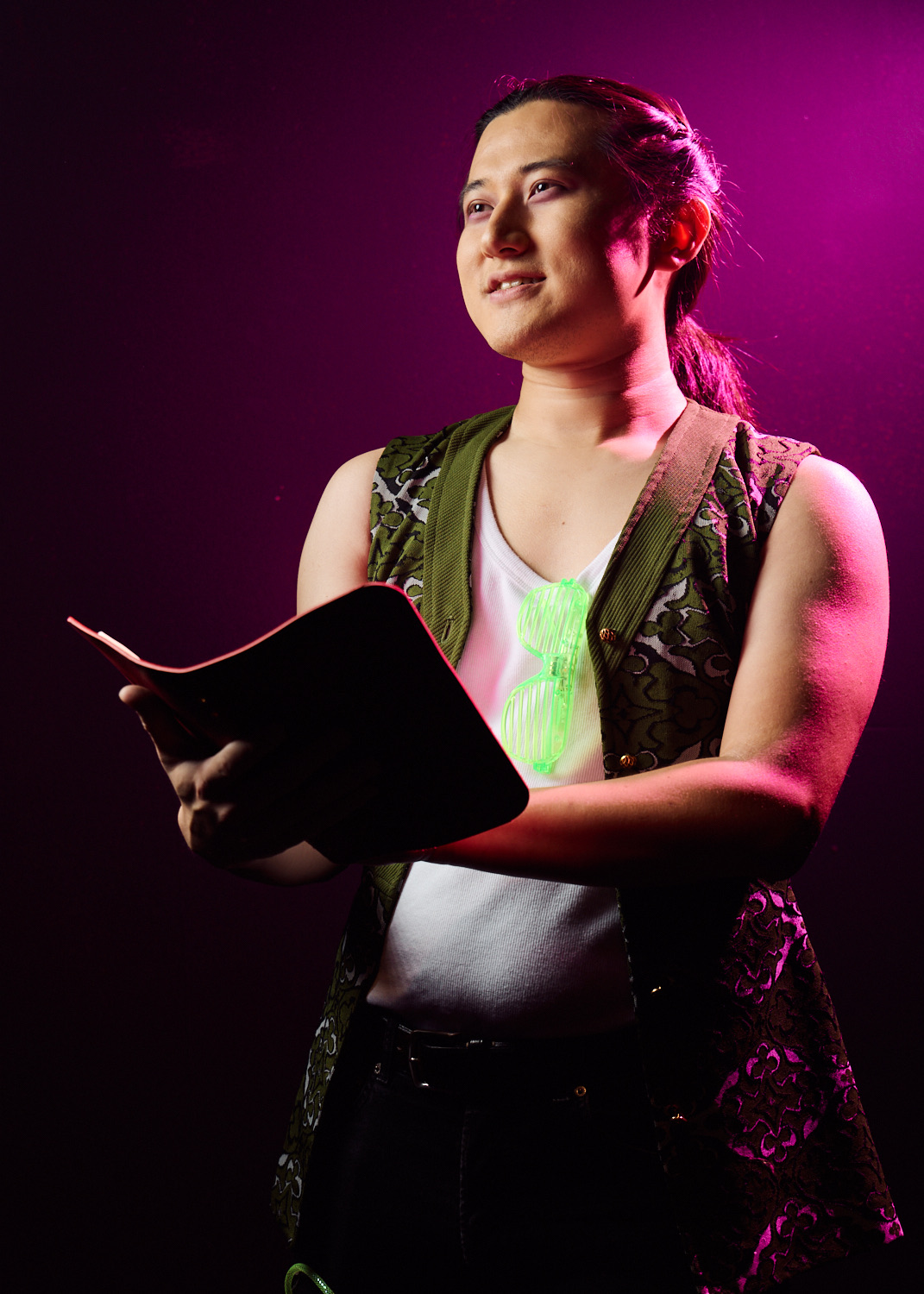
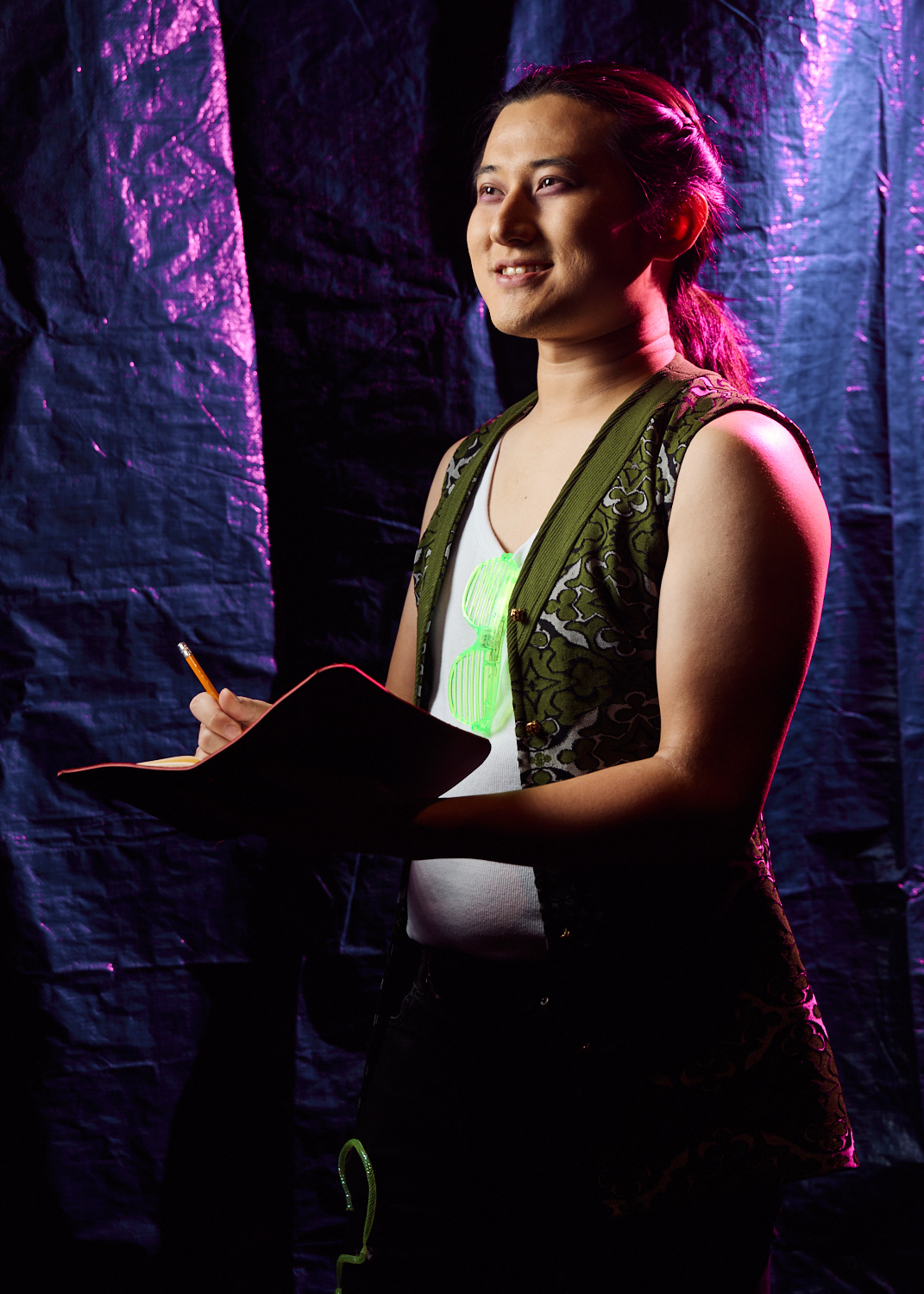
Actor Jared Son volunteered to be my light tester for these portraits, and after a comparison between a softbox and a more contrasty fresnel lens, Jared opted for the fresnel, which is certainly more in keeping with the lighting of the show. Many thanks to Jared for being my esteemed test subject!
Thanks
My thanks to Mandy Leavell, Ashley Connell, and the whole cast, crew, and company in Three of Cups’s production of God in a Hole. It is a pleasure to document your work as you build your innovative new company, and I wish you the greatest success in your run!
God in a Hole plays through October 17 at the Bramble Arts Loft, and tickets are available via the Three of Cups website during the run of the show.