
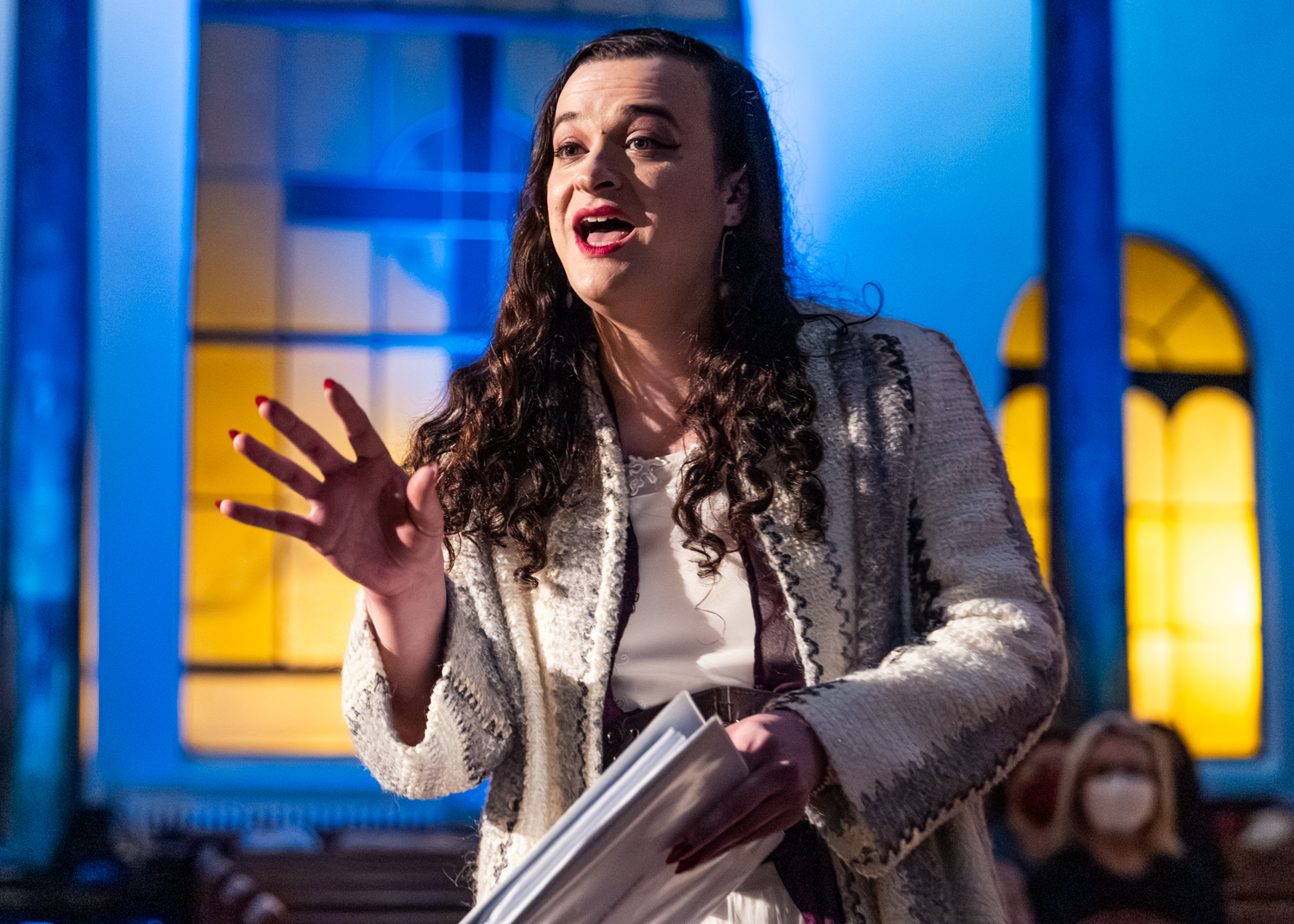
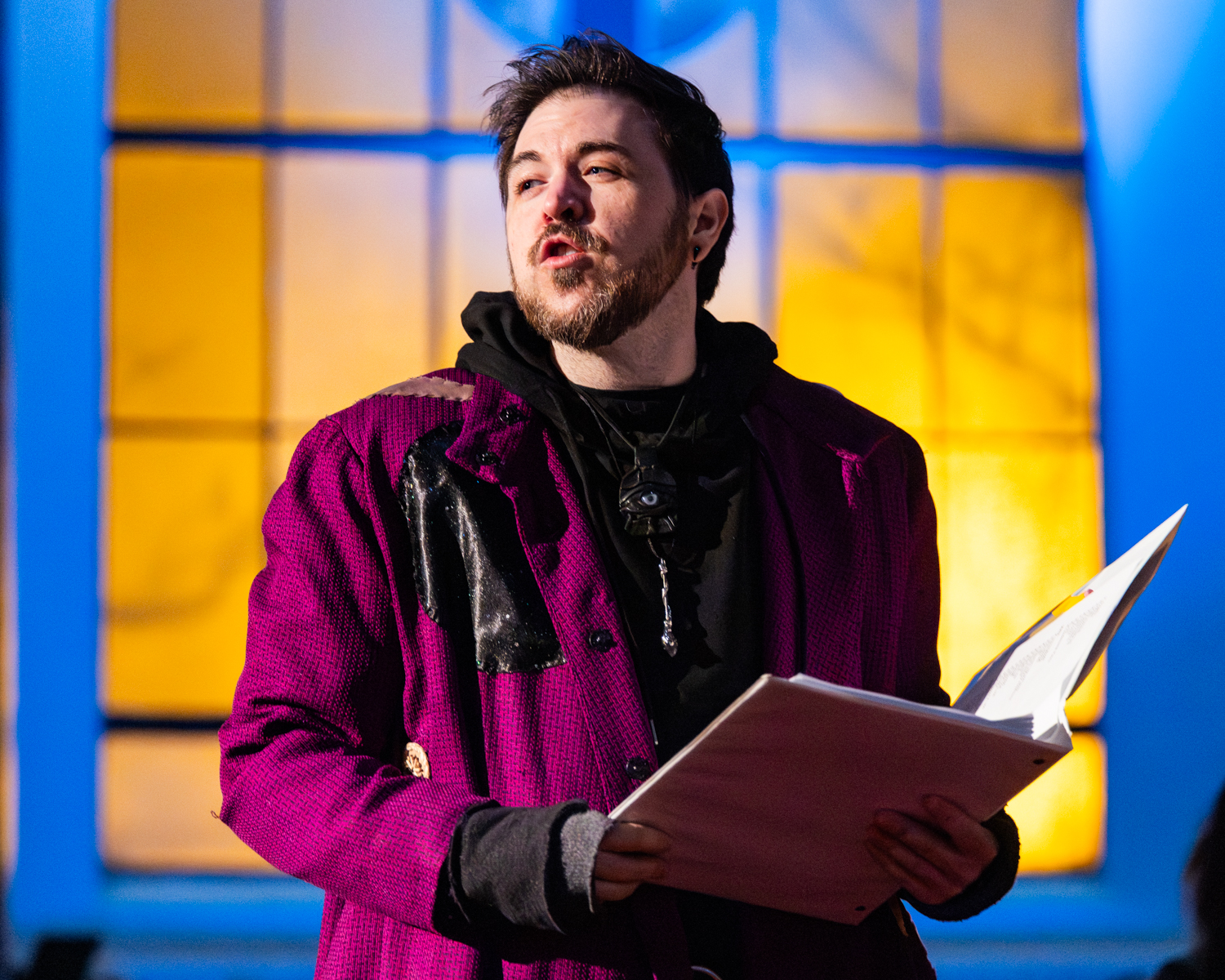
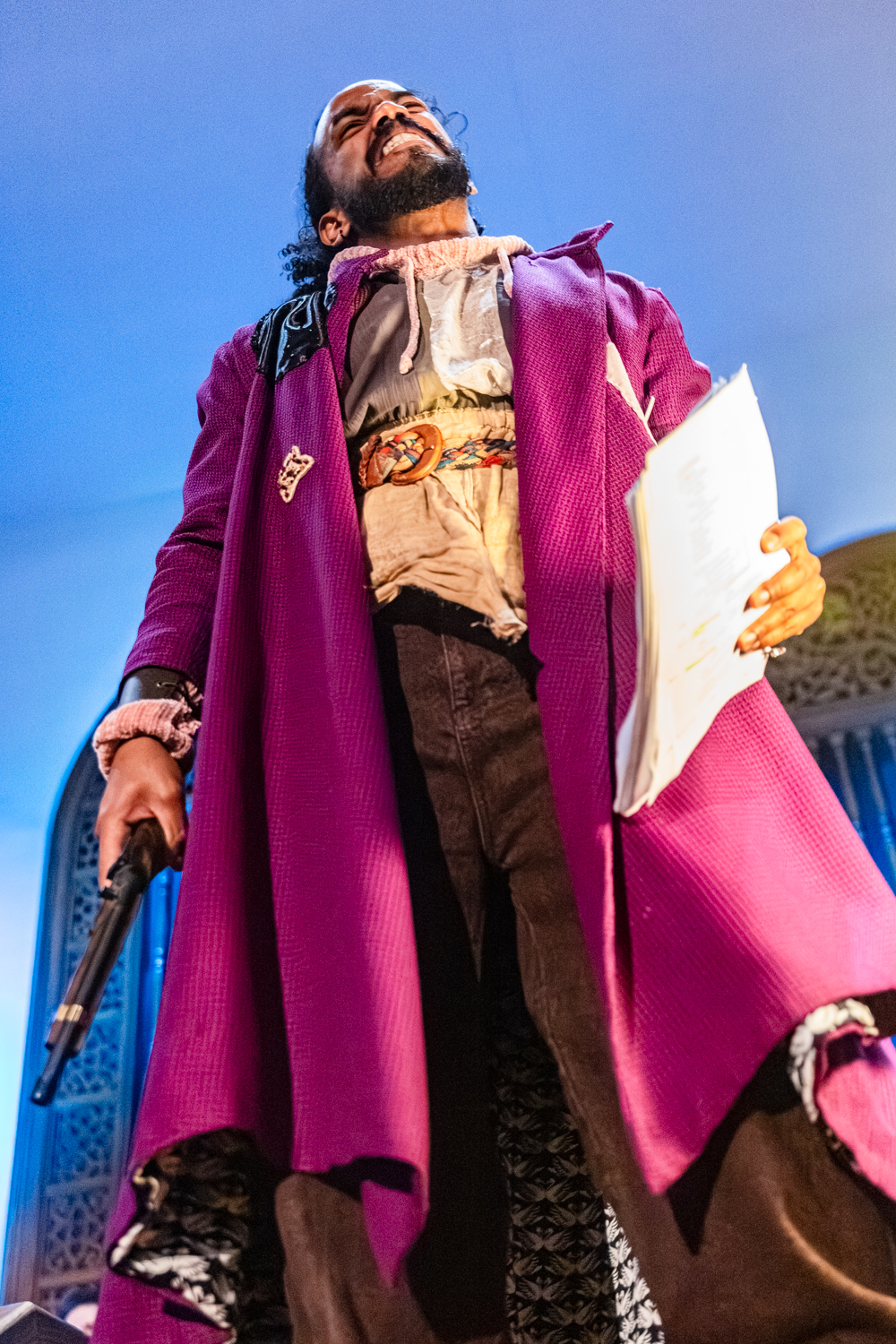
In late March, we photographed a developmental reading of Rare Wolves by playwright Gaby Labotka, presented by Coalescence Theatre Project and City Lit Theatre Company.
In a sense, this reading represented a whole lot of things going right in a space with limited or challenging lighting conditions. I felt satisfied at having overcome those challenges by implementing techniques slowly learned over time.
Before delving into that technical detail, here’s some information about this reading and how we came to be involved.
Rare Wolves
Rare Wolves is an evocative, lyrical collection of tales of a pack of transgender and nonbinary people decried as monsters by their families or towns. They form their own, humble utopia in the woods to escape violence and persecution and nourish their humanity. They find love, acceptance, and joy in the community they form together, making them powerful beyond imagination.
Rare Wolves summary from National New Play Network New Play Exchange
In February 2026, Dawn Shandrow of Coalescence Theatre Project reached out about the opportunity to photograph the developmental reading of Rare Wolves, held at the United Church of Rogers Park. The reading was being produced in conjunction with City Lit where I spontaneously ran into the playwright, Gaby Labotka, when Distant Era photographed Changing Channels. We chatted briefly about the possibility, and I asked Gaby to consider any dream shots or must-haves for the show, which I could mull over in the time to come, if I ended up shooting the show. The details were finalized over the next few weeks, and on March 29, at the end of the action-packed week shooting and turning over Idle Muse’s The Three Musketeers, we attended and photographed the developmental reading of Rare Wolves.
For those interested in reading the play, here’s a link to Rare Wolves on the New Play Exchange.
Rare Wolves Photography
I knew the church wasn’t far from where I lived, but until the day of the shoot, I didn’t realize it was only a fifteen-minute walk. Over the holidays, I had vacillated over a decision to spend too much money on some photography gear that overlapped with things I already owned but would greatly simplify and reduce the minimum I’d need to bring with me to any given shoot, as well as the time it took me to pivot between different lighting scenarios. In a word, I purchased flexibility. Rare Wolves is one of the first times I saw this in action and certainly the shoot that made it feel worth it.
Light and Color
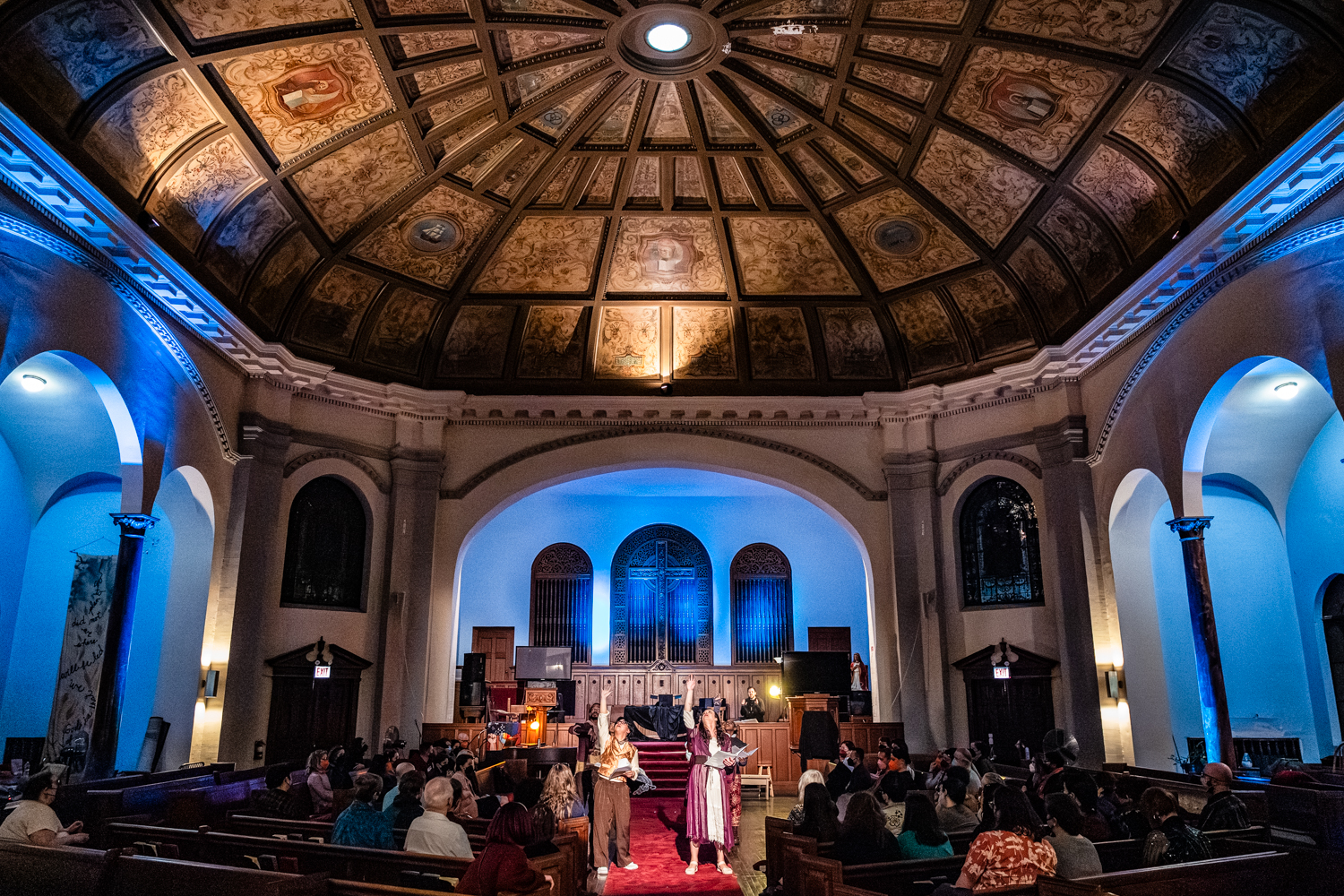
I knew I was shooting in a church at night, likely without flash during the performance. From past experience with such spaces, I imagined a dim, harshly lit space with saturated yellow-orange tungsten light.
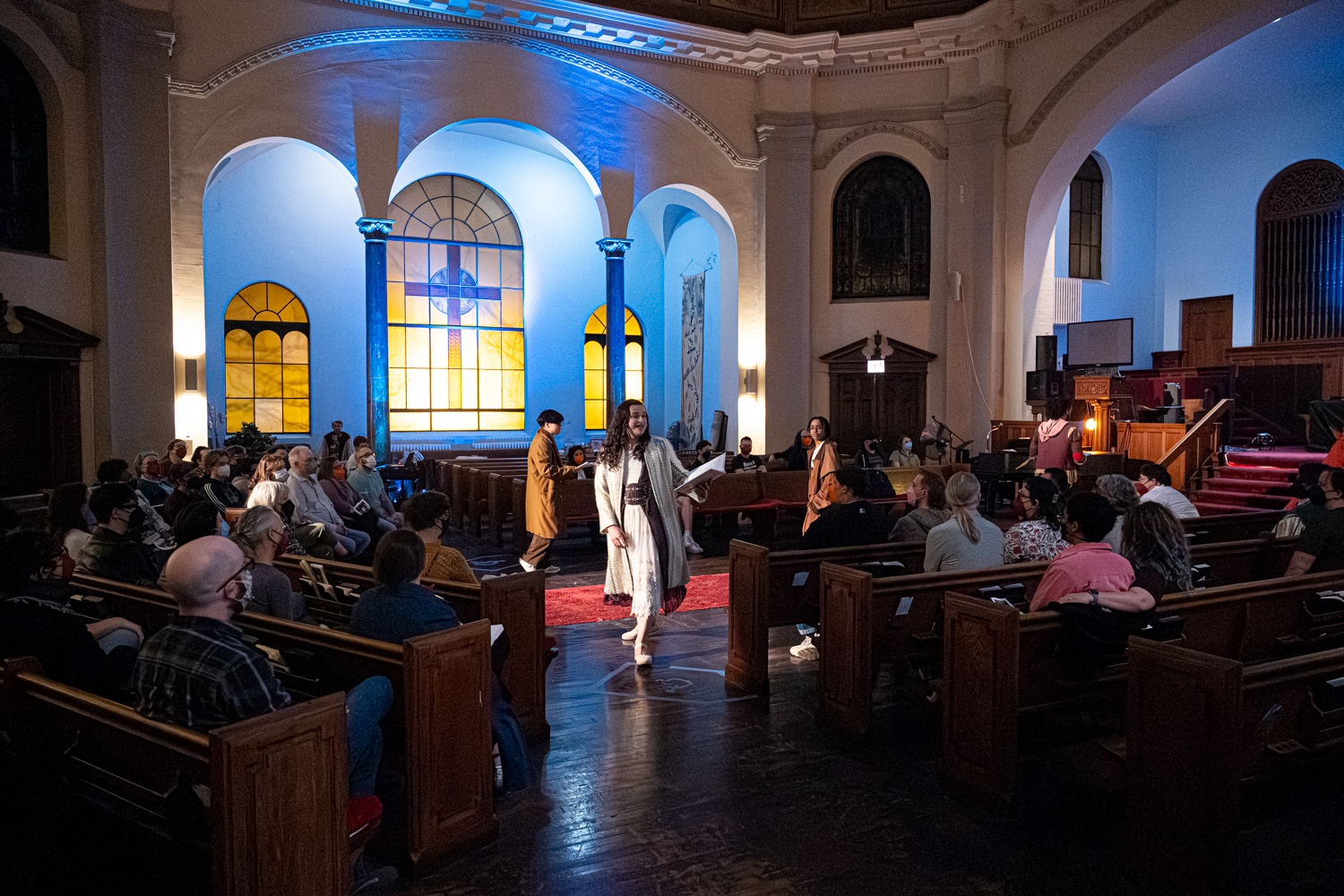
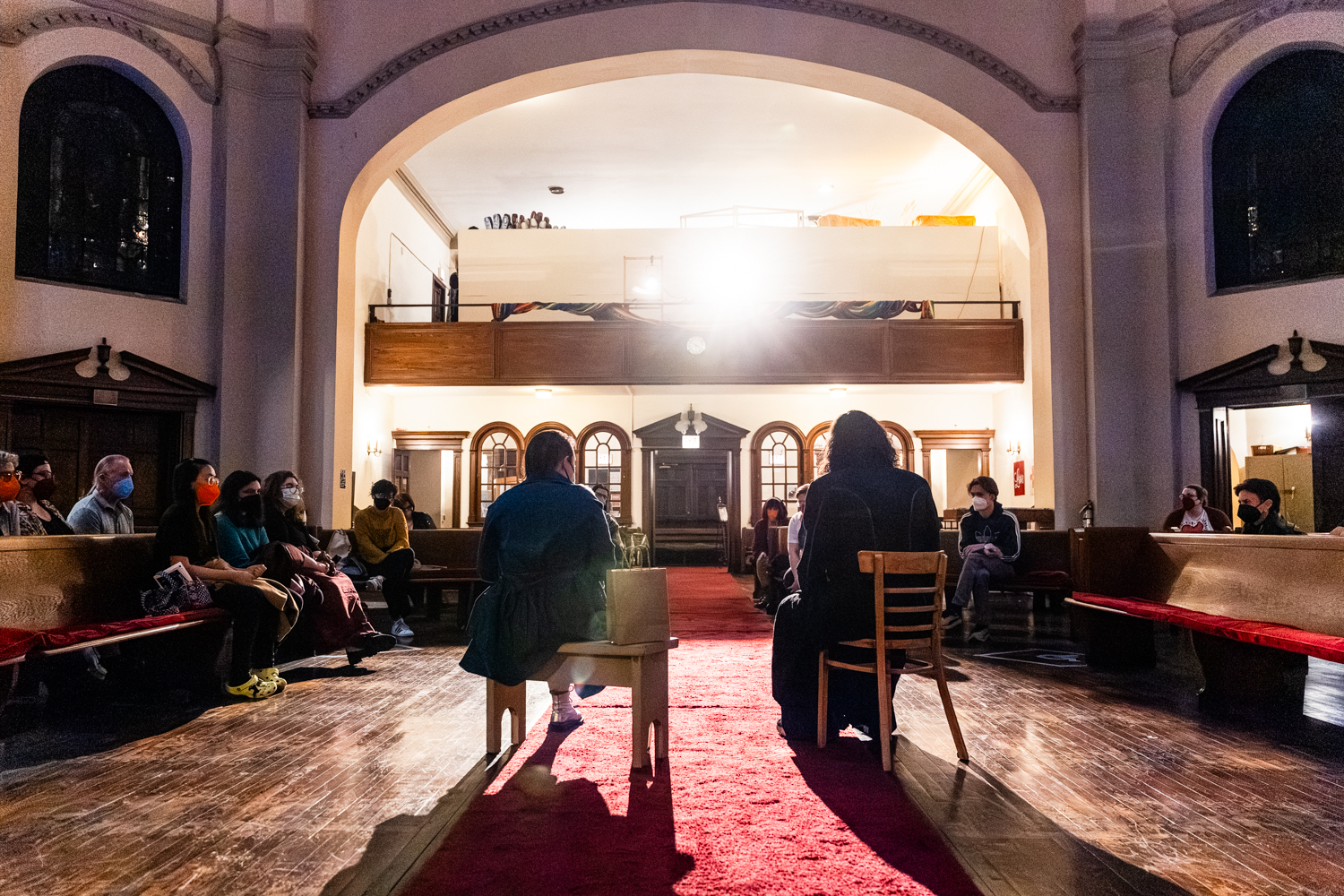
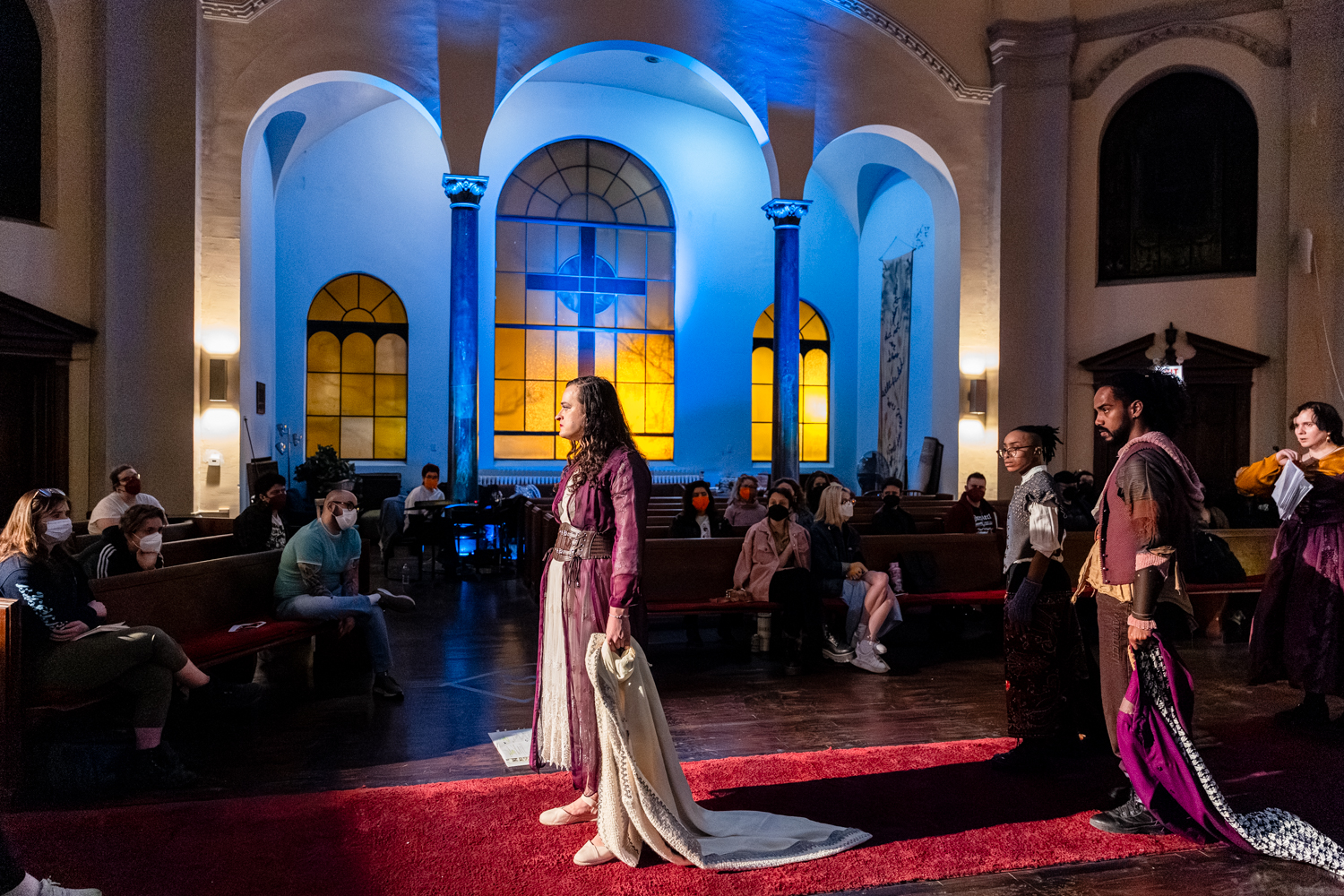
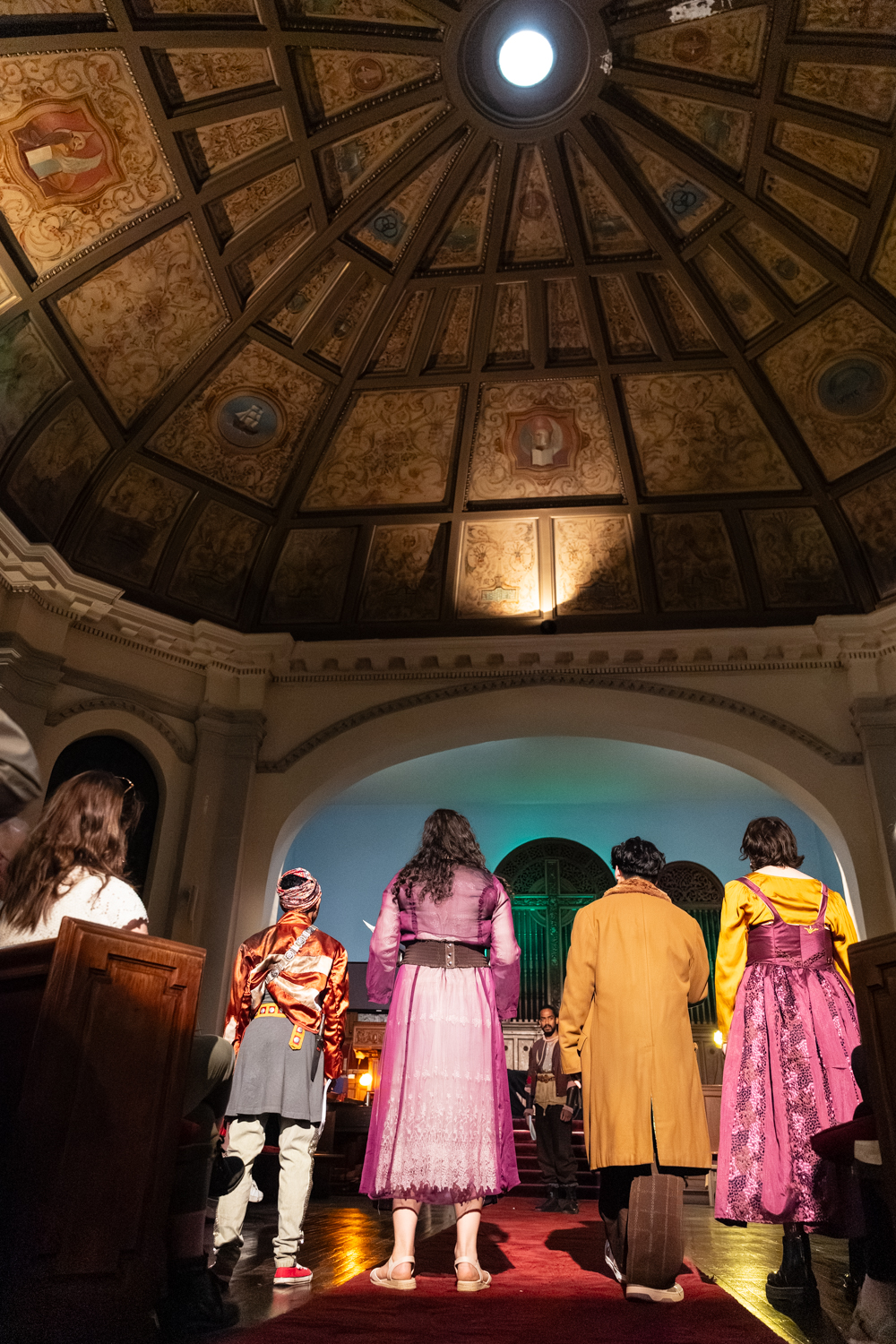
When I arrived at the space, I scoped it out and discovered the lighting situation I’d anticipated. A strong, hard continuous light illuminated the performance area from the second story of the church—from the choir loft, if I remember correctly—and blue light saturated one wall, while warmer orange and yellow lights shone on the dais at the far side of the sanctuary.
However, the performance space on the sanctuary floor would be the main area I’d need to consider when shooting the show. The light coming from above and behind the audience illuminated this area.
Setting the White Balance
When photographing theatre lately, I’ve found the auto white balance on the Canon R5 Mark II remarkably accurate in terms of representing what the environment actually looks like under constantly changing lights. However, the Rare Wolves reading wasn’t going to have constantly changing light. While the daylight coming in from the windows and skylight would diminish by the time I photographed the show, the area illuminated by the light from the audience would stay fairly consistent.
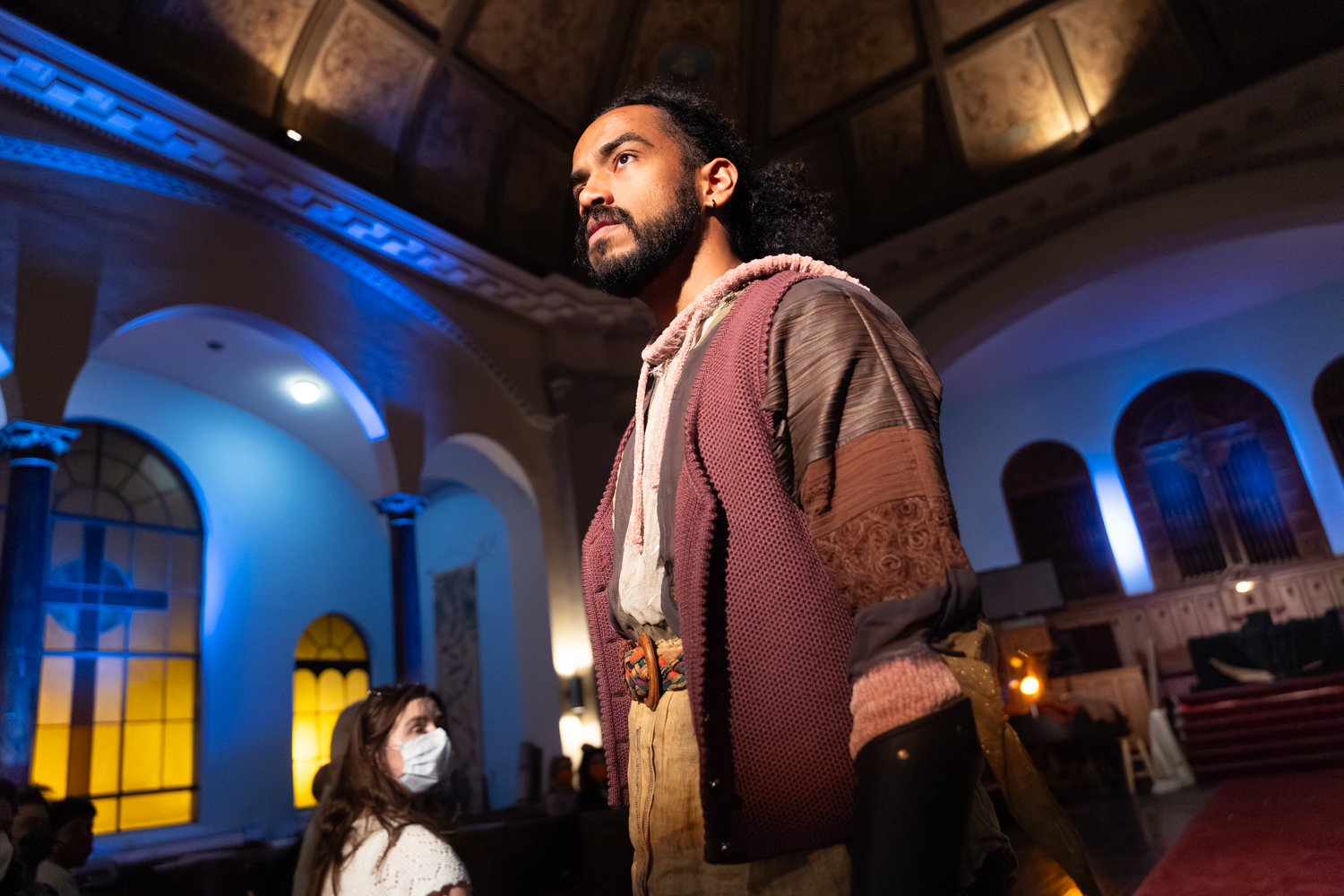
I set my camera’s white balance to Custom and photographed the gray card on my Color Checker Passport in the “show light” of the main performance area. Now, colors would be rendered more faithfully, without color cast, in that space. I knew I’d need every bit of light I could get to capture the show in the sanctuary at night, so I opened my aperture all the way and programmed the settings I’d need to shoot the show into my camera’s custom menu. This way, regardless what I shot or how I changed the camera settings beforehand, I could switch back to show settings with the press of a button and the turn of a dial.
Event Photography
The reason I’d need to change my settings was so I could capture the event happening around the reading, in addition to the reading itself, which required a different set of parameters.
I mentioned previously that the church (and many/most spaces I shoot in) are lit by warm tungsten light. Flash has a cooler color temperature, so shooting with flash in an environment with heavy tungsten light will yield generally yellow backgrounds… unless I set the camera’s white balance to tungsten, which turns everything blue, neutralizing that yellow tungsten light, and then place a color temperature orange filter on your flash, which warms everything up again, ultimately removing the color cast so that the subject and background are of a similar color temperature, which I can edit to taste.
Anyway, I did all of this and then programmed it as a different setting on my camera. Then I roved around the area and captured behind-the-scenes photos of the cast, and later the event, its attendees, its producers, and its playwright.
Flash Portraits
From the very beginning, I wanted to be sure we made some portraits of Gaby Labotka, Rare Wolves’ playwright. Ultimately, this event is about Gaby’s play, and Gaby is at the center of it, the source from which all of this flows. We did a series of pictures on the steps of the dais. I thought it would be cool to get a “howling” shot. Gaby obliged, and it’s one of my favorites from this mini session.
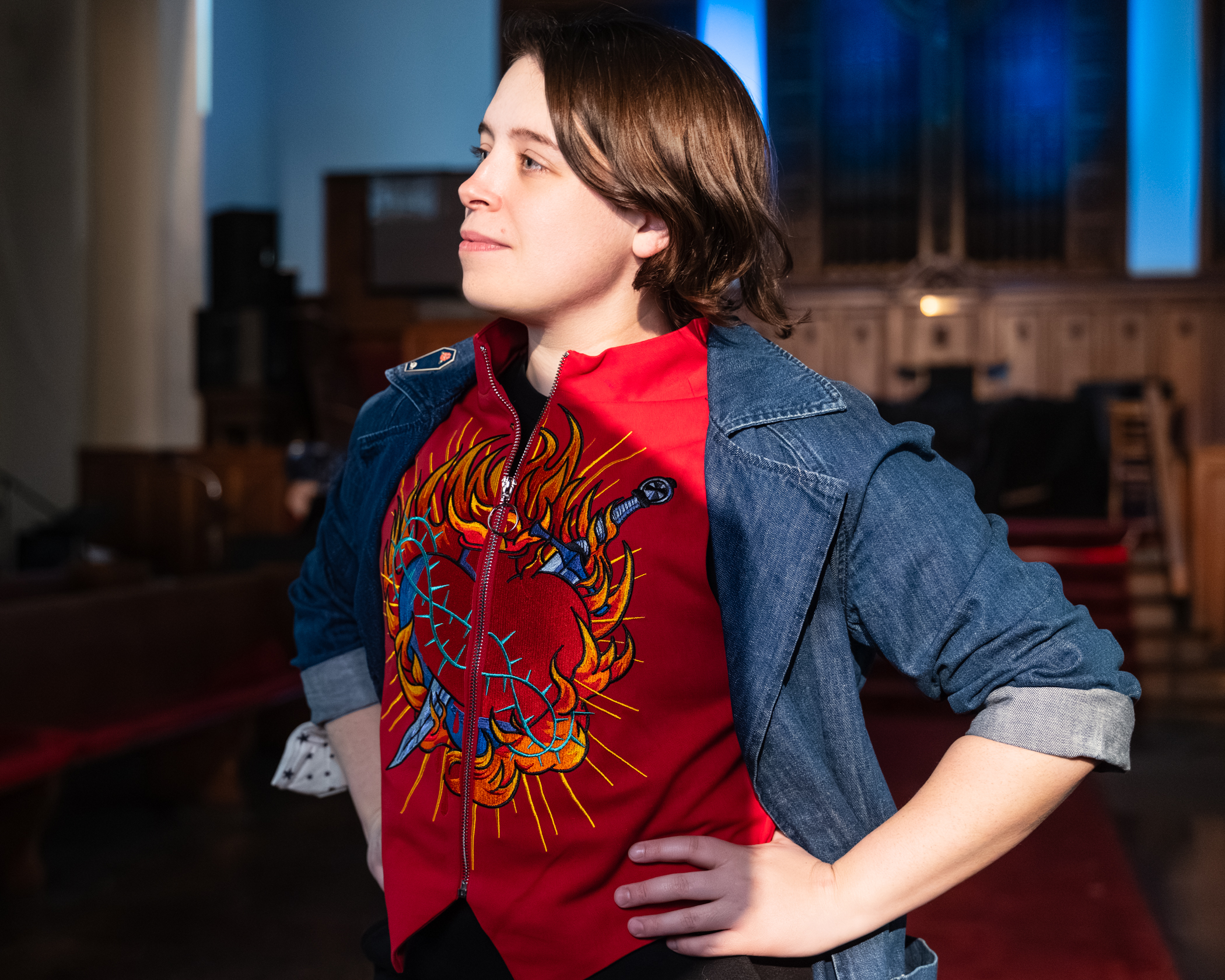
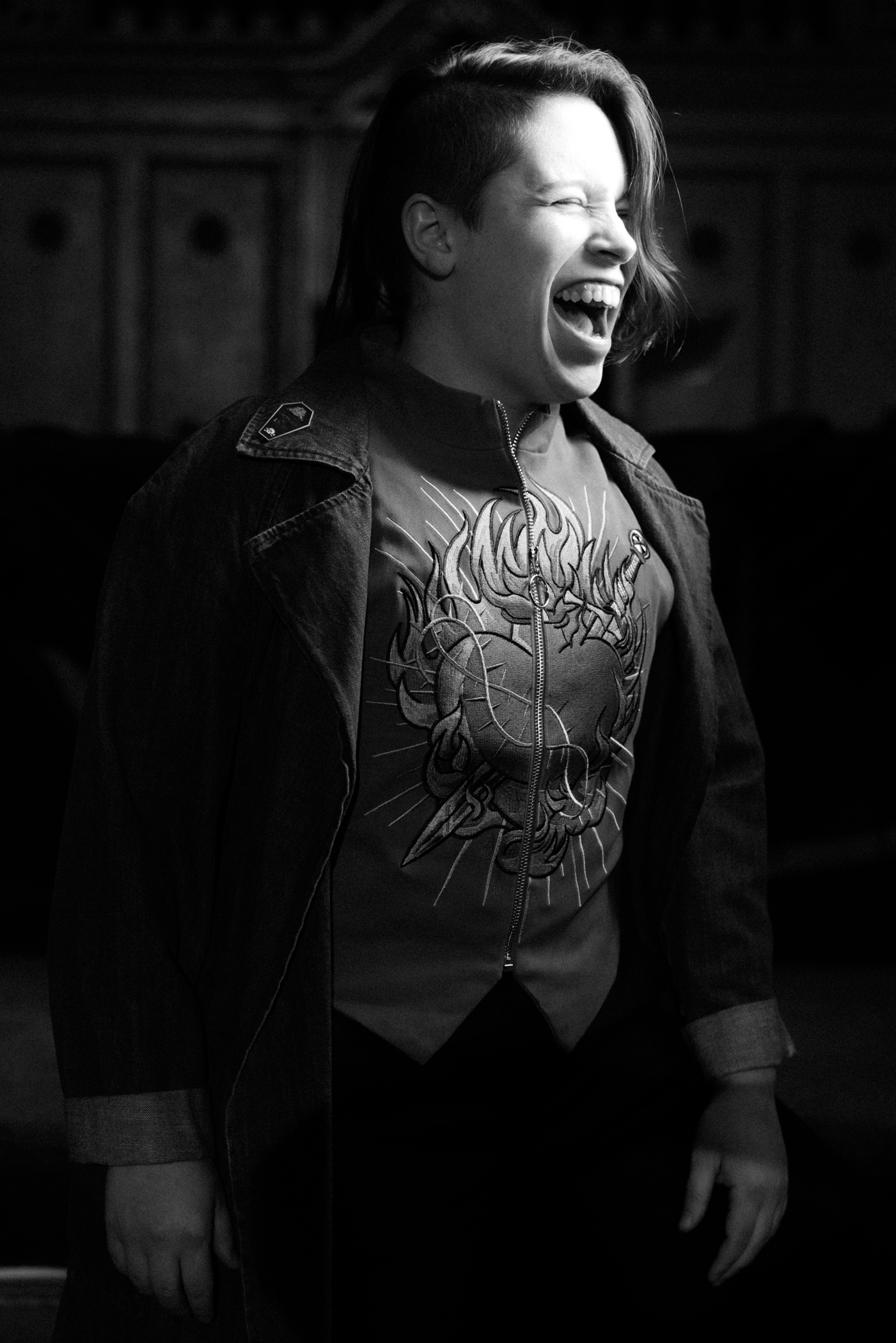
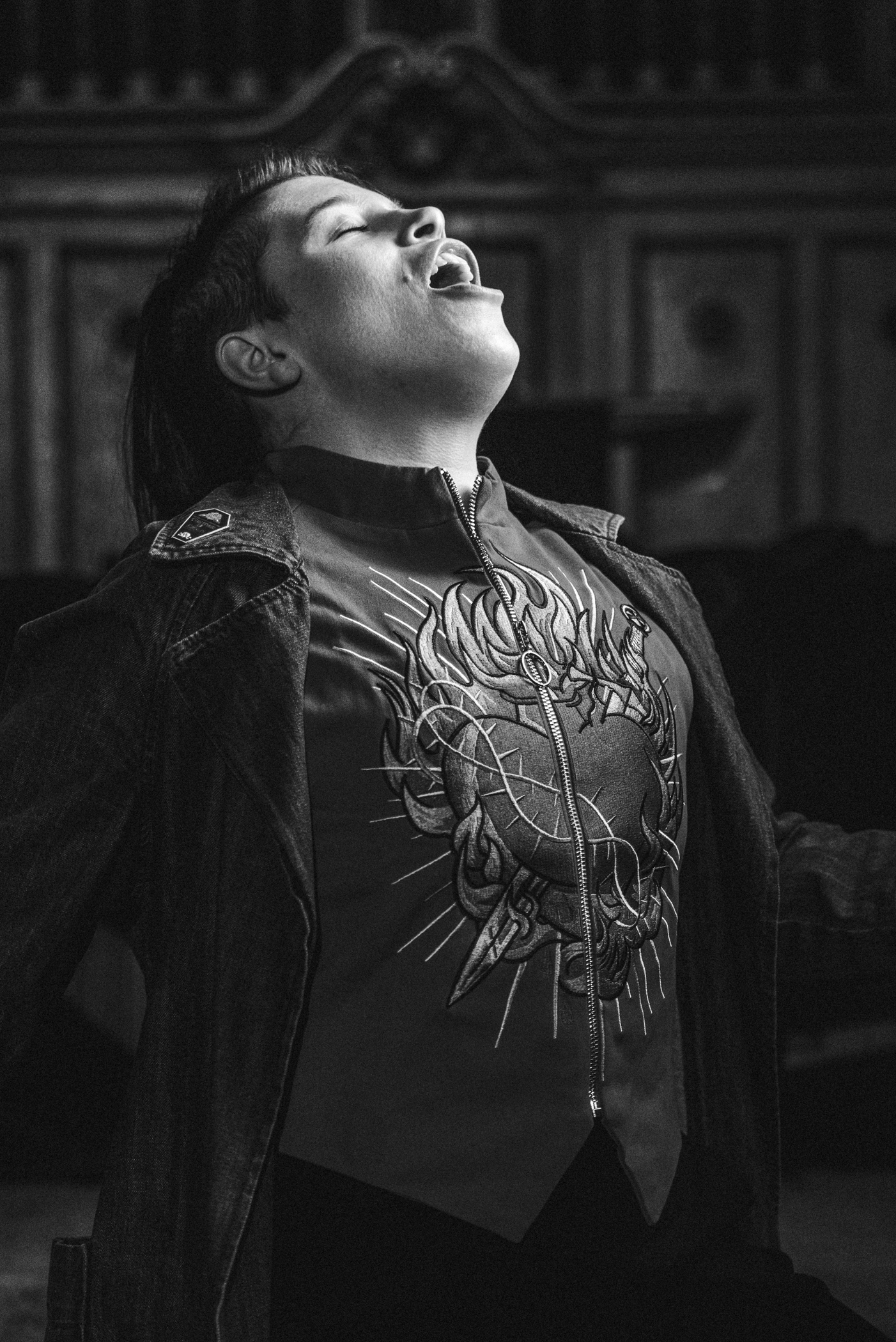
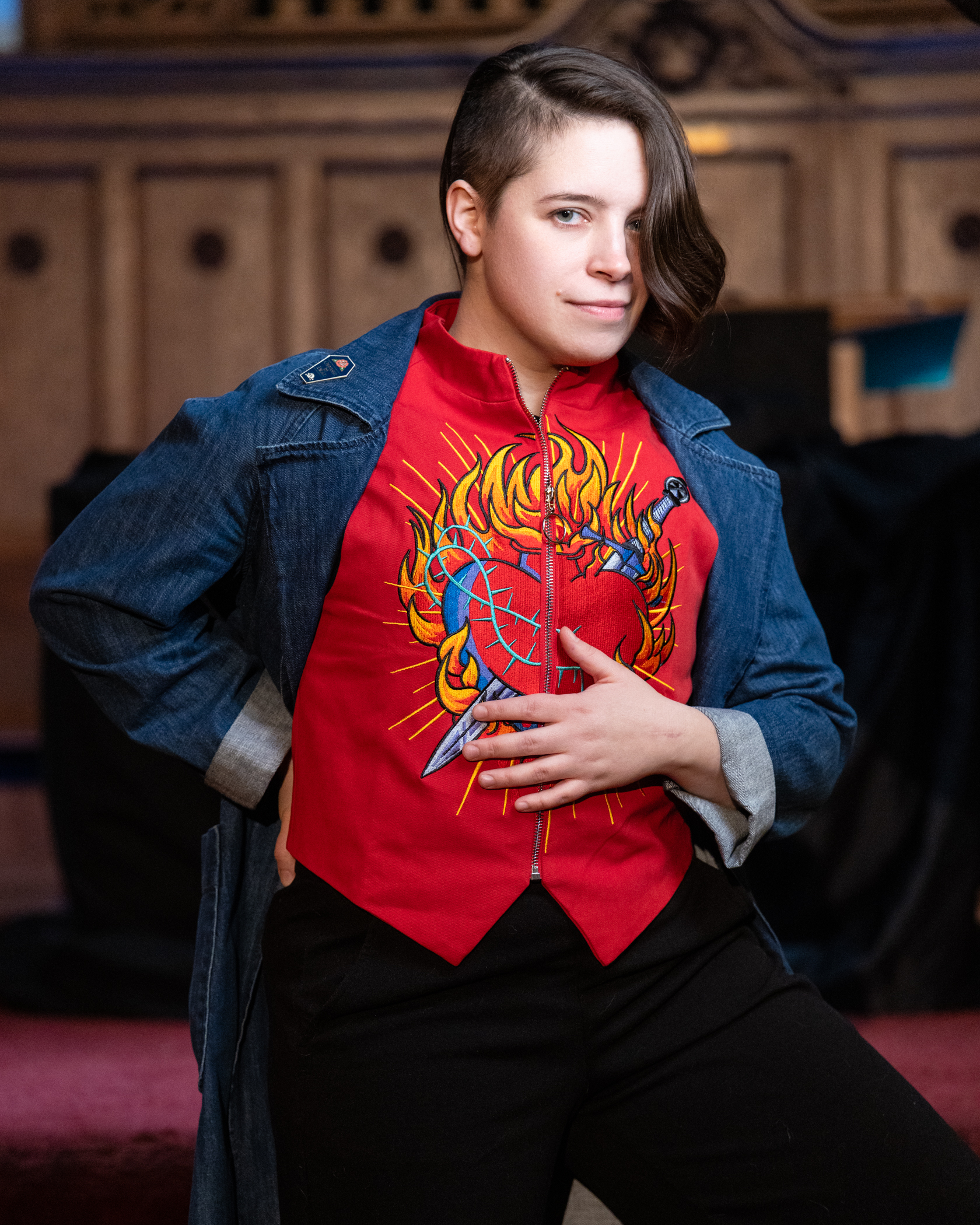
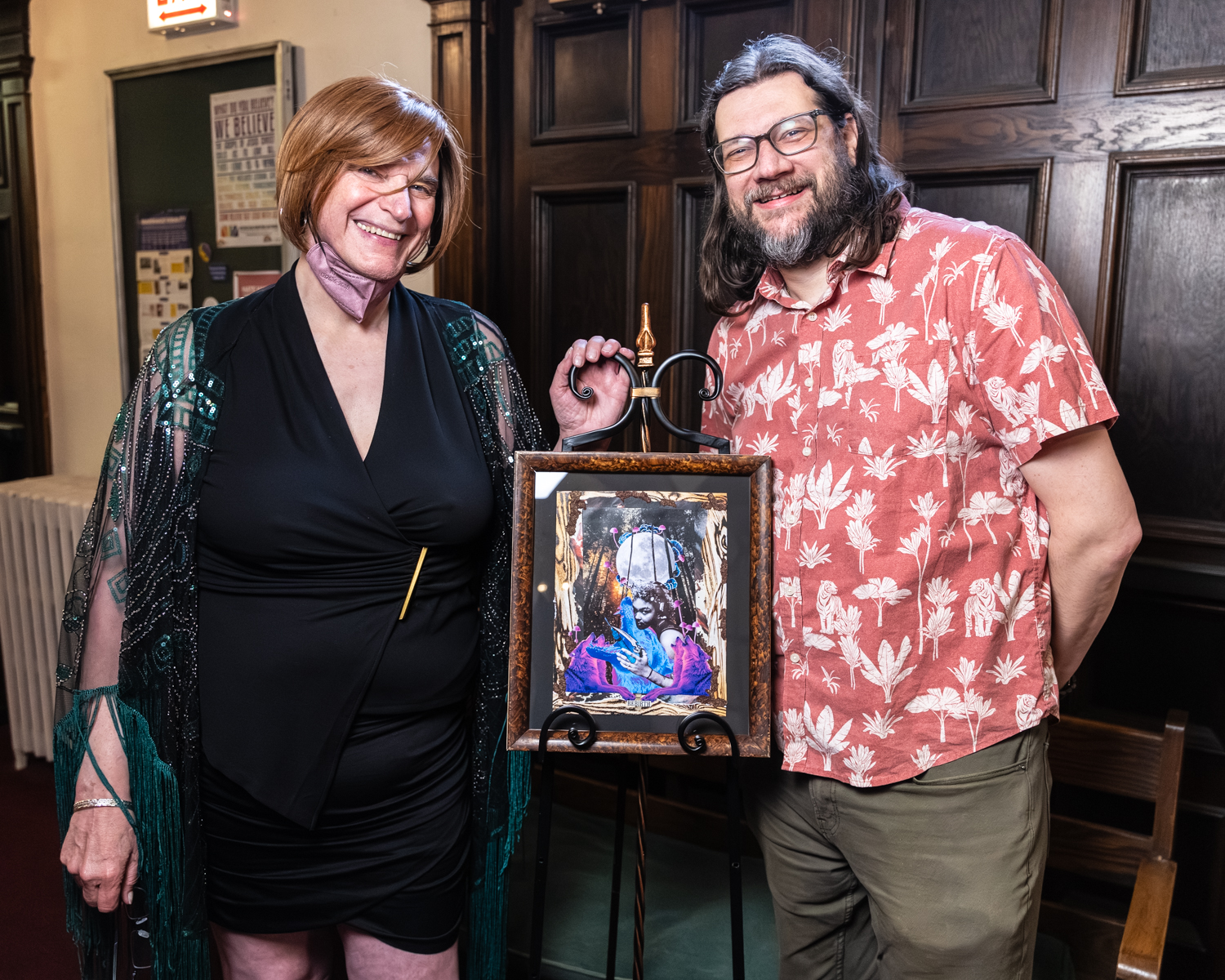
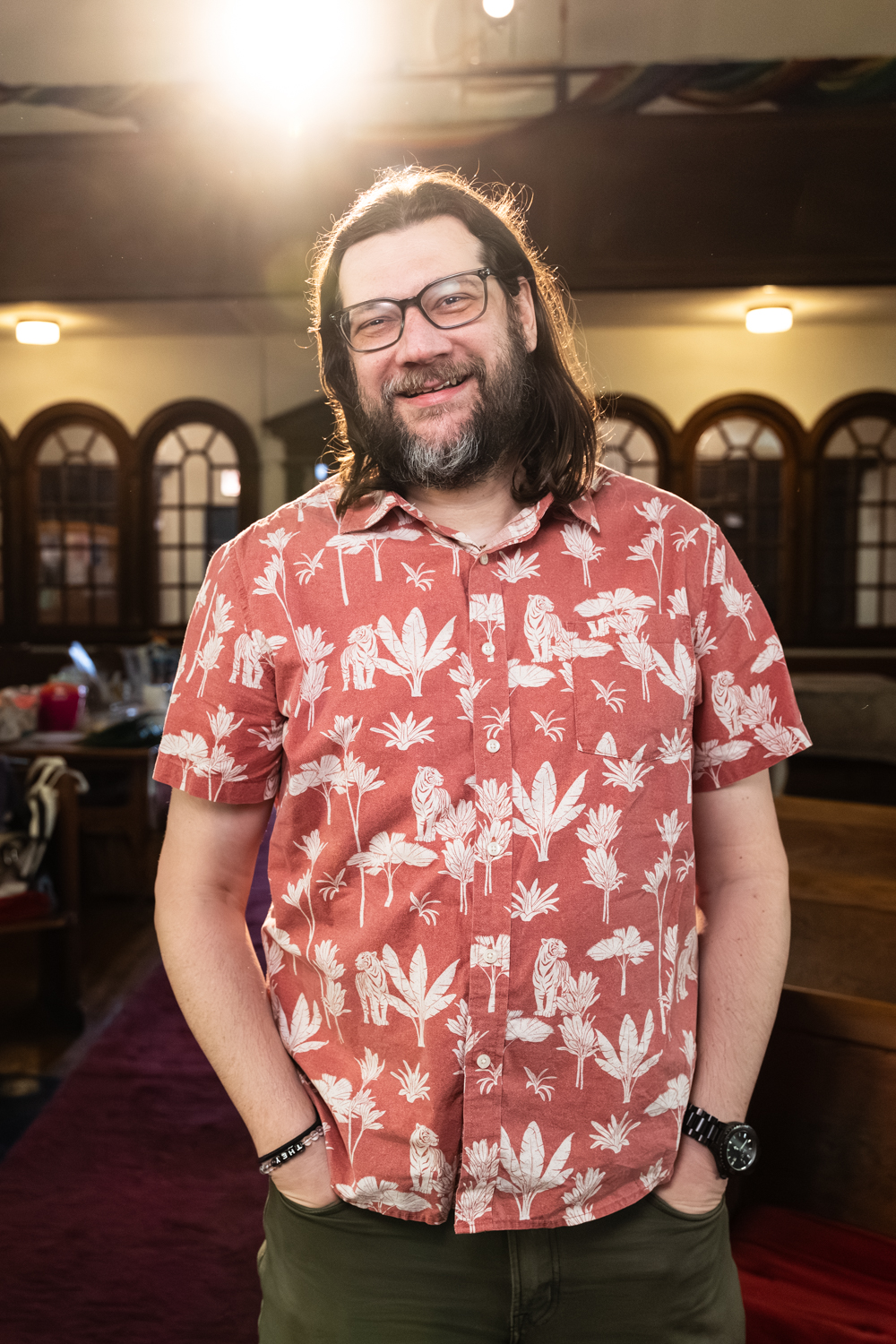
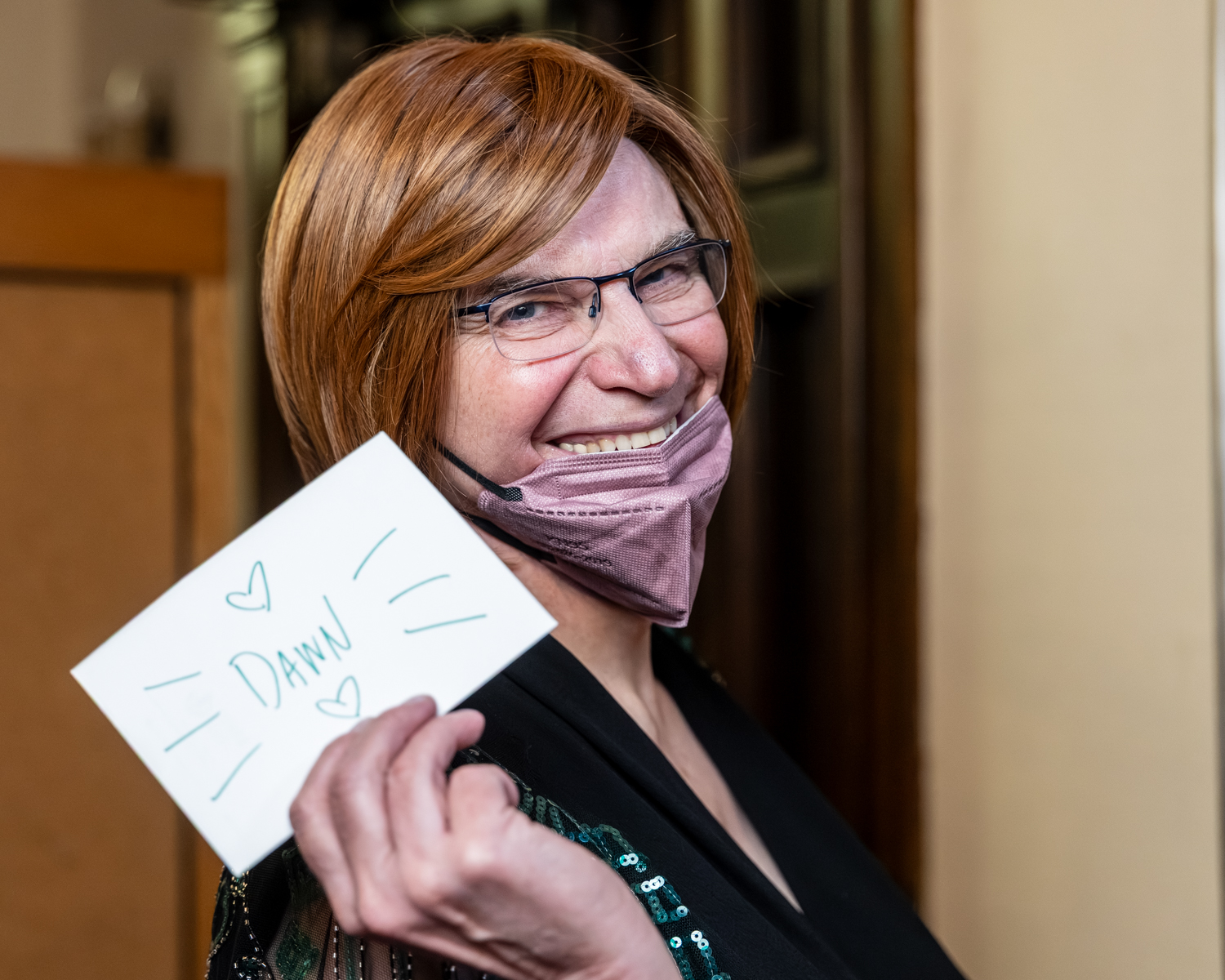
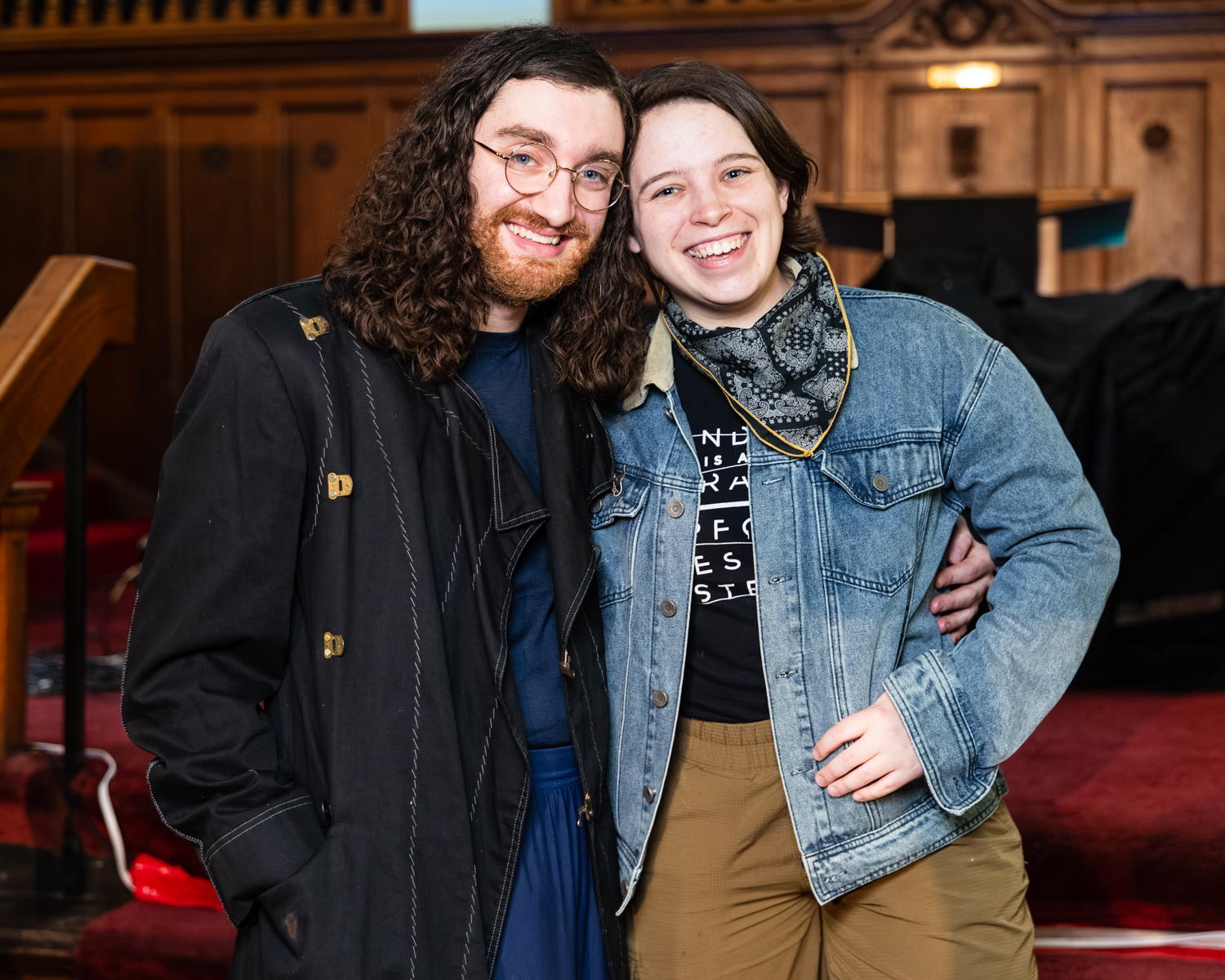
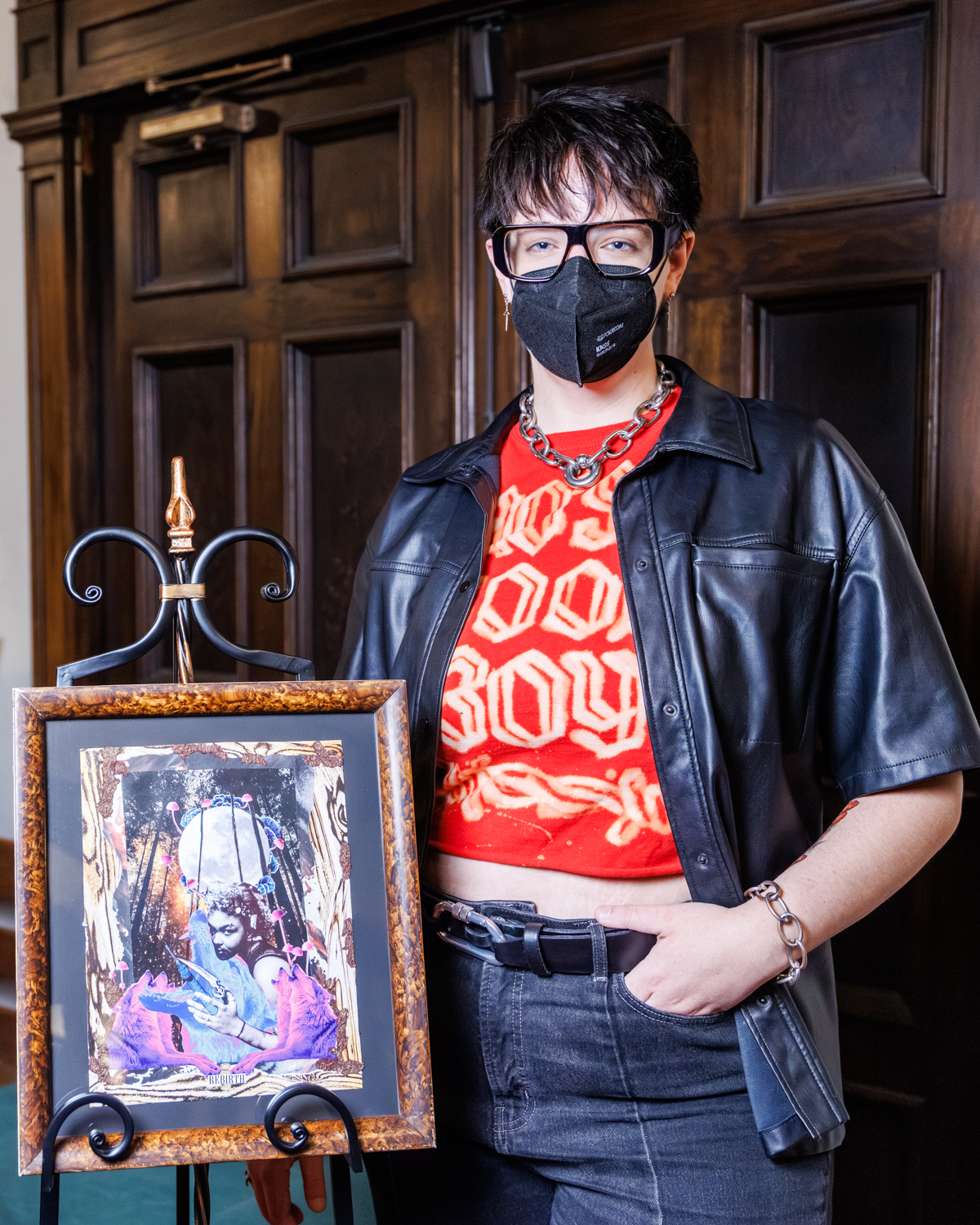
Roving around the area before the performance, I was pleased to get a picture of producer Brian Pastor with “god light” coming down from on high; with producer Dawn Shandrow of Coalescence Theatre Company; with Zach Barr, the dramaturg, and Gaby; and of J, designer of the magnificent art commissioned as Rare Wolves’s poster.
The Performance
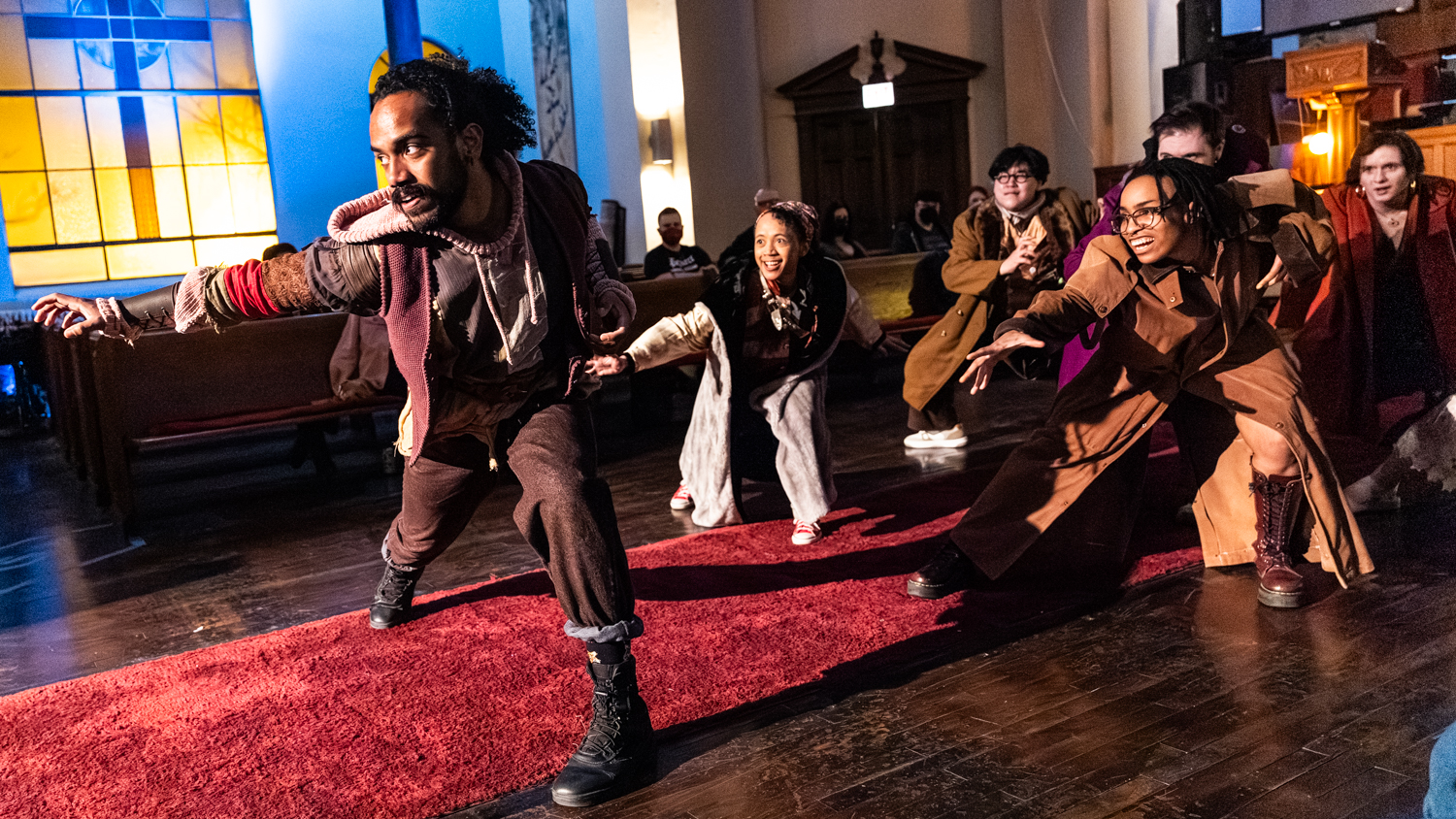
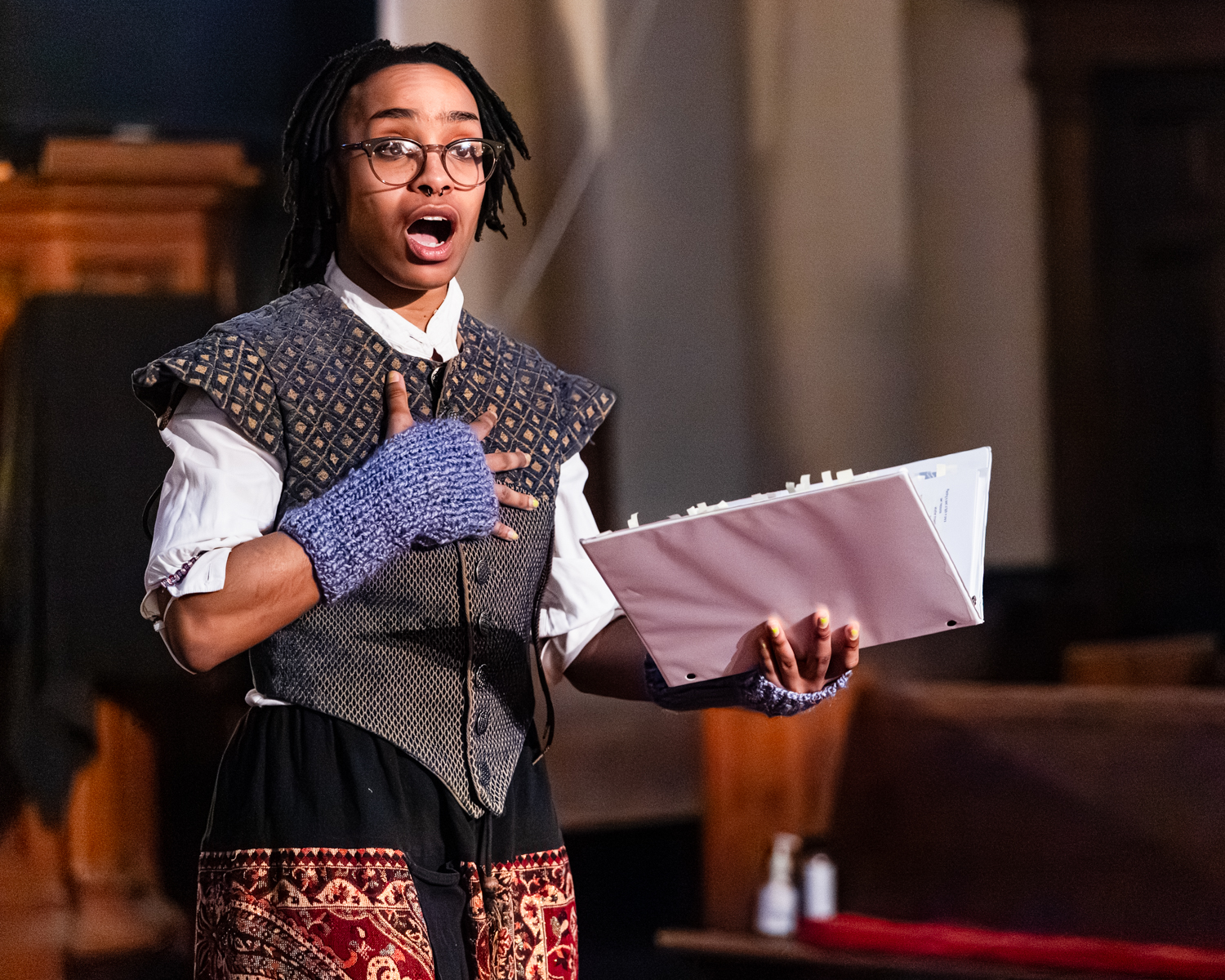
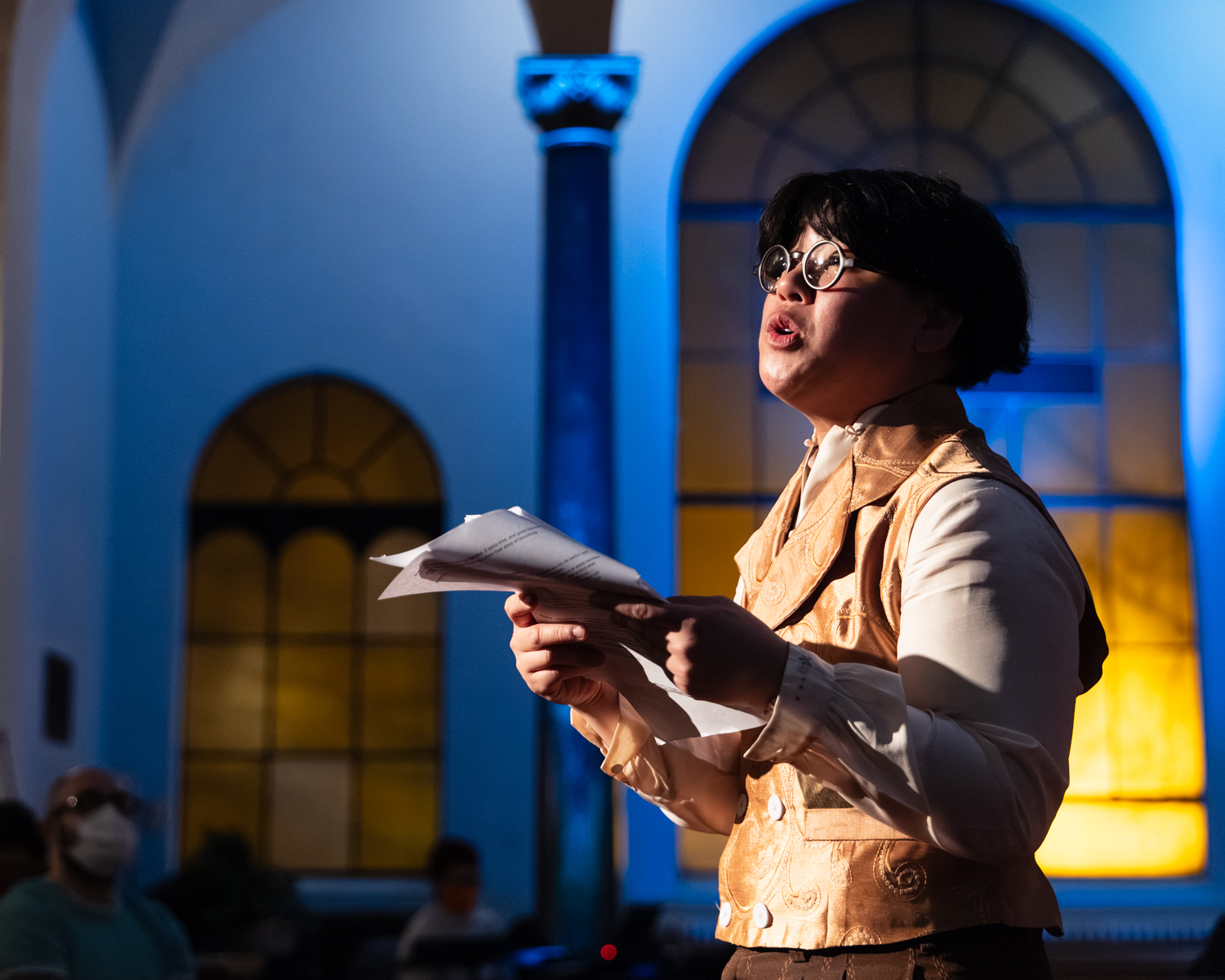
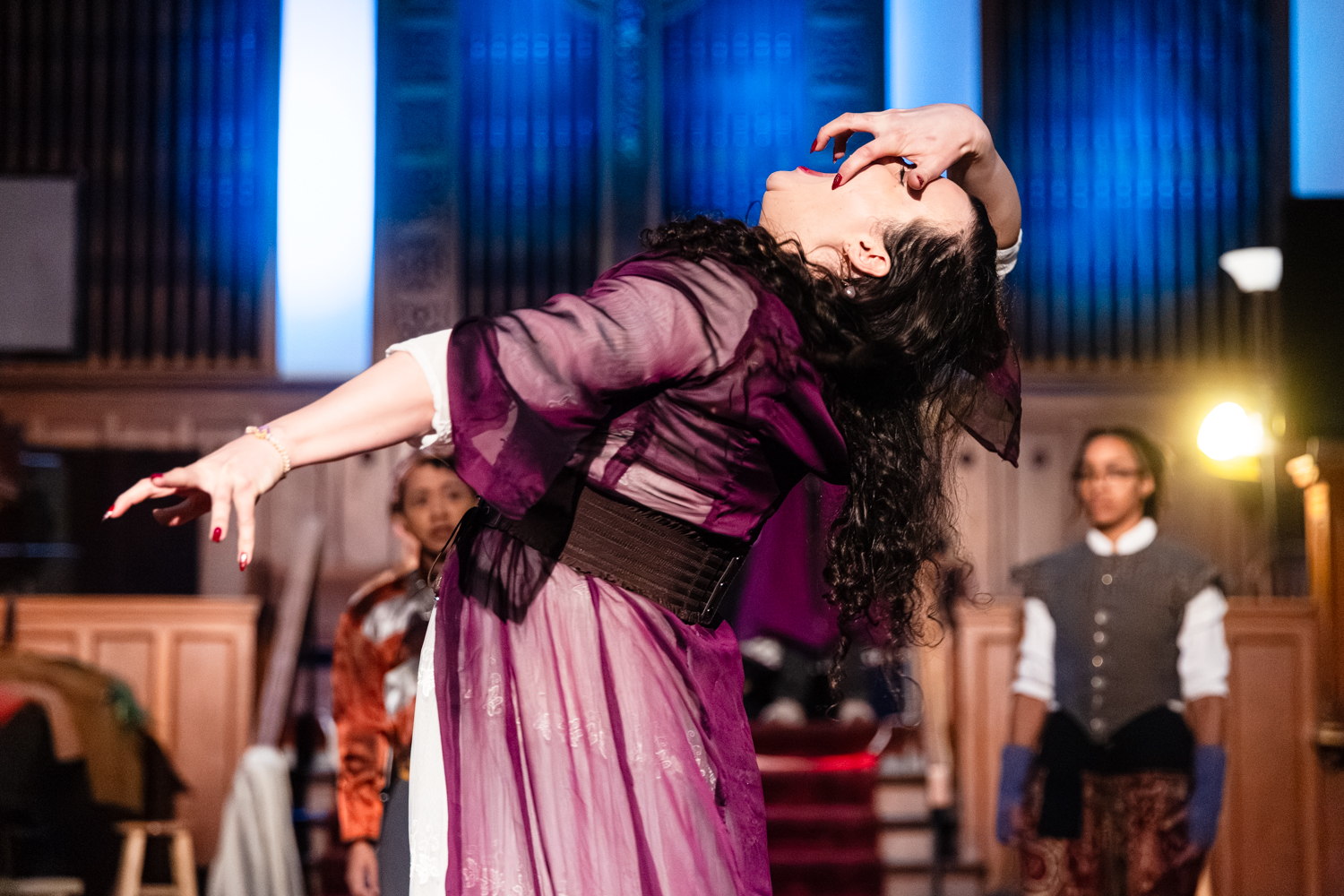
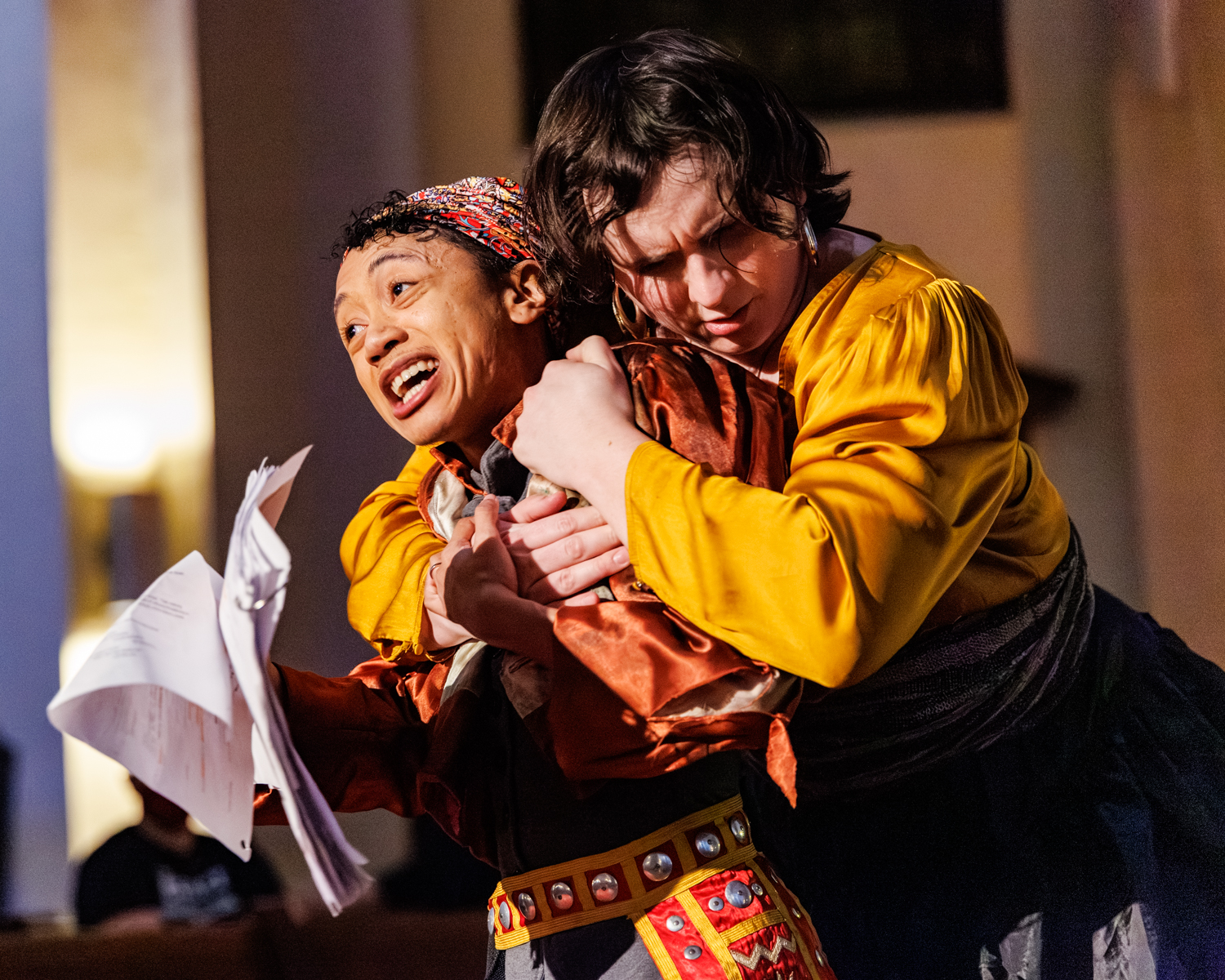
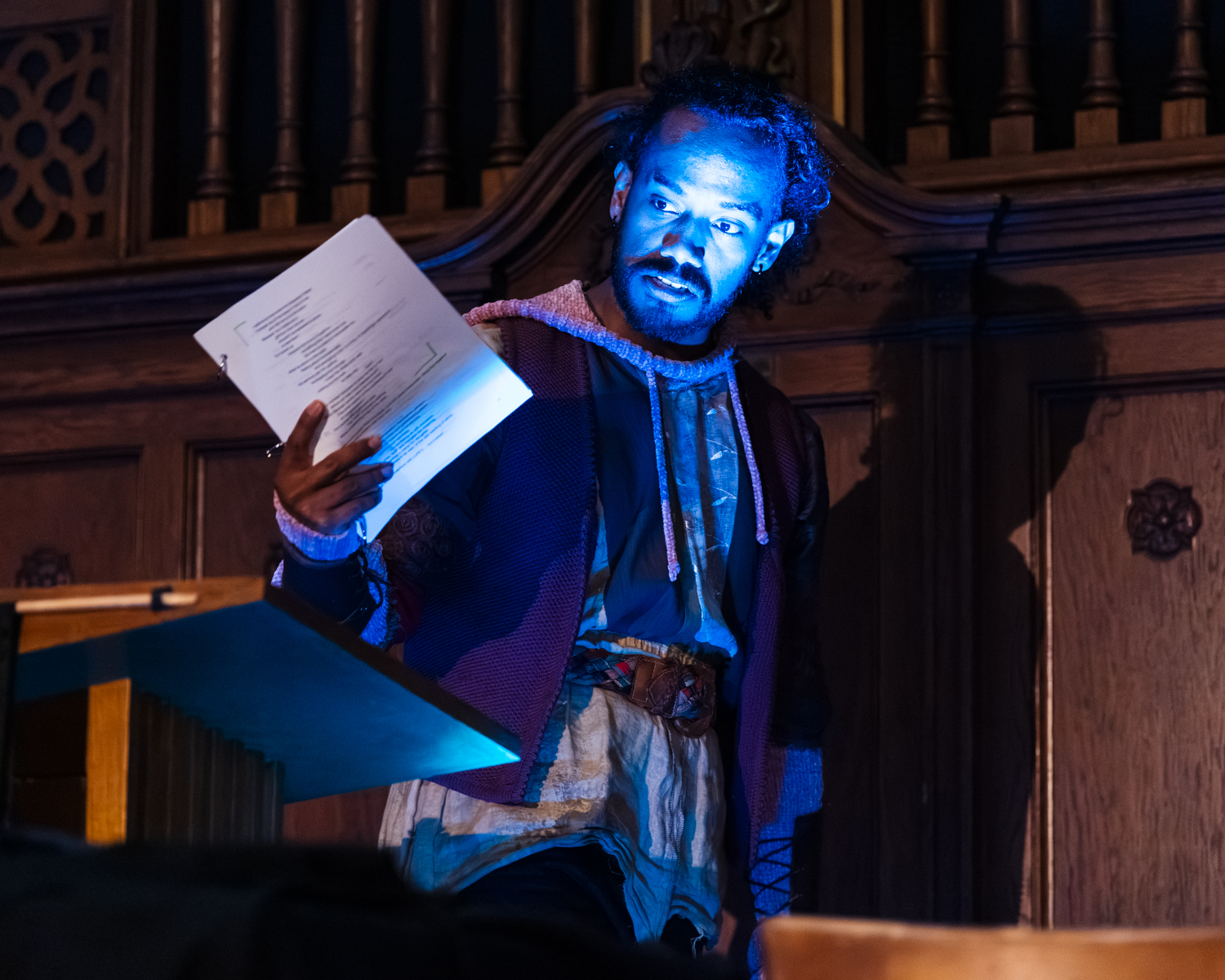
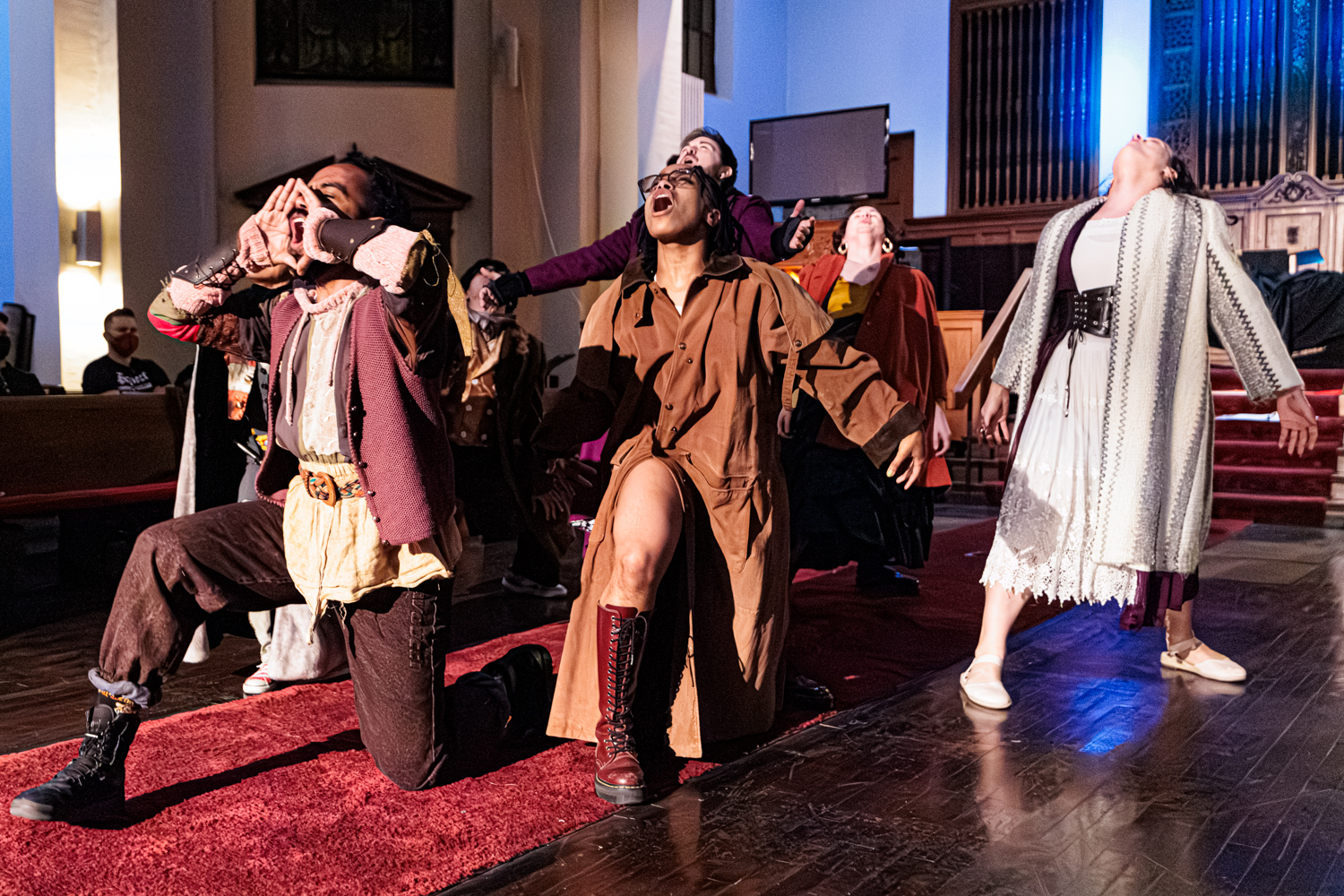
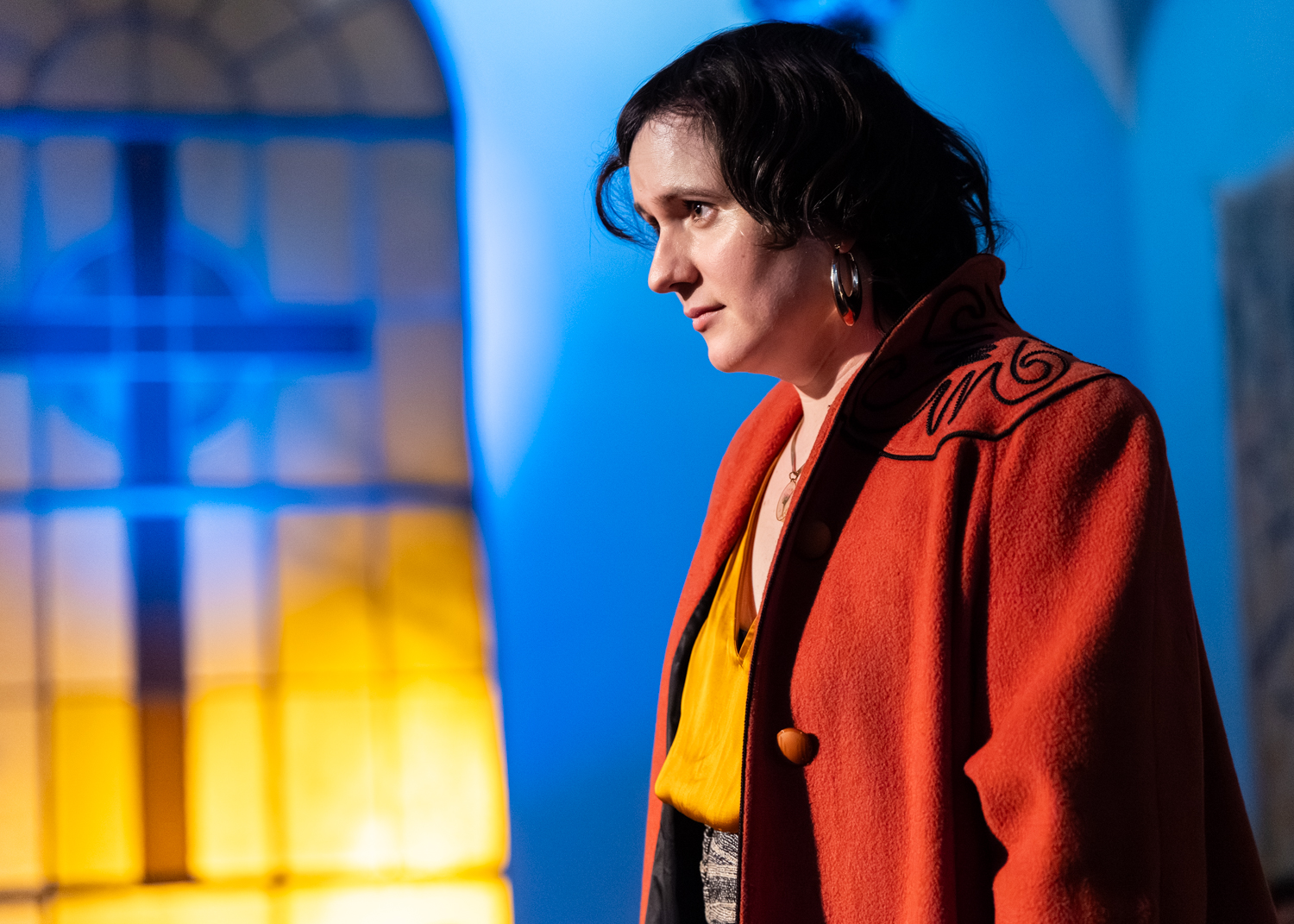
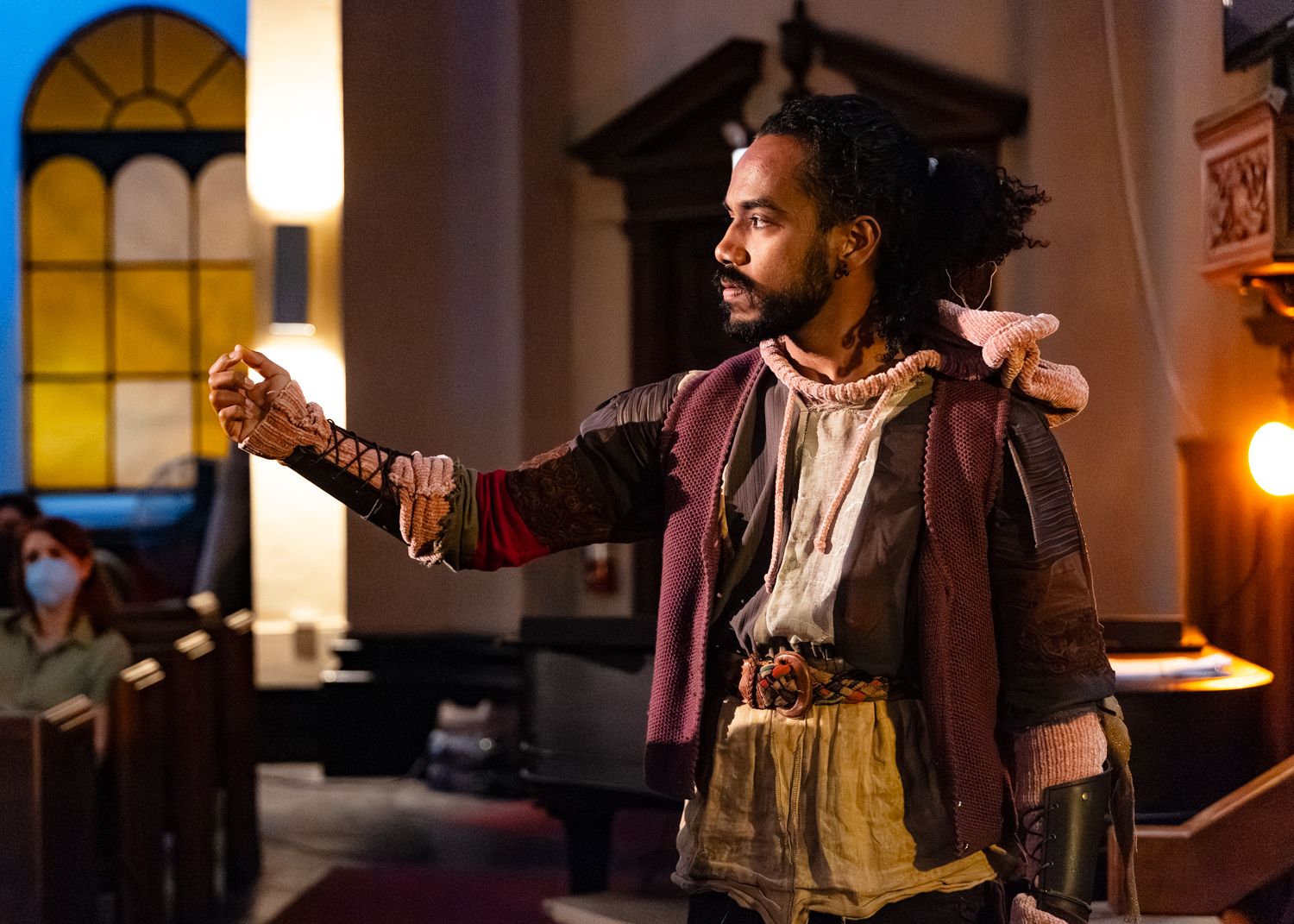
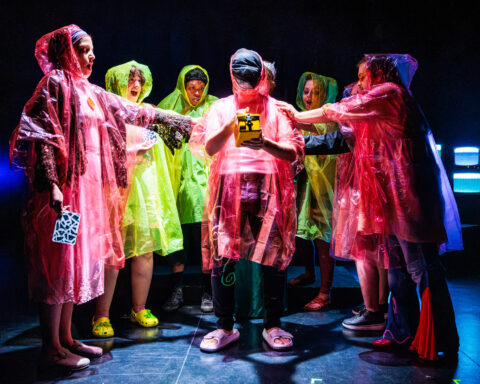
When the time came to photograph the performance, I switched my camera back to the custom mode I’d programmed for the show and then went to work, running in a semicircle around the audience, doing my best to stay clear of actor entrances and exits. I got my cardio exercise photographing Rare Wolves, and some yoga as well: the skylight in the church suggested the moon beneath which the wolves’ drama unfolded; bending over backwards while kneeling on the floor, I was just able to capture everything from the actors’ feet to that “moon” at the apex of the church ceiling.
It was a great night meeting and hanging out with great people.
At the end of the evening, I walked home (the church was only a fifteen-minute walk away) to see what we’d captured.
Editing
The first thing I noticed that night after the performance, when the pictures started loading onto my computer, was the consistency of color and white balance in the performance space. I feel like I spend a lot of time correcting for color cast in shows where the light is constantly changing. I was surprised to find I didn’t have to do that in Rare Wolves. Taking time to lock in the white balance in the performance space prior to the show was key. It won’t work for me in a show with a bajillion different lighting cues, but in consistent light, it worked like a charm. Since Rare Wolves is a colorful show with colorful clothing, I leaned toward a slightly more vibrant color profile.
The flash portraits came out well too. Gaby wrote a kind letter expressing thanks for the show photos and selecting a few portraits for retouching, which I was happy to do.
All around, it was a happy evening of people celebrating the development of this work, and I was glad to be part of it. Many thanks to Coalescence Theatre Project and City Lit Theatre Company, as well as everyone listed below.
Cast and Creative Team
According to the National New Play Network New Play Exchange, Rare Wolves requires an “ensemble of all transgender, nonbinary, intersex, and/or gender-nonconforming people” and specifies that the cast “must reflect the diversity of the world and therefore must never be an all-white cast.”
Creative Team
- Playwright – Gaby Labotka
- Co-Directors – Gaby Labotka and Brian Pastor
- Dramaturg – Zach Barr
- Stage Manager – Baylee Hudson
- Intimacy Director – Chels Morgan
- Music Composition – Dee Etti-Williams and Nat Puff
- Costume Consultant – Saawan Tiwari
- Artwork – J Dawn
- Co-Producers – Brian Pastor and Dawn Shandrow
Cast
- Rahne – Haven AJ Crawley
- Louve – Brynley Halverson
- Lupe – Ricki Romano
- Jean – AC Rakotoniaina
- Bleddyn – Alec Phan
- Rollo – Thomas Russell
- Stage Directions/Christine – North Rory Homewood



Follow Me