
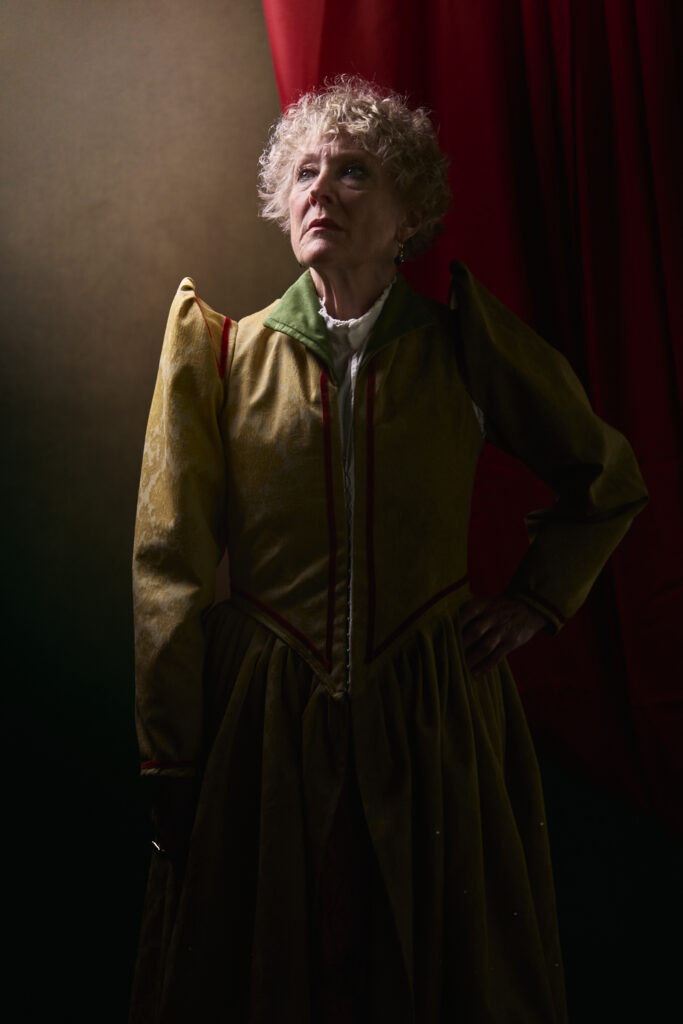
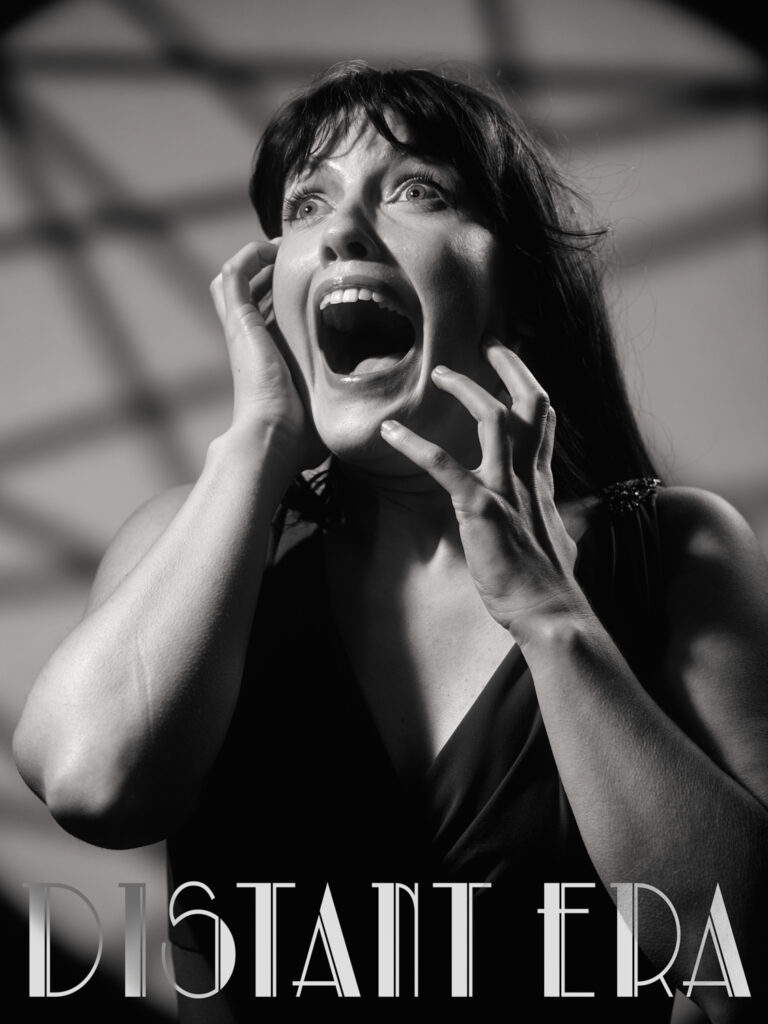
It’s Halloween season, so for the next two weeks on The All Worlds Traveller, we’ll immerse in that theme, starting with this week’s portrait featuring storyteller Megan Wells as Mary Shelley, author of Frankenstein and widely considered the first science-fiction novelist.
Megan Wells
For new readers of The All Worlds Traveller, let me catch you up.
Megan Wells is a professional storyteller. If you listen to Megan tell a story, even in a casual social context, her whole being connects to the story, and she draws from deep wells of emotion, and the details she chooses and the energy with which she describes a scene captivates the listener. It’s not just any old story when Megan tells it; it’s an immersive experience, and the immersion comes from the atmosphere she creates in the telling.
Megan’s historical impersonations take one giant step further into the immersive space. For these, Megan doesn’t just tell stories but relates them as the character who lived them. Actor Hal Holbrook famously made a lifelong career of performing Mark Twain (for some awesome perspective on that, check out the documentary Holbrook/Twain: An American Odyssey). What Megan does in her historical impersonations is kind of like this, but multiplied across a wide variety of women from thousands of years of history.
The Work
Megan first learned of Distant Era’s work when I photographed new portraits for my close friend (and roommate for my first thirteen years in Chicago), storyteller Joshua Safford. In early 2024, Megan and I set out to create a series of Distant Era portraits to show her as the characters she plays. Over the first eight months of 2024, we made portraits for Abigail Adams, Florence Nightingale, Eleanor Roosevelt, Mary Magdalene, Nannerl Mozart, Clara Barton, and Miep Gies.
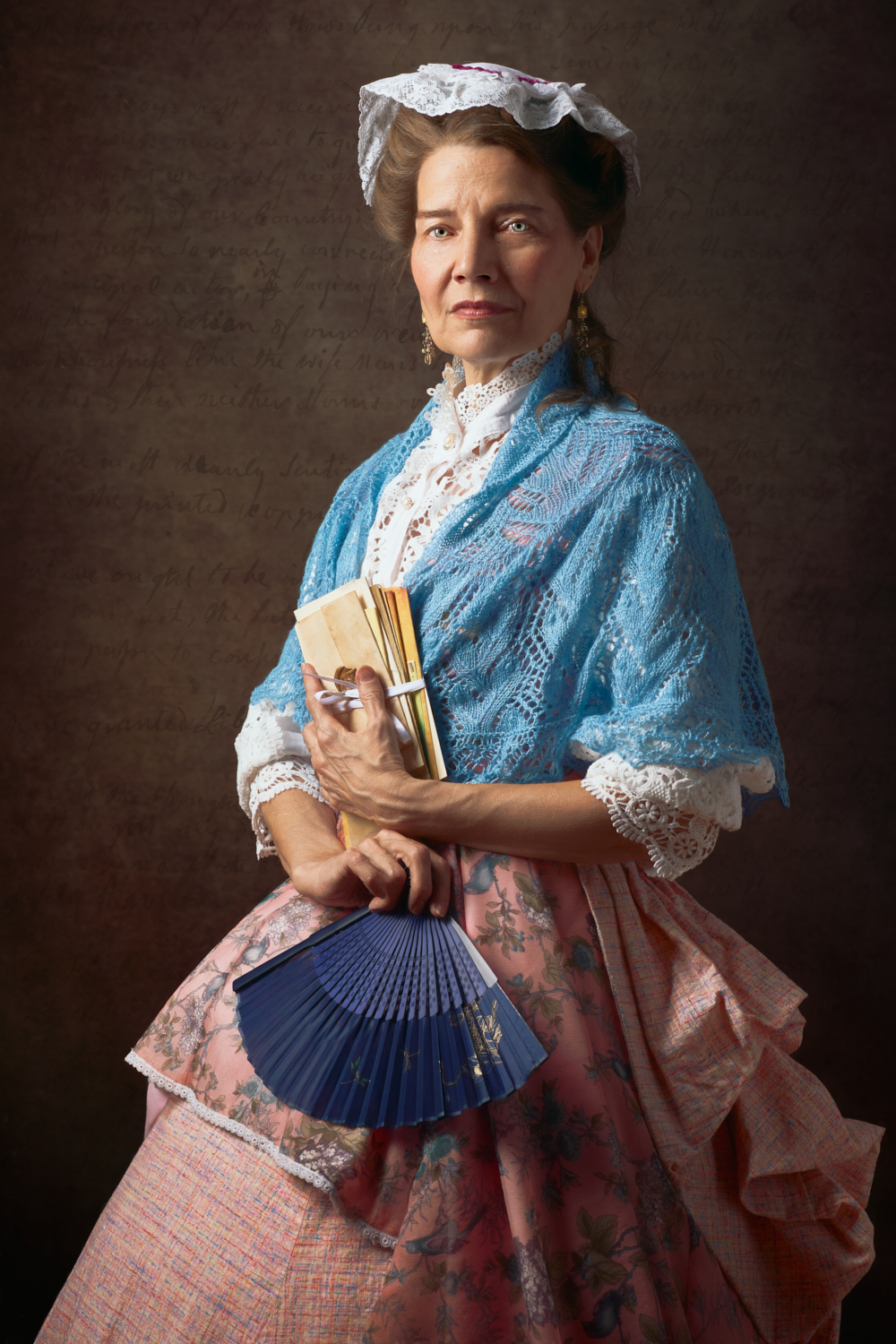


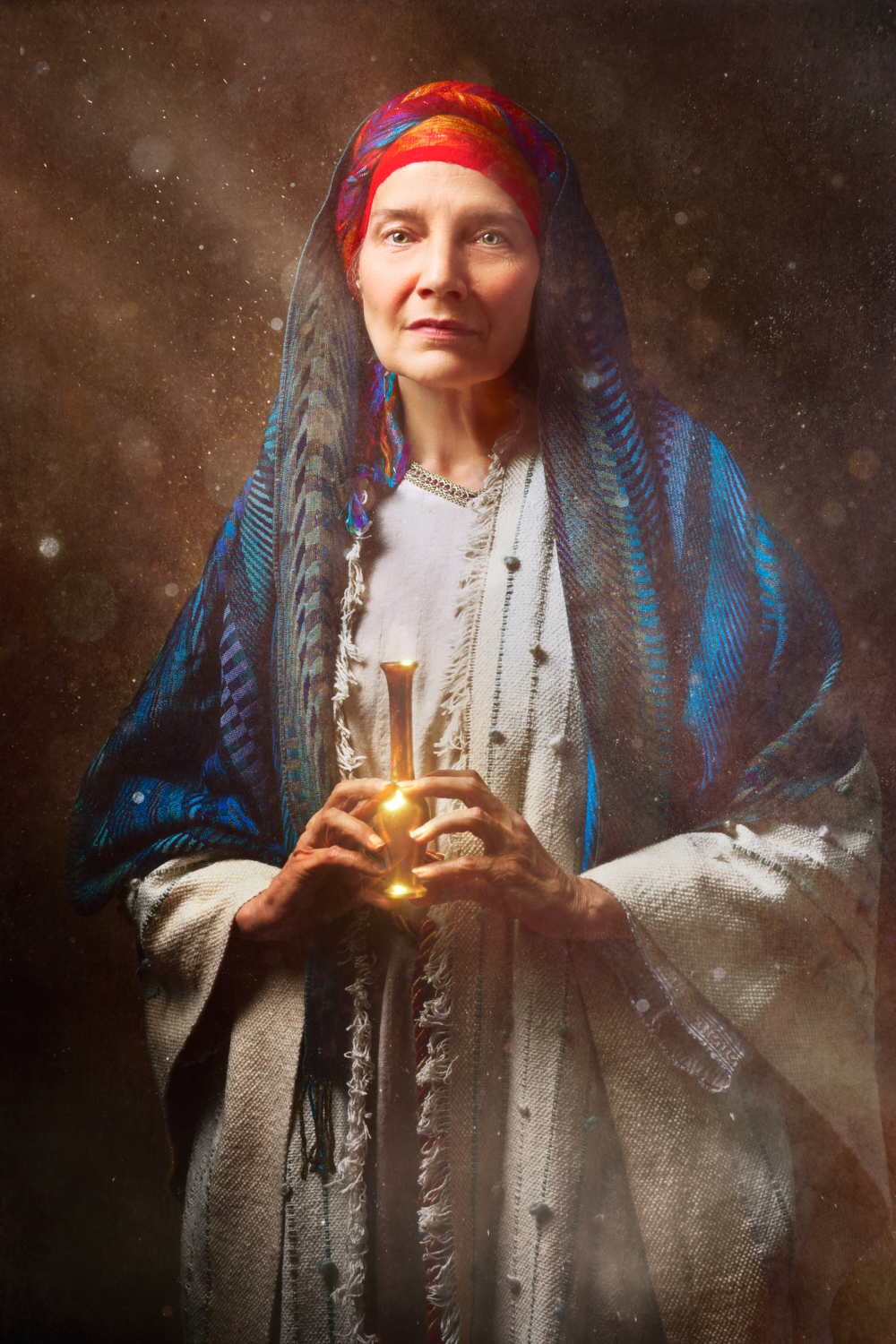
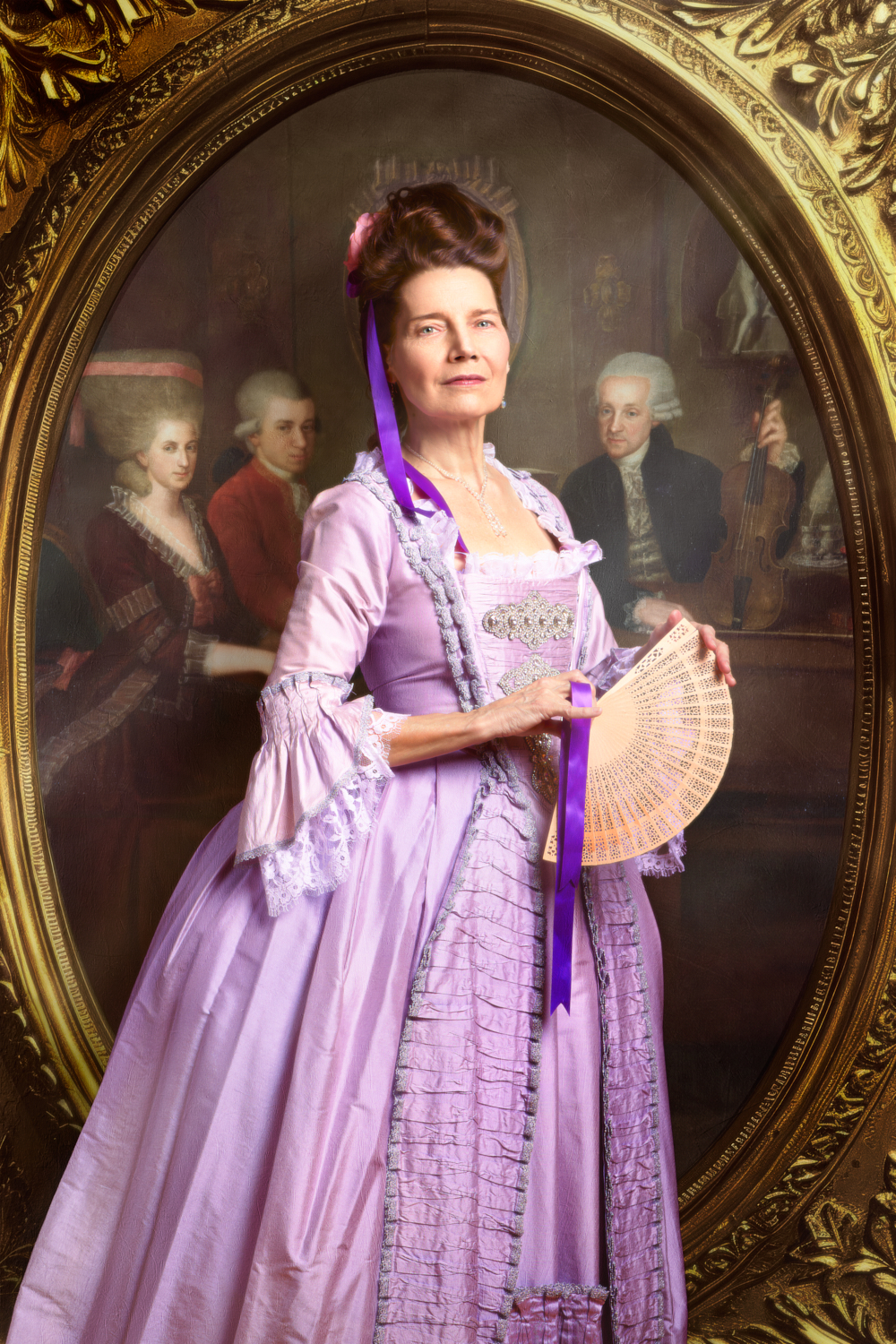
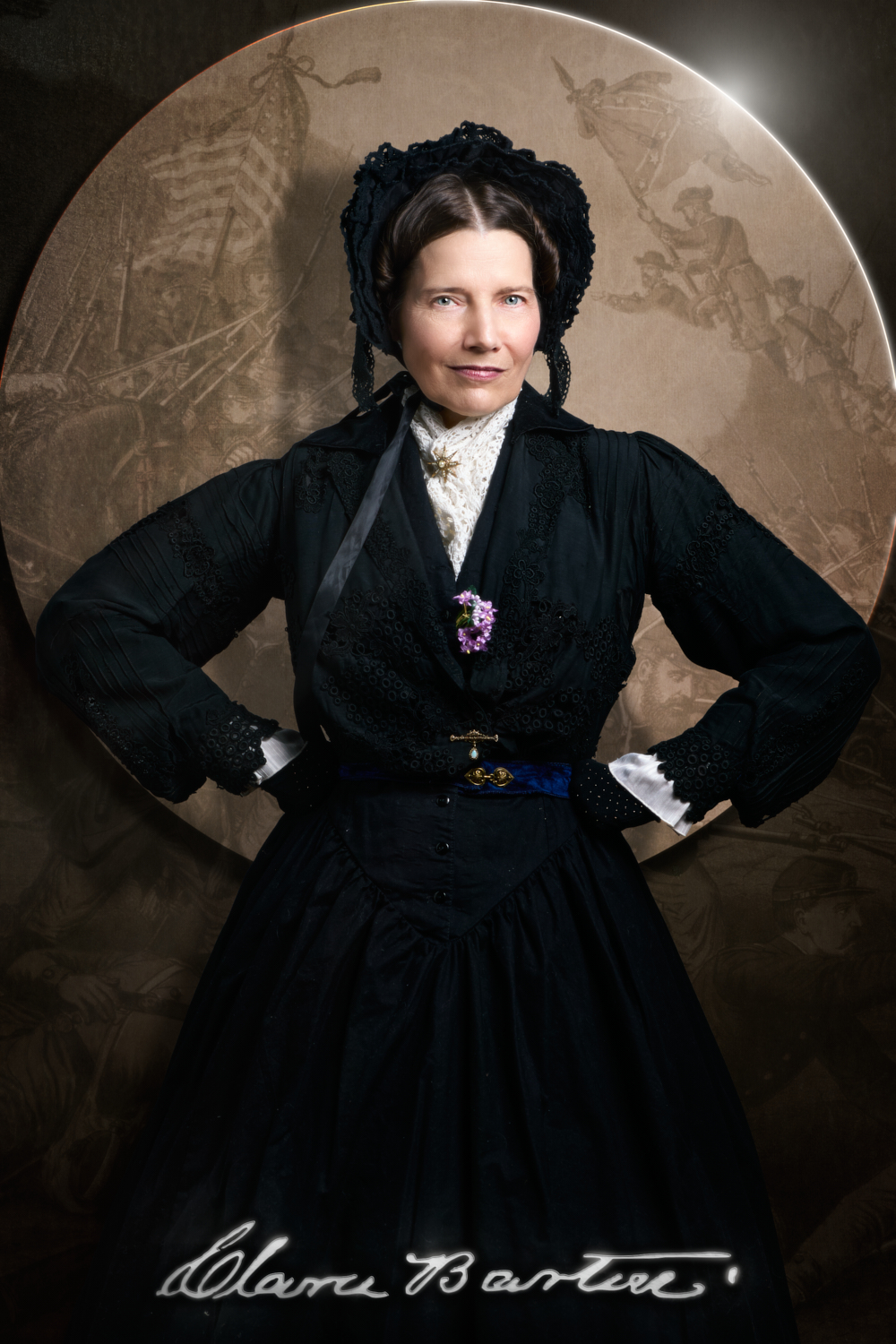
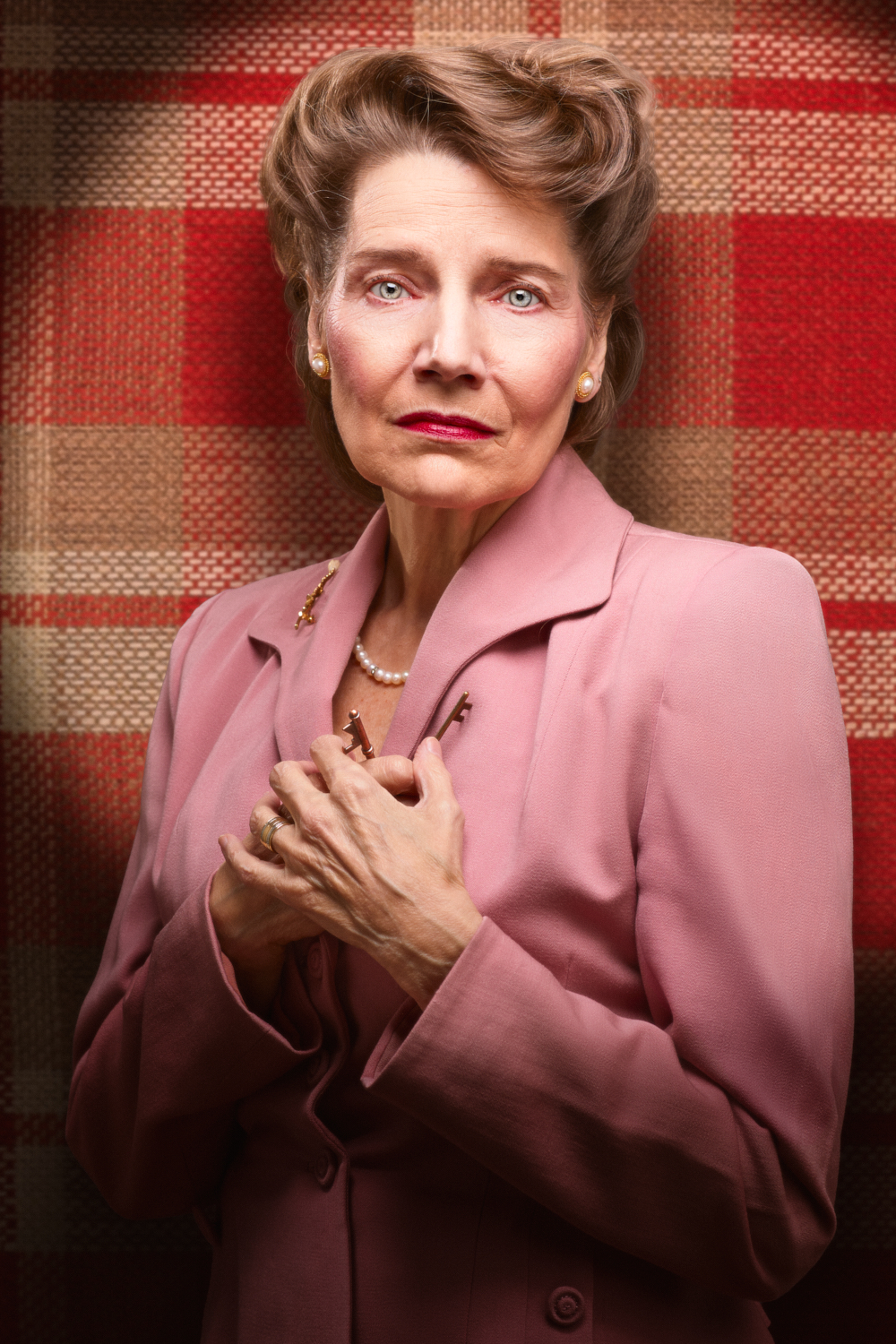
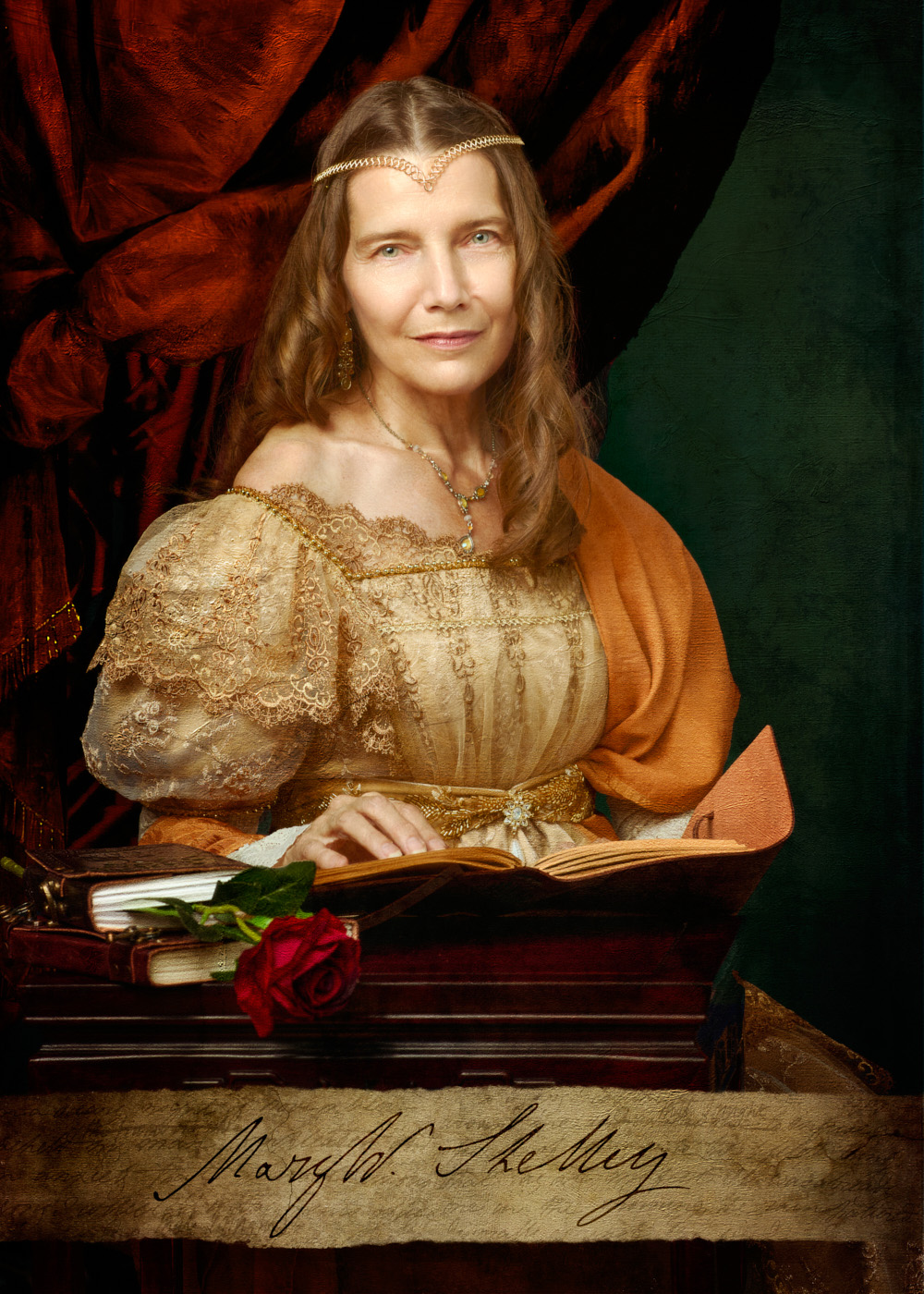
Working with Megan in 2024 was an oasis in a desert. My pandemic-era online work (teaching D&D to twice-exceptional students) dried up; Distant Era work slowed to a trickle; I struggled to make my new series, Gods and Heroes of the Aegean, but this too went slowly, as I had a lot to learn. It seemed a year of strange-but-constant misfortune.
In spite of what seemed like constant adversity, there were Megan’s portraits of historical women. Distant Era’s mission is to create story pictures across space, time, and reality, and Megan’s project aligned one hundred percent with what we do. Through that time of struggle, the series Megan commissioned gave Distant Era a reason for being and something to believe in.
Photography
In August 2024, we photographed our latest session, which included Mary Shelley and Princess Diana (we’ll talk about her another day). It was the very last session I photographed with my first true professional camera, my Canon 5D Mk IV. This was the artistic tool I had used to photograph LARP and theatre, to learn flash portraiture, to experiment, and eventually to create Distant Era and every series and piece of work I had made from September 2016 through August 2024. So for me this session like a farewell.
We positioned our light to match the light in historical portraits of Mary Shelley—high and center—though our source was somewhat softer than the light by which the author had been painted, as evidenced by the shadows beneath her nose and chin in the historical portraits.
Mary Shelley
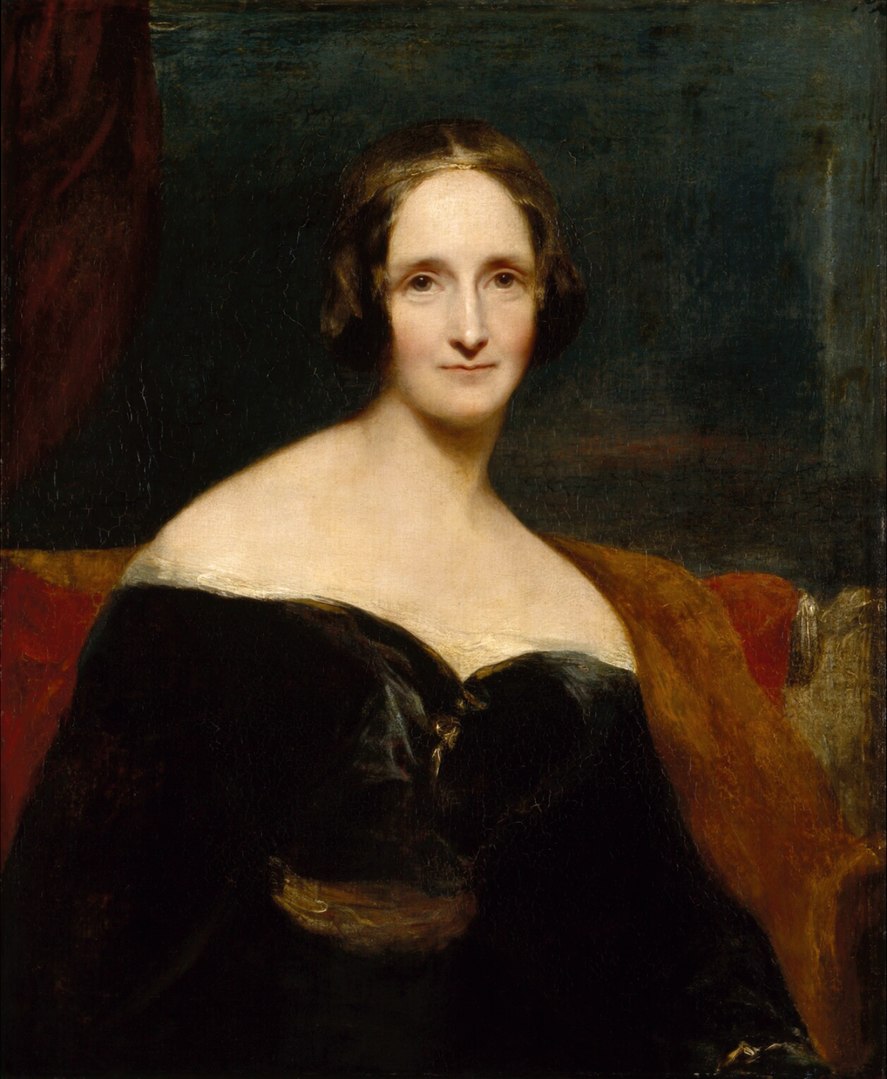
For Mary Shelley, we created our set with the blue canvas background Distant Era MVP Elizabeth and I hand-painted during the pandemic, as well as a red curtain Megan brought, and Mary Shelley’s writing desk. I had always envisioned pushing the blue backward toward a greenish tone, as in Richard Rothwell’s portrait of the author, which also includes a dark red curtain. In a more contemporary portrait I might cast some light on that background; however, I wanted the tones to suggest the period and style, so I followed the Rothwell portrait’s dark greens and reds as closely as I could. I don’t know why we associate Frankenstein with green, but it seemed the right color combination to complement the red. We also referenced a portrait by Samuel John Stump once thought to have been Mary Shelley at her writing desk, with red curtains in the background.

Editing
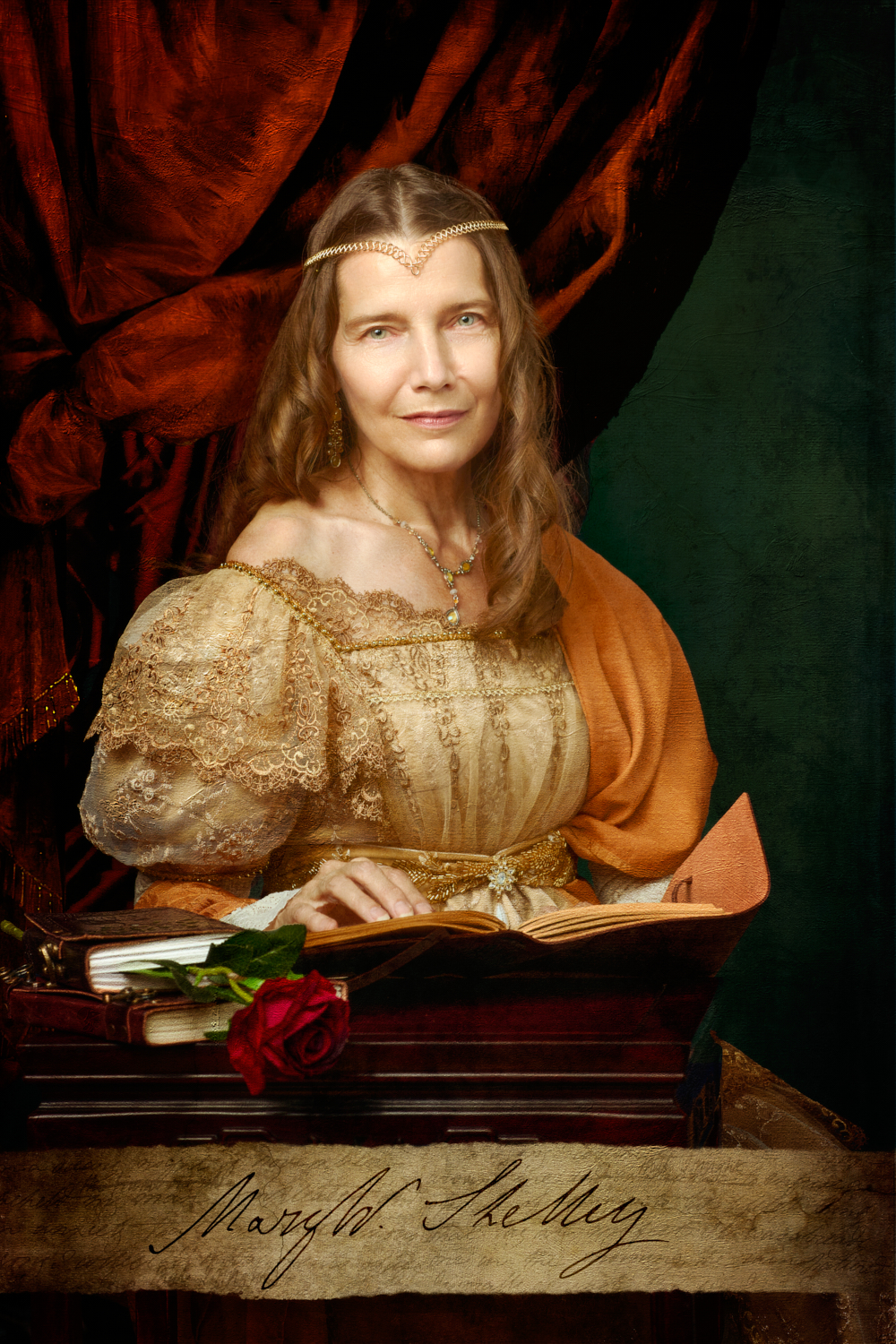
I always knew that editing Mary Shelley would be a longer, more difficult task, making a photograph look more like a painting. Along with the aforementioned color shifts, I borrowed some extra curtains from paintings from the period and added warmth to the photograph. I considered adding monstrous shadows to the wall to help identify Mary Shelley, but I couldn’t think of a good way to do it. Instead, I borrowed from myself.
In July 2025, I created the poster for Promethean Theatre Ensemble’s production of The Book of Will. In that production, I used a strip of parchment to place the title of the play on the poster. For Mary Shelley, I did the same thing with different resources, using Mary Shelley’s signature and handwritten draft of Frankenstein, courtesy of the Bodeleian Library, in the background. I really liked this effect. We’d used handwriting and other historical documents of other historical women to identify them in the series, so this method was in keeping with everything we’d done thus far, and perhaps an improvement on it.
Finishing the Work
In late 2024, Megan got an amazing new job teaching theatre, which delayed decisions on the portraits. As Halloween season approached and I finally caught up on my own work (2025 was thankfully much busier than 2024), I looked through the portraits and selected the one that was the closest to the Mary Shelley historical portraits we have. As I finished the portrait, Megan in the midst of more Mary Shelley performances, and now she has a new Distant Era character portrait to draw attention to her work!




Follow Me