

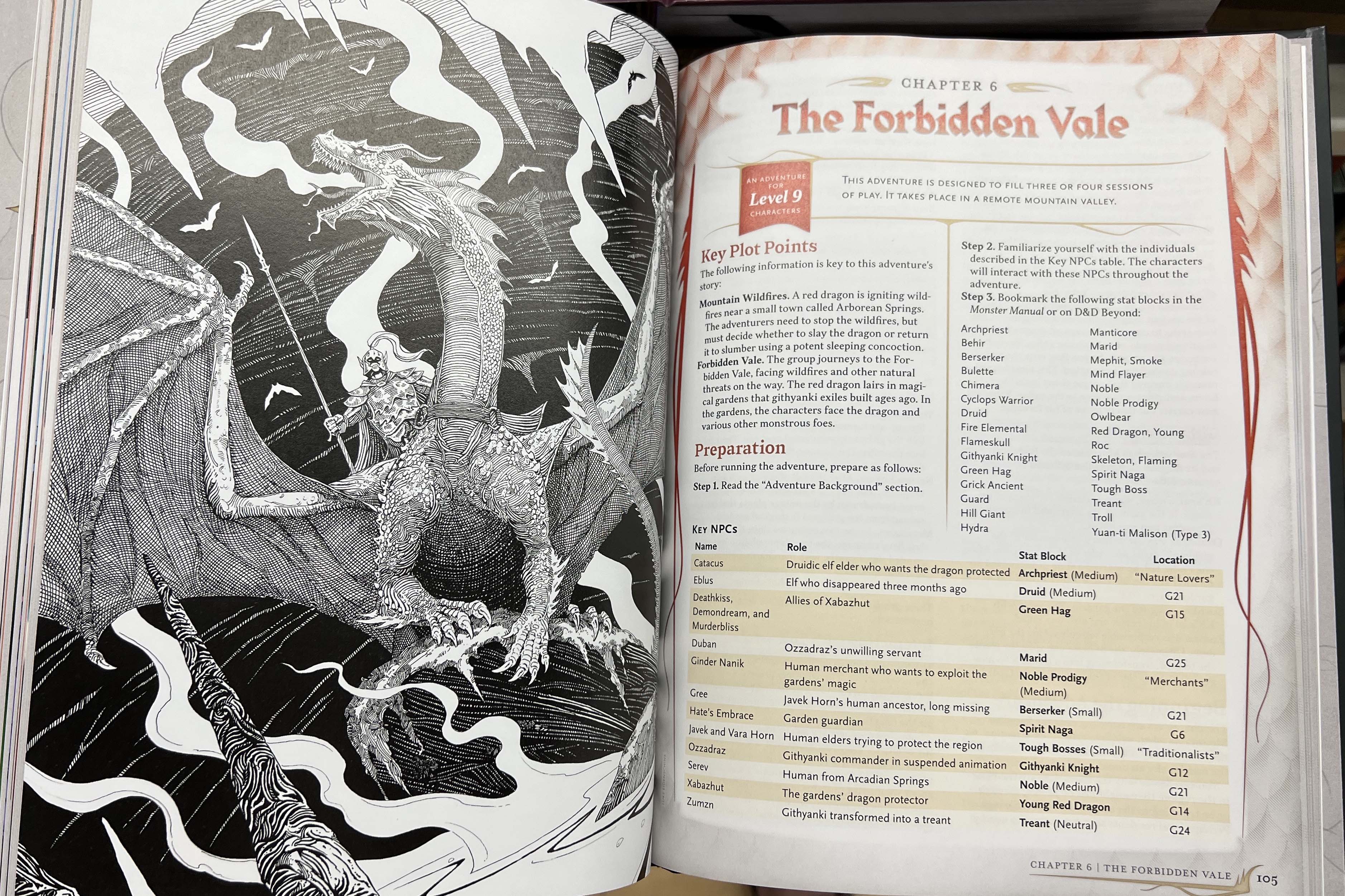
Tomorrow (July 8) sees the official publication of the Dungeons & Dragons adventure anthology Dragon Delves, for which I contributed an adventure called “The Forbidden Vale” in late 2023.
On The All Worlds Traveller blog, I show my work, which is mostly photo work these past years. But we travel all worlds here, so I’ll go over “The Forbidden Vale” in the same way I might go over a photo project, showing the choices made, alongside sketches, notes, and inspirations.
This blog is rife with spoilers for “The Forbidden Vale,” though some elements from the design draft differ from the final, which needed to be scaled for level and complexity.
Origins
Last week, I wrote a goofy self interview discussing how the project came to be. Check that out for the premise and pitch. Suffice it to say, I pitched an adventure about wildfires that threaten to destroy a region; they’re caused by a fire-breathing dragon who awakens every two centuries to wipe out civilization that encroaches on its lair and harvest their wealth. Its lair is an ancient ziggurat garden (think the Hanging Gardens of Babylon) where miraculous otherworldly plants grow, which have the power to extend life and cure all ills.
Game Design
It’s a challenge to summarize the game design for “The Forbidden Vale.” I worked on it every day for nearly three months and went through the familiar artistic process of inspiration/excitement, hard work, depression, eureka moments, and satisfaction. It was a vast amount of work. I didn’t dream up the design in one clear vision, but rather stumbled through one iteration after another until it all made sense. This blog shows the thought process behind the decisions in the design draft.
Start of the Adventure
My favorite classic D&D adventure modules presented adventure maps the characters could explore in any way they wished. Those locations contained a variety of interesting characters, puzzles, and foes, and the best ones were just as much fun when you replayed them. That’s the kind of experience I wanted to offer with “The Forbidden Vale.”
Similar to some of my favorite adventure modules, I made an overland map of the “Four Springs Valley” with various locations to explore.
Three of these locations were settlements where three different factions presided (merchants/druids/tribespeople).
The other (non-settlement) locations in the overland map carry hints about the nature of the gardens and its creators, as well as interesting areas to explore.

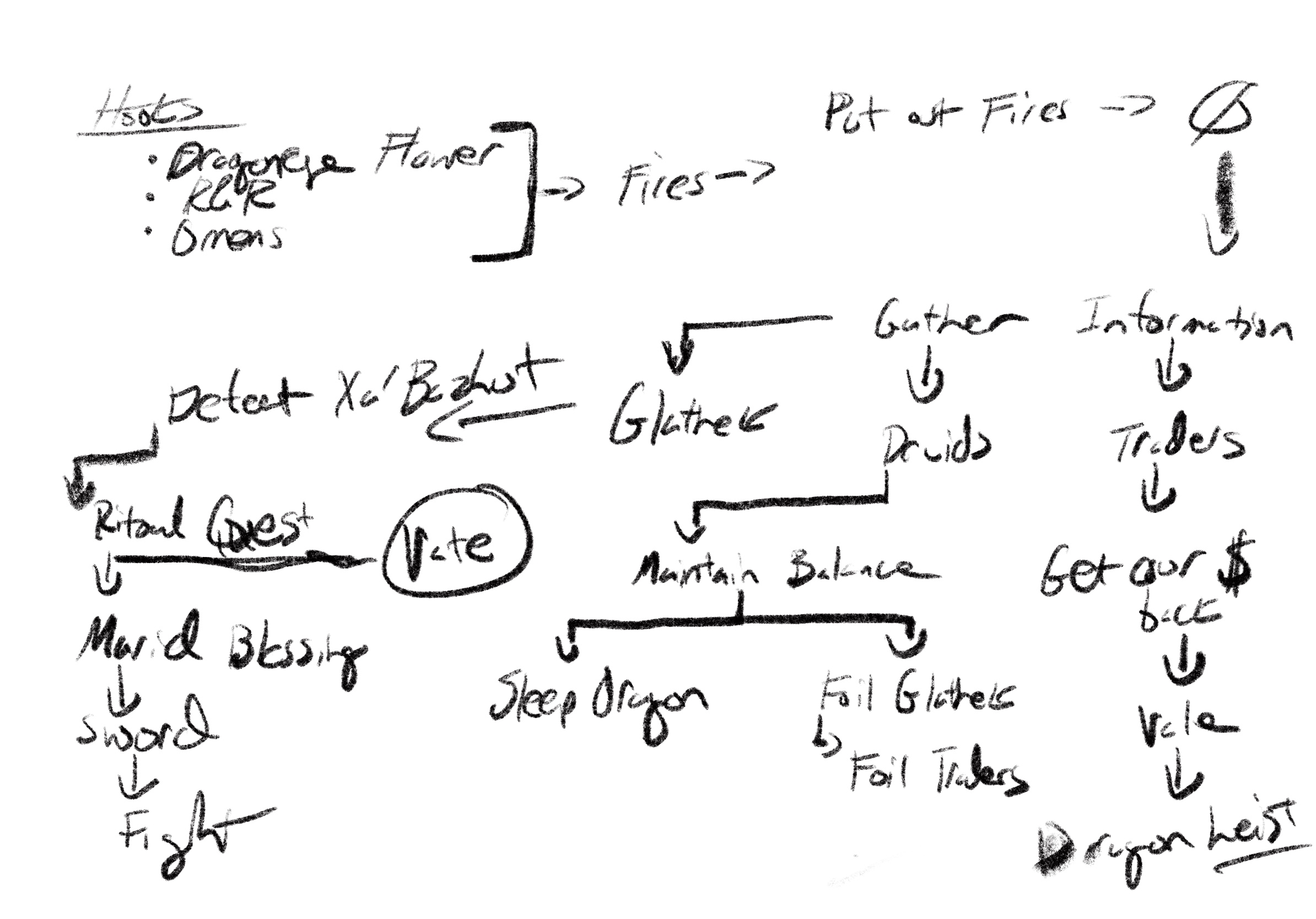
The characters start in or near one of these settlements, where they witness the wildfires break out. Each of the resident factions has a different perspective on what’s happening (only one knows the fires are caused by a dragon), each has a different piece of the story, and each faction sends the characters to a different location within the Forbidden Vale on a different kind of quest, which amount to: steal the treasure; gather ingredients to subdue the threat; or defeat the ancient foe in combat.
Three Factions, Three Quests
- The merchants who run the resort town won’t leave until they recoup their wealth, but they hear rumors of vast treasure in the Forbidden Vale, underneath an ancient garden, and if the characters steal some of it, the merchants will depart.
- The druids’ inner circle knows the cause of the fires is a dragon. They want to preserve the life-sustaining plants of the valley, but they want to preserve the dragon, whose actions protect the gardens, so they propose that the characters use a recipe to put the dragon to sleep again.
- The people native to the region say the fires happen on schedule every few centuries, when the gods cleanse the world via their demon, Xa’Bazhut the Ender. They send the heroes to follow the path of past heroes to challenge the demon in an attempt to preserve the world for another cycle. Their history tells the backstory of the adventure in the symbols of myth.
If the characters travel around the region, they’ll meet the other factions, none of which agree with one another about the problem or who should have access to the vale (as mentioned, only one of them believes the cause to be a dragon). If the characters only go to one region, they’ll just have the one perspective and point of view. I sketched out NPC representatives for each faction and what’s happening when the characters arrive so that the characters are always arriving in the midst of the action.
Here’s the hand-drawn flowchart I made to visualize the characters’ options while working on my draft. The hooks place the characters with a given faction, where the faction suggests a possible course of action.
The Stakes
The characters can explore the region however they choose. I suggest a timer: Every two days, the dragon obliterates a settlement. Which is to say the tribespeople, the merchants, or the druids are no longer accessible because the dragon has destroyed them.
I envisioned this particular fire-breathing dragon like Jaws. Under cover of smoke and fire, he’s destroying the region’s settlements. He’s been around for millennia—long enough to know that attracting attention to himself by flying around breathing fire is stupid when he could just let the fire do the job, inciting panic and causing destruction while he travels within the blaze, appearing suddenly from the fire to finish off stragglers and plunder their wealth. I liked the idea of a mysterious, terrible predator lurking in the wilderness unseen. Like Jaws.
The Forbidden Vale
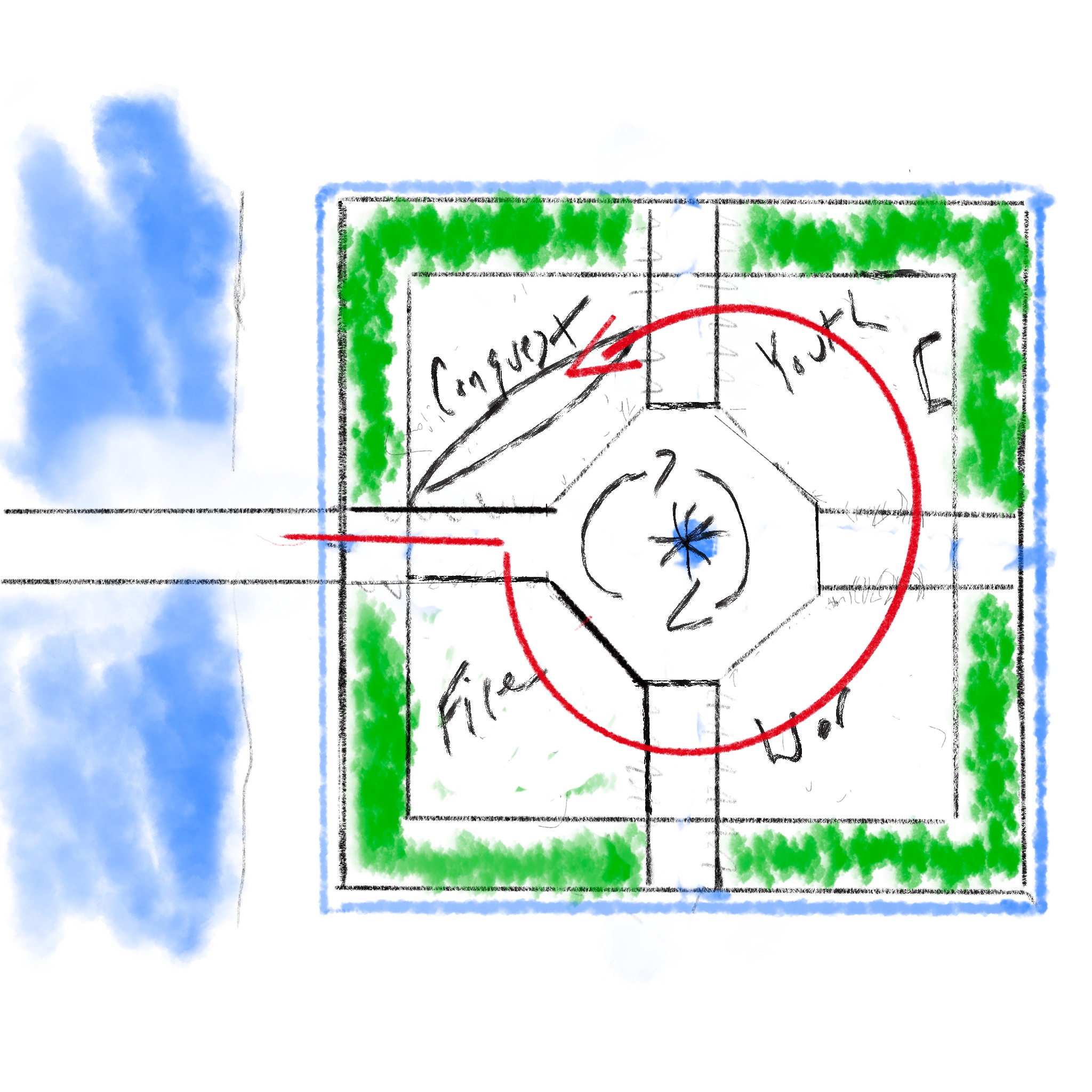
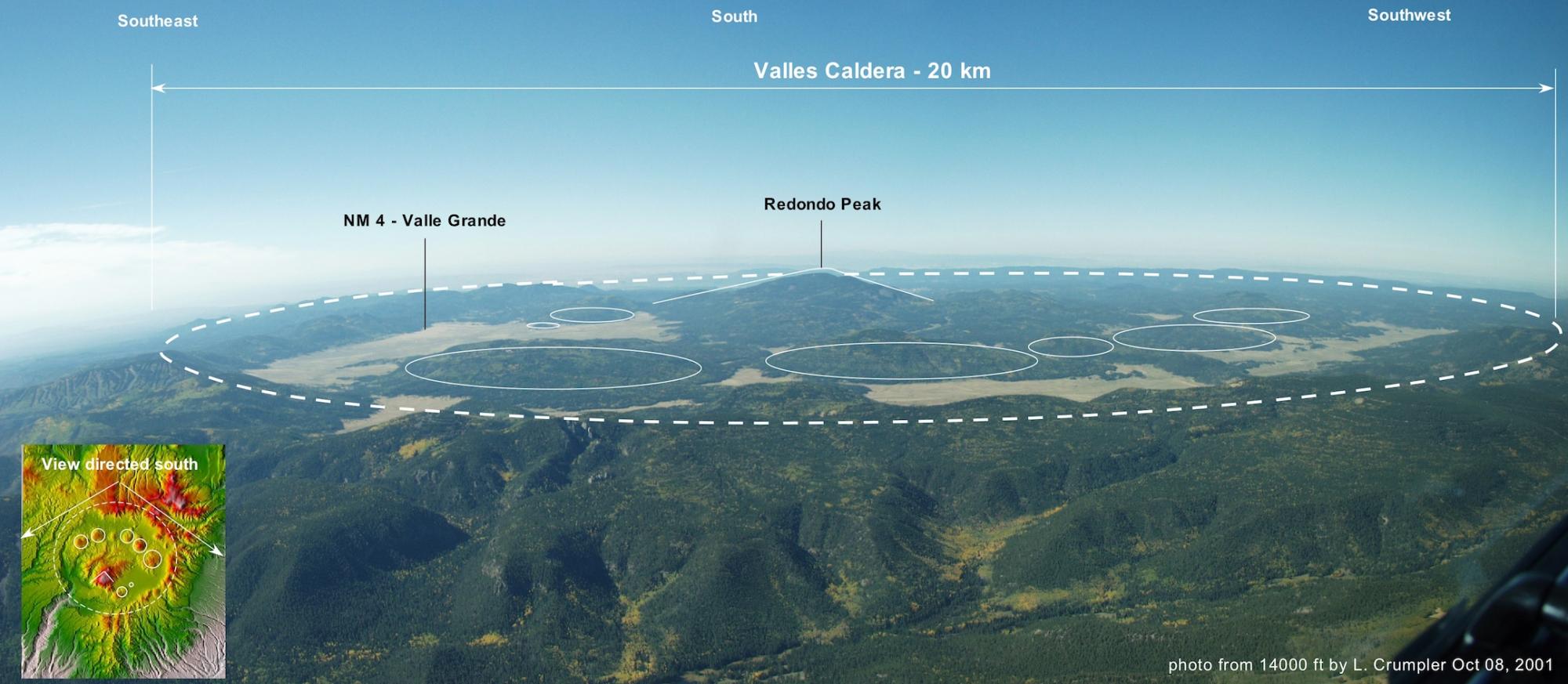
Eventually, the characters make their way to the Forbidden Vale. Here they’ll discover the adventure’s dungeon, a tiered ziggurat on an island surrounded by a boiling lake filled with bones, spanned by a long stone bridge.
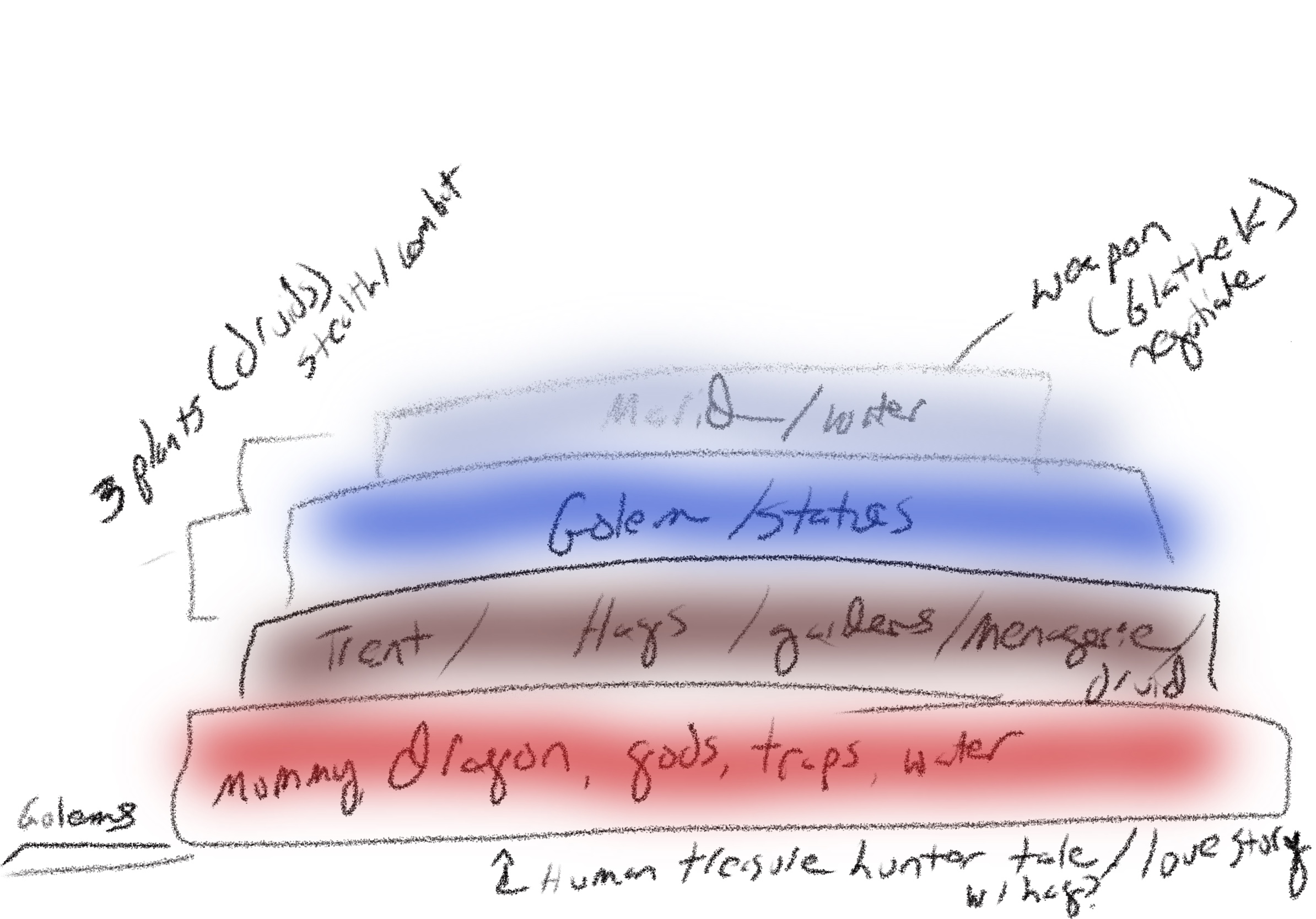
- Each tier of the ziggurat gardens has a different theme.
- Plants with magical powers grow on each tier.
- The characters can start on any tier and explore as they please. Each of the missions the factions gives them sends the characters to a different tier.
The hand-drawn illustration below shows the tiers of the gardens with the different missions the factions give, from the druids’ plant collecting to receiving a blessing on a weapon to fight Xa’Bazhut (a negotiation quest with the marid on the top tier) to the treasure hunt quest assigned by the merchants.
The Story of the Gardens
I assume that only certain players are going to care about an adventure’s backstory, so I try to be sparse with exposition and instead write locations that hint at what happened before. The players can pursue these hints or ignore them. The details are for those players who enjoy story and piecing it together. The characters are the stars, after all.
In this case, the story was that four alien exiles (githyanki) conquered a piece of the world from the backs of dragons, subjugated the populace, and forged an empire. They built the gardens to cultivate extraordinary life-giving plants that would extend their lifespans until they accomplished their mission and received a pardon from their godlike ruler. Ironically, they too became godlike rulers in the eyes of those they ruled. Nevertheless, over the ages, the githyanki each sought and found immortality in a different way (mummy lord, lonely medusa, treant, vengeful ghost), at the cost of their essential nature. Their dragons either died, were petrified, or departed until only the commander’s dragon Xa’Bazhut remained.
Of Ancient Times and Dragons
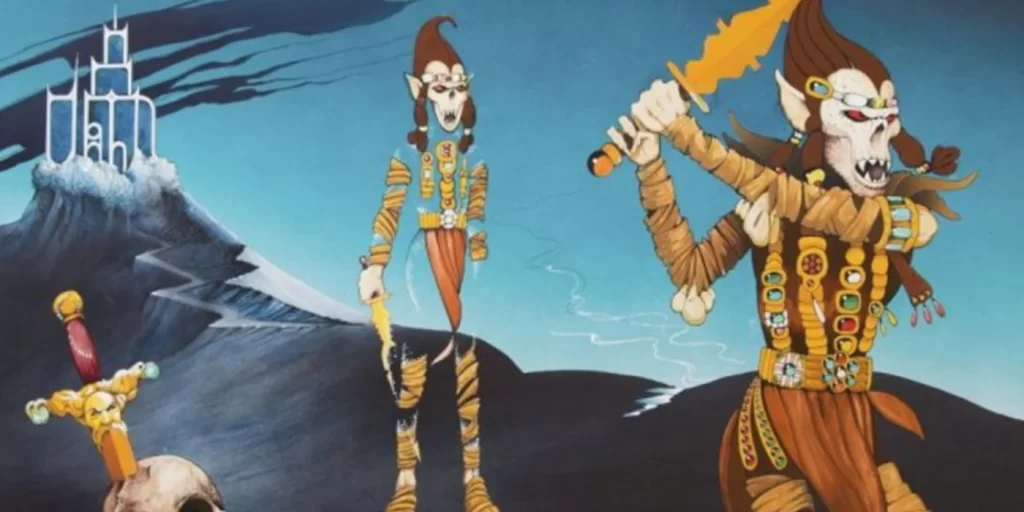
Though Xa’Bazhut is ancient in years, the longevity-granting properties of the garden slowed his aging, keeping him in the adult category—still a very difficult encounter for level 12 characters who hadn’t received the marid’s charm (tribespeople quest) or sleep poison (druid quest).
To create a history for the gardens, I played Ben Robbins’s game Microscope by myself, blocking out the ages from when the gardens had been built to the time they fell into decline. I translated these ages and events into the frescoes that appear on the interior walls of the gardens. I scattered the pieces of the githyanki story all over the adventure, even in the (githyanki) naming conventions; for example, their term for farmer/laborer is “g’lathk,” which became “Glathek,” the name given to the traditionalist/tribespeople whose forebears in ancient times would have served these pseudo-immortal githyanki and worshiped them as gods.
Doing the work gives context and consistency to the adventure, regardless whether anyone cares about the details; the details are there to discover.
The Dungeon
Creating the gardens/dungeon was a challenge, and the early stages were pretty tough. My goal was to populate the entire ziggurat structure with garden-themed rooms. This got to be both weird and tedious early on.
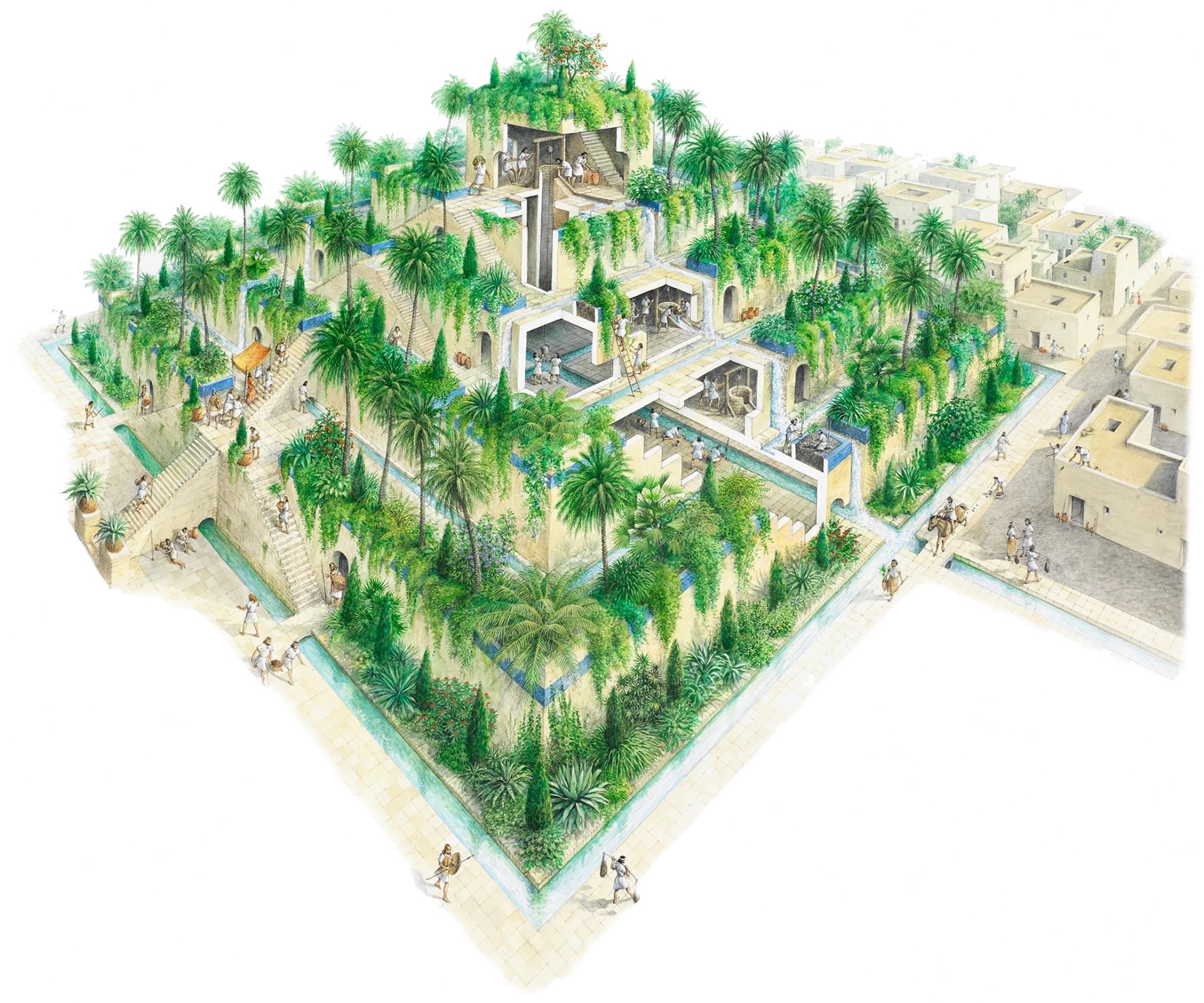
Ancient ziggurats weren’t hollow, and the Hanging Gardens of Babylon may not have actually existed, at least the way they’re imagined, so I had to draw inspiration from other places. And while the upper tiers of the ziggurat seemed like they’d make fine gardens, what was I to do with the giant square footage on the lower levels? I considered putting the dragon there, but that would mean walking right into its lair through the front entrance. In fact, I was perplexed as to how I’d put the dragon in the gardens in a practical way and make it at least a little bit of a challenge for the players to find his lair—but without falsely concealing it at the “end” of the dungeon. At one point, I had a rotating series of central chambers that turned on an axis… it gave me a headache.
Fixing the Map
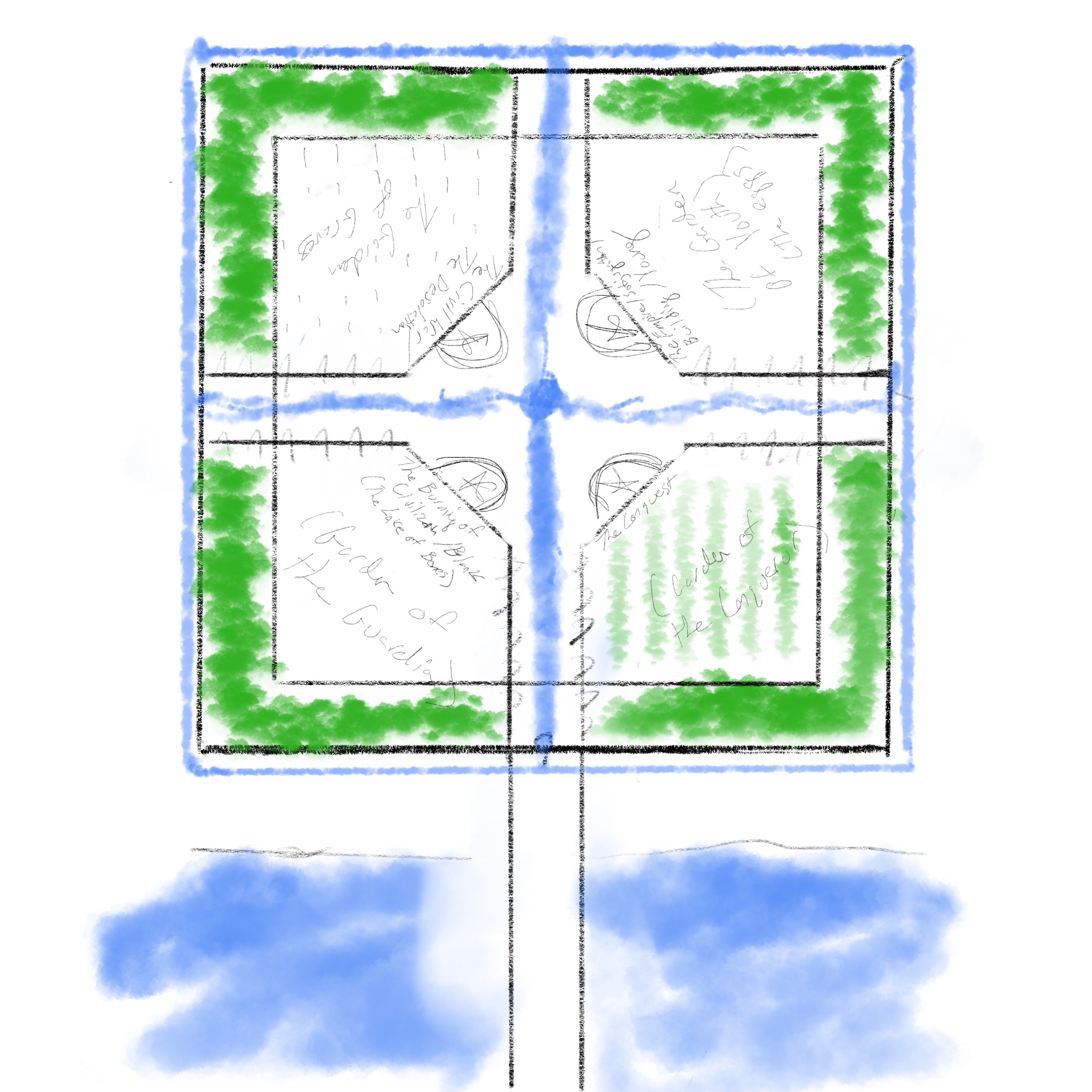
The gardens became easier to design once the githyanki story emerged and I began looking at art featuring different interpretations of ancient gardens. I even got a few ideas visiting the Chicago Botanic Garden during an event. Collapsing passages on the first tier to create a circuitous route to the dragon’s lair—and placing encounters near entry points on higher tiers—ensured that any characters entering the gardens experienced a few encounters (not necessarily fights) prior to reaching the central irrigation shaft that provided access to every tier.
Irrigating the Gardens
As for watering the gardens, I studied irrigation and articles about what the theoretical gardens might have been watered by. At one point, an Archimedes screw carried water from the lake to the top of the ziggurat. Eventually, I decided the ziggurat would have a central shaft—I may have been inspired by the illustration above—and a chain with attached buckets would cycle down to the spring in the dragon’s lair and then up to the top level of the ziggurat, where the buckets would empty into channels that carried the water along to the gardens’ plants (it would do this slowly because the water in the spring was dangerously hot).
This apparatus would first have been manually operated by creatures subjugated by the gardens’ cruel creators until the gardens’ chief architect-turned-medusa created constructs to maintain the gardens (the dungeon’s only wandering monsters, based on tier 3) and golems to guard them. Those same creators later bound a marid into service to keep the gardens magically irrigated. But these details would come later.
In the story, the garden’s plants come from various planes of existence. Each possesses different magical properties reflecting their native plane, which can benefit characters who take time to examine them.
Inhabitants of the Gardens
Every creature in the gardens either wants something in particular or feels a certain way about another creature in the gardens. Each encounter therefore offers opportunities for creative solutions for the party that wants to think creatively (and a DM willing to yes-and the players’ ideas). Still, fighting everything is also an option for a group that prefers to do so. I designed the encounters to accommodate multiple styles of play. My personal preference is for creative solutions. There’s also plenty of weird stuff to poke with a stick and see what happens—there’s a menagerie that uses a mirror of life trapping to contain its beasts when they’re not in their garden cells, for instance, run by a coven of green hags that worship the dragon and act as its spies throughout the region.
When I playtested the draft, I sent the green hags to the settlements in magical disguises to have them stir up conflict within the factions and cause trouble for the characters. This is all just to say that each encounter in the gardens has a potential to inspire an interesting scene, in accordance with the whims of the group.
Scrawling the Dungeon
I’ve been a Campaign Cartographer user since the late ’90s. I love it but have been unable to use it on my Mac lately, and I no longer own a PC. This had me scrambling for a comfortable way to sketch out adventure maps I could modify.
I stumbled on Dungeon Scrawl, a free old-school map maker. As of this writing, I note Dungeon Scrawl has been nominated for an Ennie Award in 2025.
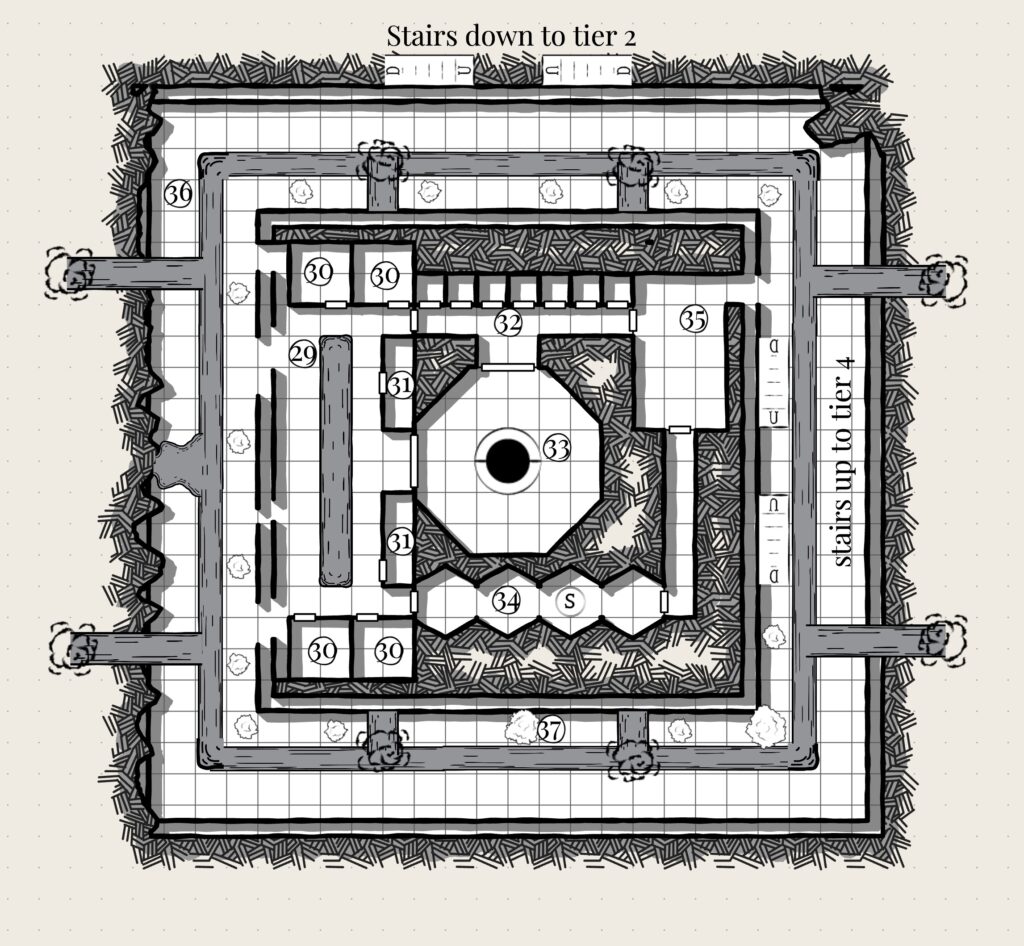
Dungeon Scrawl proved easy to learn, and I could save and reload my designs. It also gave me the ability to add multiple levels on top of one another. Lining up the tiers and irrigation was a challenge, but Dungeon Scrawl did the trick, and I was able to share both the final maps and the Dungeon Scrawl files with my final turnover, allowing for alterations as desired. The beautiful cartography in “The Forbidden Vale” published in Dragon Delves was made by Dyson Logos.
The Final Choice
Ultimately, the adventure leads to a choice and a cost. I think this is important in every story, so I wanted to call attention to the choice the characters make at the end of this adventure so the DM can help to structure that choice and set it up. Rather than write if/then statements, I wrote out a series of questions for the DM to consider, along these lines:
Without the dragon, what happens to the magical gardens? If the dragon is slain and its nature revealed, what happens to the culture whose mythology and religion were based around it? If the dragon remains, what will that mean for people living in the region in two centuries, when the cycle repeats? Will an invasion of the gardens cause a githyanki incursion from the Astral Plane? The characters’ actions will have consequences. What will the characters do to resolve the problem satisfactorily? Furthermore, how much of the region is inhabitable after the dragon’s destruction?
Another Matter of Conscience
As a side note, none of the factions offers a reward in this adventure. Everyone in this region teeters on the verge of losing every piece of property they own, and everyone they care about. Depending on how long the characters take to resolve the threat, Xa’Bazhut’s fires may have completely obliterated whole settlements. Meanwhile, the gardens overflow with wealth and rare magic.
While it’s traditional to offer a quest reward, and I was tempted to, refusing to help people whose entire existence is going up in smoke—unless those people cough up some cash, and especially after you’ve plundered the wealth and magic of ages that the merchant faction tells the characters about—is an interesting, character-defining choice. I thought about firefighters in the West offering only to help with the wildfires if people can pay adequately. It seemed a little gauche. Even so, the tribespeople/traditionalists and the druids acknowledge the cycle, if in different ways; the former presume that postponing the world’s end mutually aligns with everyone’s interests, while the latter presume the characters believe in the balance they struggle to maintain. Thus, the faction(s) the characters align with at the beginning likely says something about the party’s beliefs and stance.
Thanks
There are a million more things to say about the design for “The Forbidden Vale,” but this is a broad overview. Many thanks to James Wyatt, who commissioned the adventure, as well as everyone at Wizards of the Coast, who developed it, to Dyson Logos for the awesome maps, and to Luke Eidenschink for the killer black-and-white art that accompanied the published adventure.













Follow Me