
Distant Era MVP Elizabeth and I met Idle Muse in 2009, when Elizabeth was cast in their original production of What the Weird Sisters Saw. We all became fast friends. In 2010, I began doing preproduction/press photography for Babes With Blades Theatre Company, which led to the opportunity to do my first production photography for Idle Muse in 2015.
In 2026, Idle Muse Theatre Company celebrated its twentieth anniversary. What began as a hobby grew with experience and (eventually) dedication over many years.
In this post, I’ll reflect on the last eleven years of production photography with Idle Muse and share anecdotes about some of the things I learned along the way from hobbyist to professional.
The Talking Cure (2015)
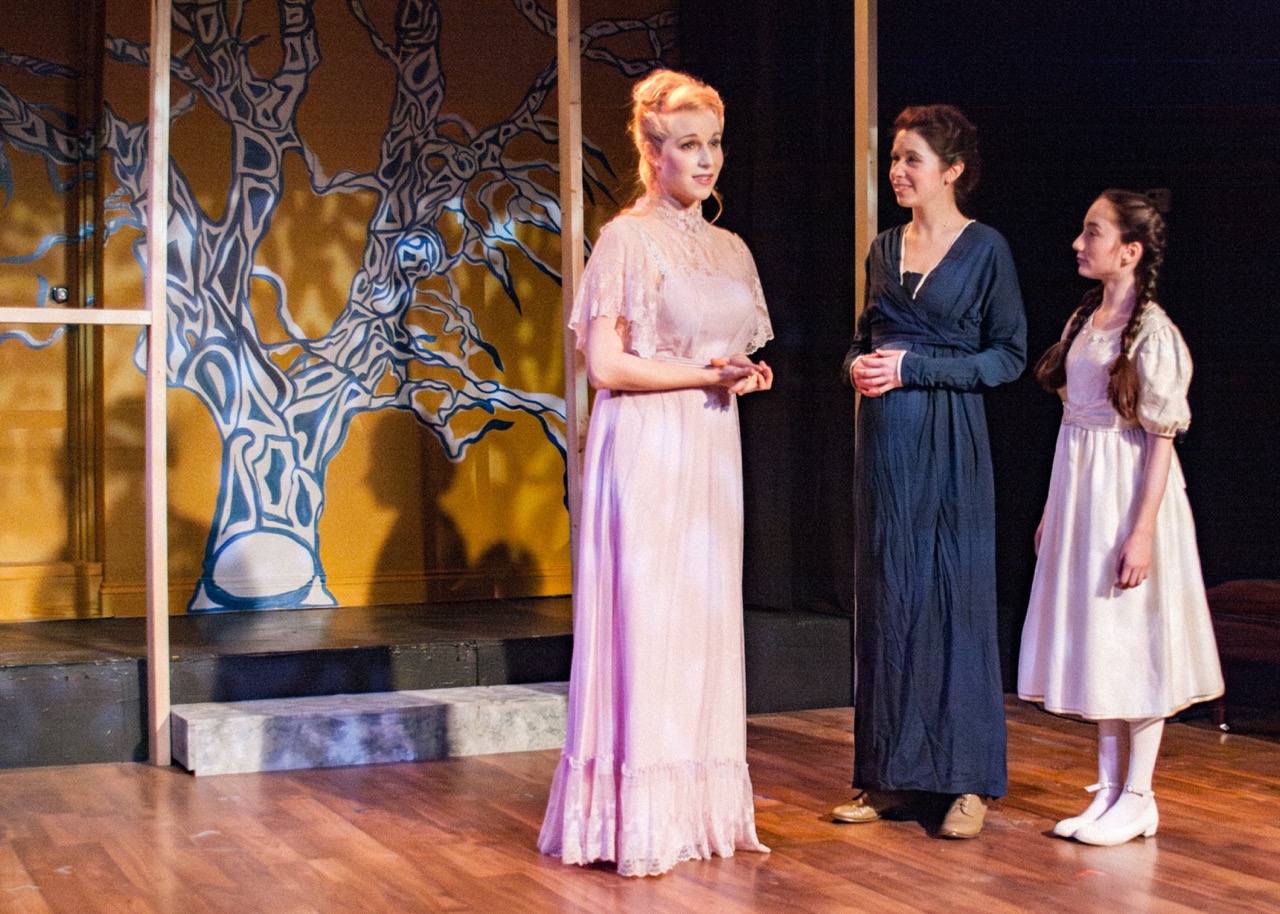
My first production photographs. Qualifications: had a digital camera, had shot poster images for Babes With Blades, was married to a company member.
Lessons Learned: Shooting in low light with the semi-automatic Aperture Priority mode and my kit lens wide open yielded a shutter speed of 1/60, often less, and that won’t cut it for theatre lighting or photography.
Anecdotes: This was my first time working with Caty Gordon and with Mary-Kate Arnold, who would later become one of my strongest creative collaborators.
Last year, in 2025, I did a shoot at Northlight Theatre with Greg Inda. One of the actors looked familiar, but I couldn’t place her; turns out it was young Maya Hlava, all grown up and very successful in her career.
The Hound of the Baskervilles (2016)
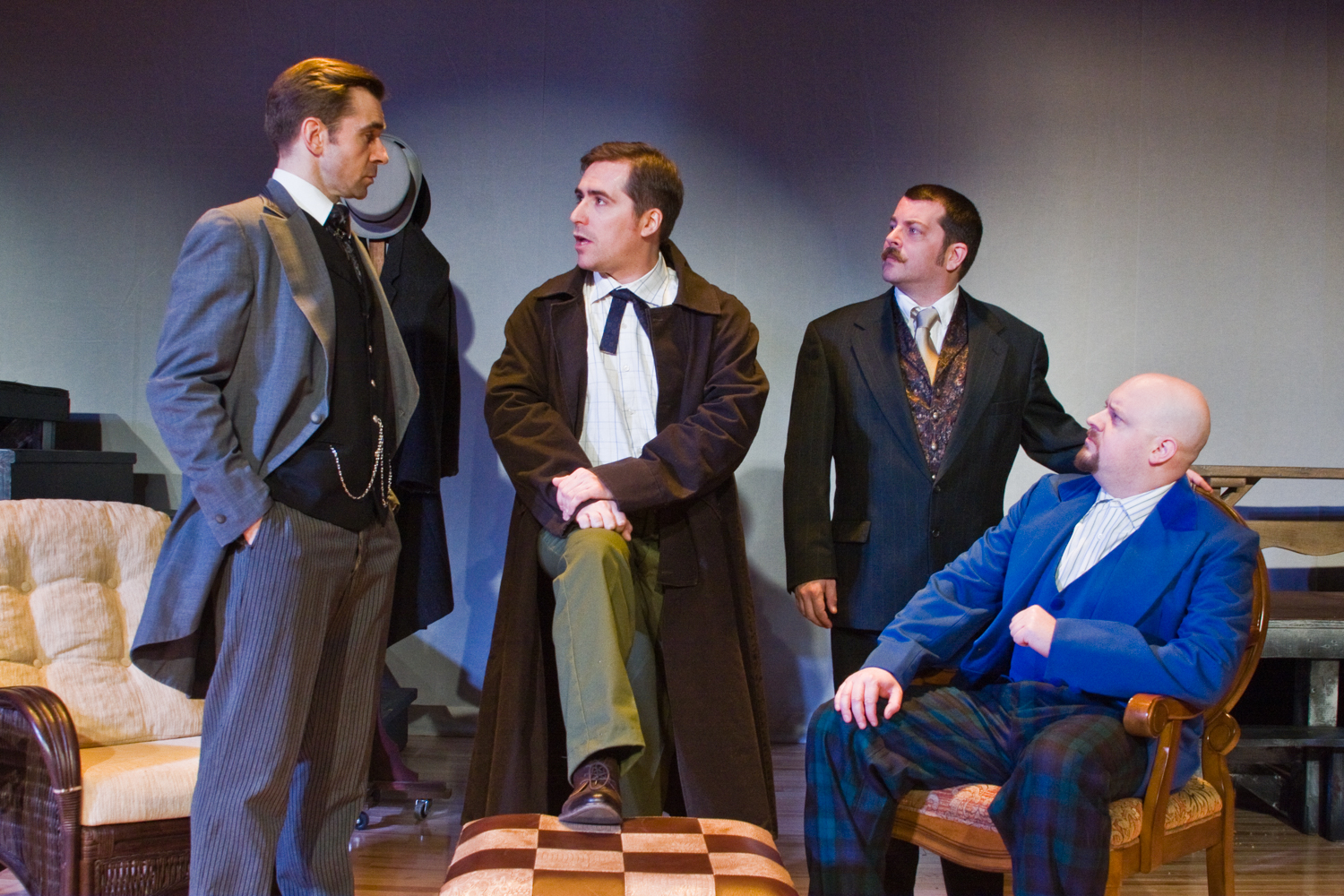
My second production photos ever, I had little concept what a production photo ought to be, though images were somewhat less soft than they were in Talking Cure.
Lessons Learned: A closeup shot can crop out distractions.
Anecdotes: My most significant memory from Hound was attempting to photograph Erin Gallagher and Edd Fairman’s energetic dog Teller within a dim Chicago apartment under warm tungsten light for the poster image. Not much was in focus.
During the production photos for Hound, I met Gary Henderson, who would become another of my closest collaborators on Distant Era projects.
The Woman Who Amuses Herself (2016)
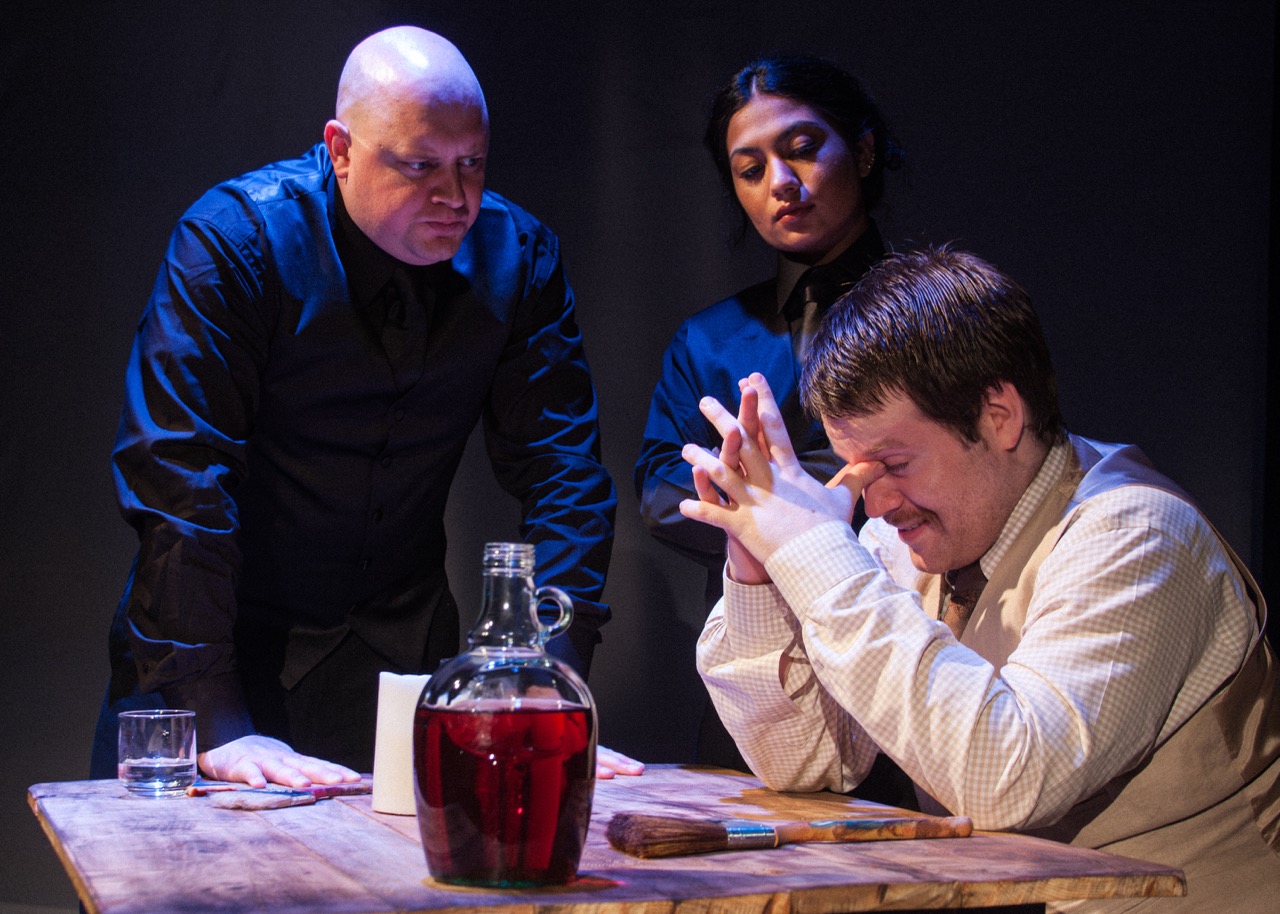
Up until this point, I think few of us had much of an idea what a production photo should be, so our process involved a lot of guesswork, setting up scenes from the play and capturing a small number for press.
Lessons Learned: Between the preproduction photos in May 2015 and the production/press photos in June 2016, I switched from semi-automatic Aperture Priority mode to full Manual mode in which I’m choosing my shutter speed, gaining control over those soft focus images.
Anecdotes: When I heard this play was a series of monologues, I did not want to see it. But I did see it, and I enjoyed the show’s structure and was significantly moved by the performances. It was one of my favorite Idle Muse shows. Lighting designer Laura J. Wiley’s projection design in the production further revealed her genius.
The Scullery Maid (2017)
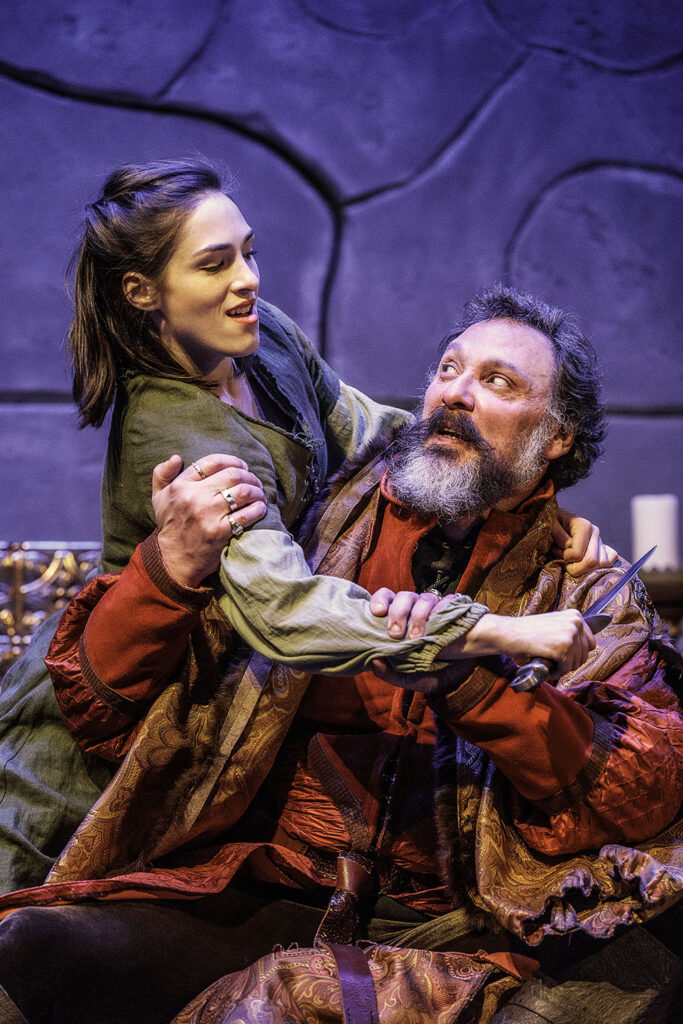
Between The Woman Who Amuses Herself and The Scullery Maid, I purchased my first professional camera and resolved to take photography more seriously while confronting the imposter syndrome such a decision manifests. Armed with a much more light-sensitive camera and two professional (non-kit) lenses, things got easier.
Lessons Learned: I learned to capture action with a fast shutter speed. There is a production image from a fight scene in this show that catches a flying dagger frozen in midair. This was the first time I managed that in a theater space.
Anecdotes: Editing production images from The Scullery Maid showed me how fair skin tones like Lydia’s and swarthier tones like David’s reflected and absorbed colored light differently.
The Veil (2017)
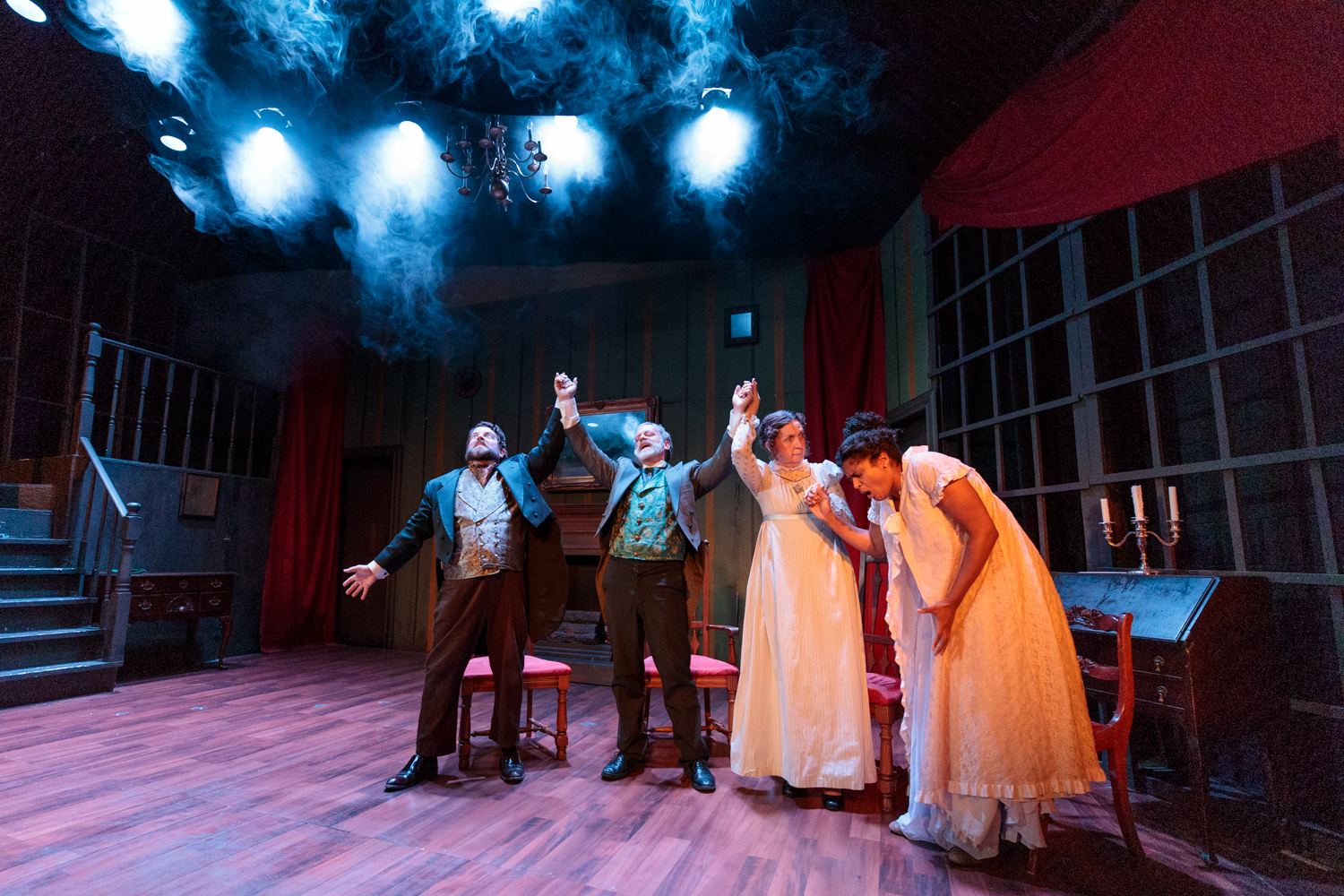
Lessons Learned: For more interesting production photos, I started getting closer to the action in The Veil, sometimes onstage among the actors, trying various angles for more interesting compositions.
I also learned to start articulating what makes a more interesting production photo and how to talk to theatre companies to make sure that’s what we’re shooting.
Anecdotes: I’ve often viewed The Veil as an act break for Idle Muse. Up through The Veil, the company had operated one way for its first decade. From an outside point of view, the company that emerged on the other side of The Veil seemed like a refocused group with a new drive and energy.
Girl Found (2018)
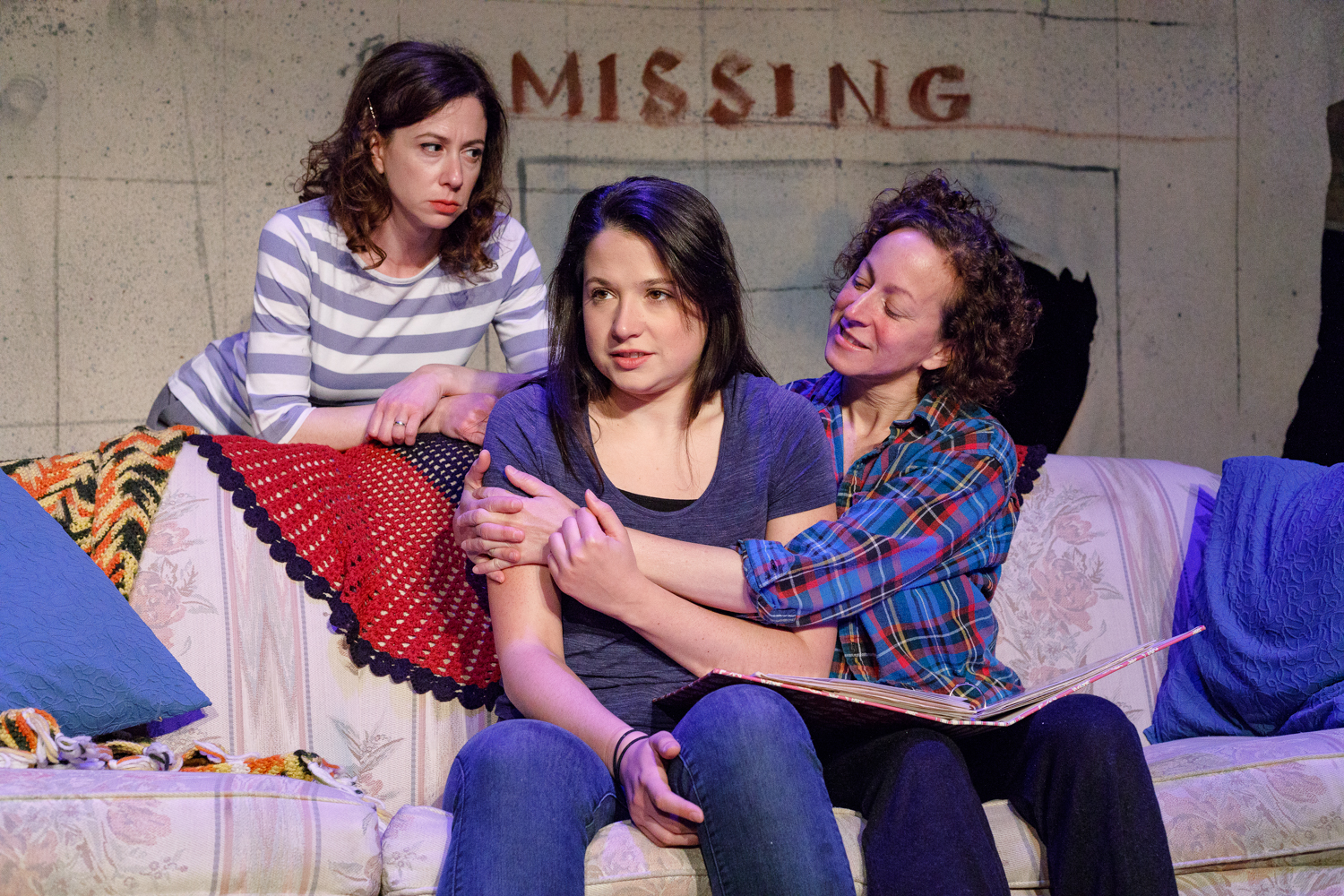
Between The Veil and Girl Found, I had learned a lot from photographing and editing two big live action role-playing events in 2017 and early 2018 that had me chasing characters, capturing action, framing scenes, and compensating for dim light. All of this informed the way I could shoot onstage.
Lessons Learned: In the production photos from Girl Found, I began to compose with more consistency with shots relevant to the play. In the example above, the characters are central to the frame with the word “Missing” just above the protagonist’s head. The actors’ expressions all show something of their character. By looking at the picture, one might guess who the missing girl is in Girl Found.
Anecdotes: Upon entering the space, I was pleasantly surprised to learn Katherine Swan was in the play. Katherine and I met in the Artistic Home training program in 2001. We completed that program together and hung out among a tight group of friends in what now seems like a different age, a quarter century ago. She’s a playwright now with a growing body of prestigious work. It was great to reconnect with her on Girl Found, as it always is in our meetings throughout the years.
Best for Winter (2019)
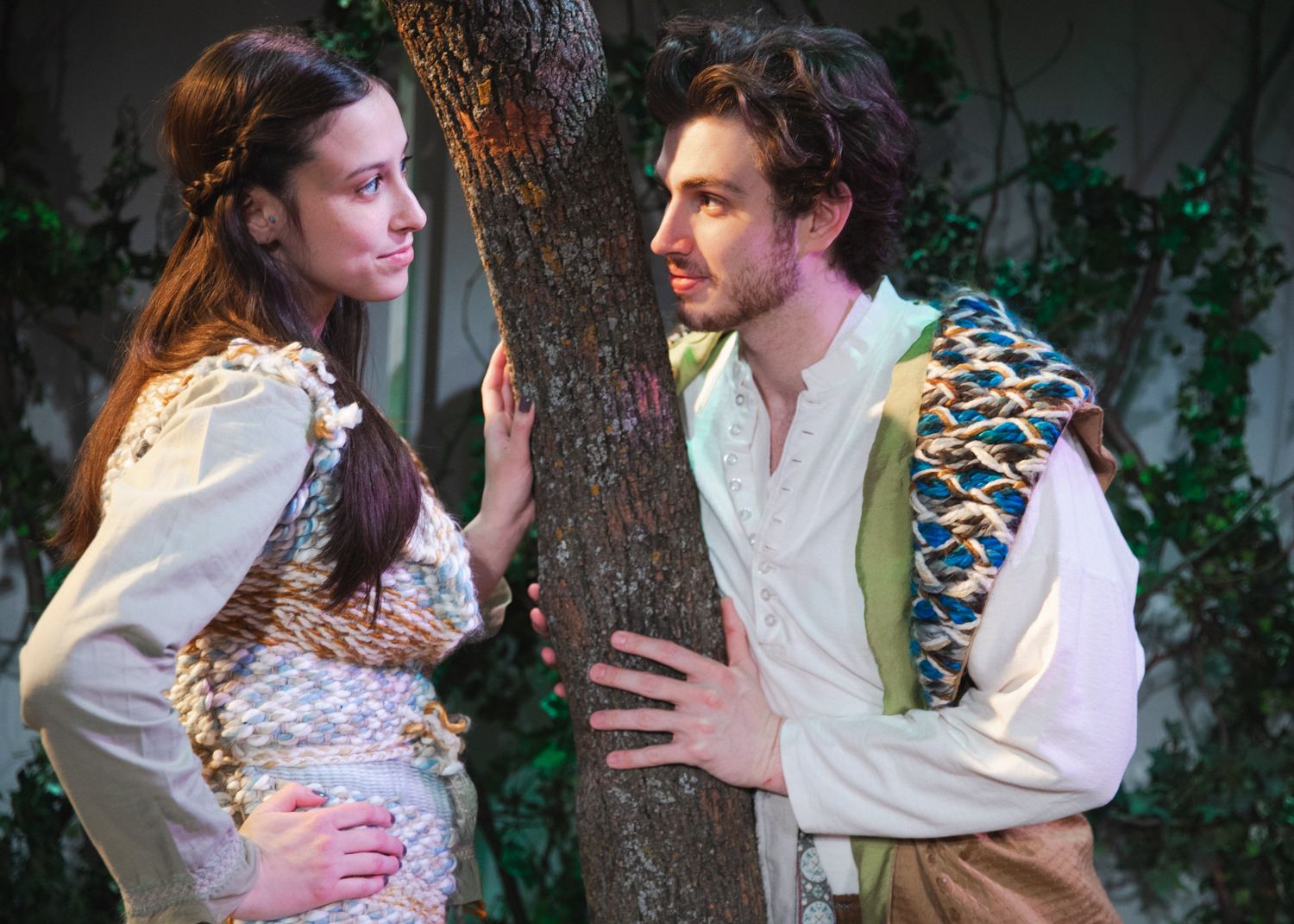
With Best for Winter, Idle Muse moved from the large proscenium space at the Edge theater in Chicago to their home in Edge’s smaller black box space within the same building. I had also enrolled in Chicago Photography Academy in the summer of 2018 and was learning advanced professional photography skills that benefited everything that came after.
Lessons Learned: Compose for the most interesting elements. In Best for Winter, I was concerned that folds in the background fabric and supports on the set might distract from the scene, so I learned to mostly avoid them by composing for foreground elements and angling the camera lens away from distractions. In the example above, I’ve chosen to frame the action around the very realistic tree that separates the actors.
Anecdotes: Best for Winter was the first Shakespeare adaptation (of The Winter’s Tale) that I saw from Idle Muse. I liked it a lot, and it introduced me to Kristen Alesia, who I’d continue to work with, both in Idle Muse and Birch House Immersive shows.
Equivocation (2019)
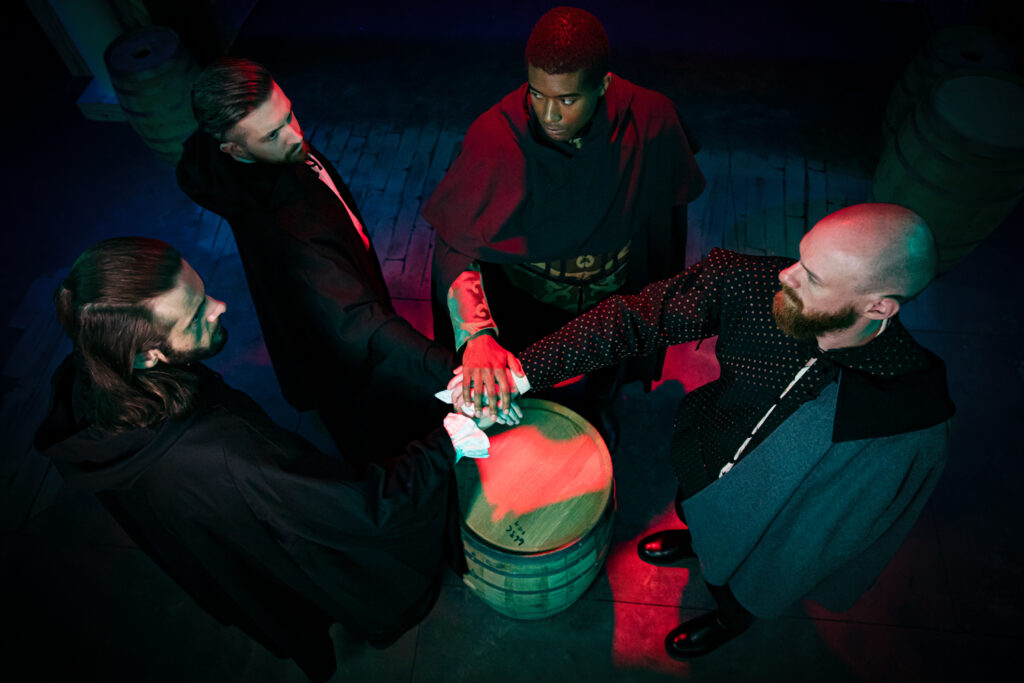
Lessons Learned: By Equivocation, I had started to get more creative with angles, represented by this shot from above. Building on the lessons from previous shows, I kept what worked while trying new things.
Anecdotes: As Equivocation opened in September 2019, Distant Era was being founded. Equivocation opened a few weeks after photographing Distant Era’s first portrait series, Portraits from a Distant Era.
In the Next Room (2020)
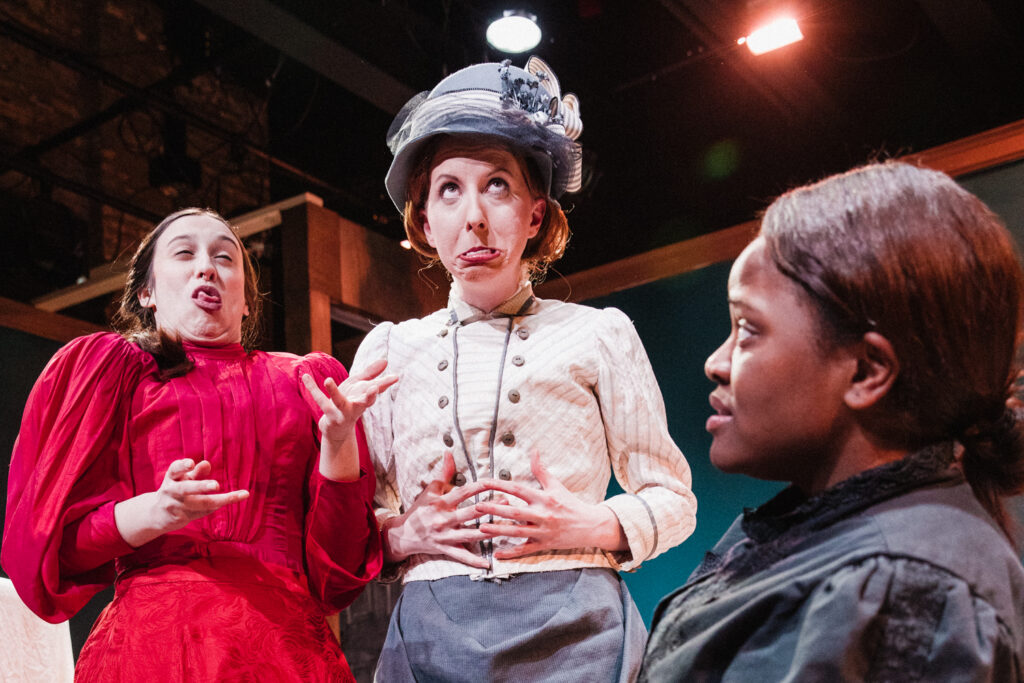
Lessons Learned: Grand revelations had slowed down by In the Next Room, and now most of what I learned was from practice and experiment. Since The Scullery Maid, I had learned how to capture action. Now, it was a matter of making better and more interesting compositions.
Anecdotes: In the Next Room was one of my favorite Idle Muse shows, but the pandemic shut it down after two weeks and comparatively few people got to see it. Of the actors in the photo above, I’ve worked with Kristen Alesia and Christina Jones many times. This year, I reconnected with Michelle Bester on The Hula-Hoopin’ Queen.
Upon This Shore (2022)
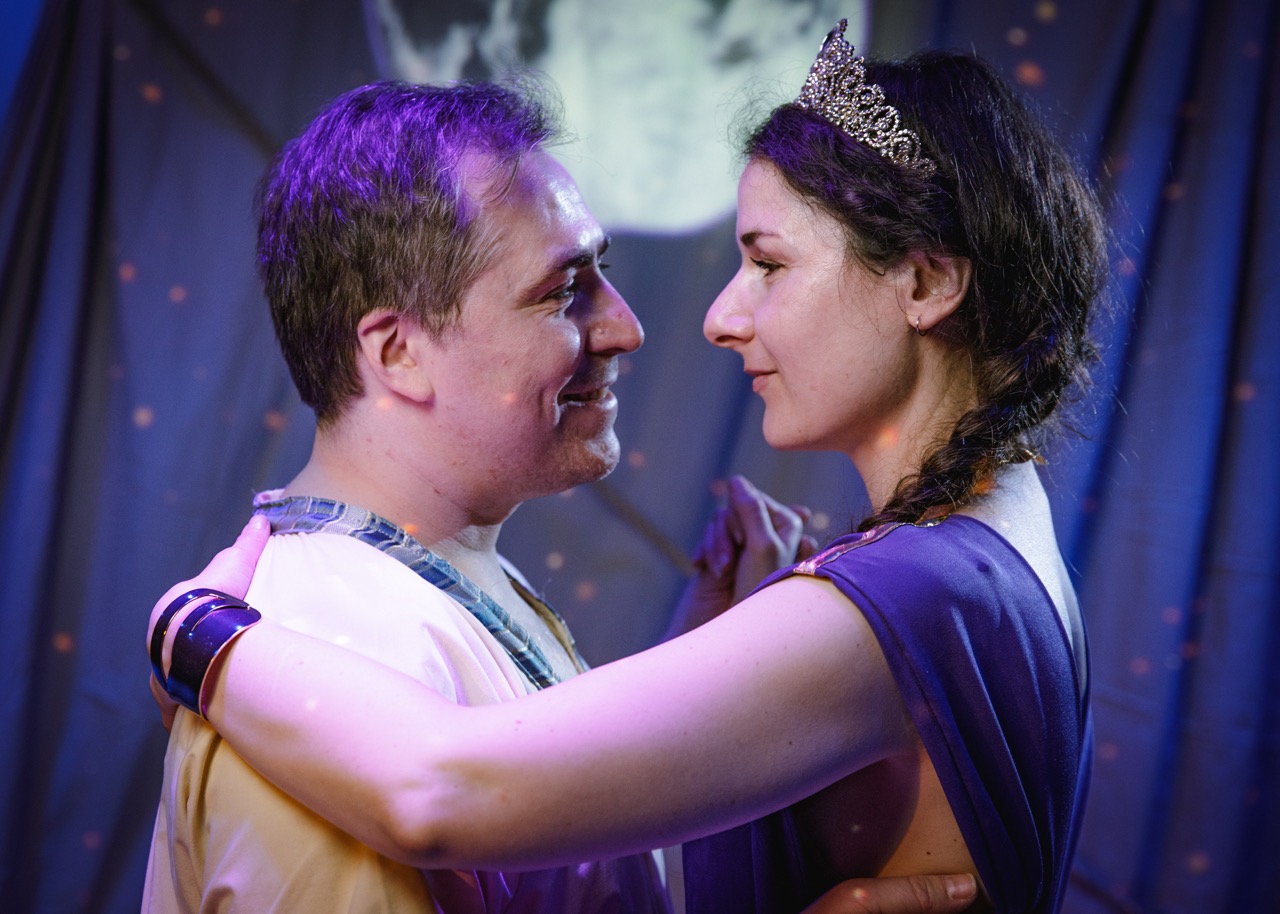
Lessons Learned: How to do production photography (again). Upon This Shore (Idle Muse’s adaptation of Shakespeare’s Pericles) opened two years after a global pandemic closed their previous production. I’d spent a good amount of time practicing my flash and strobe skills during the pandemic, but it took some time to get back into the rhythm.
Anecdotes: When we photographed Upon This Shore, I had just started running Distant Era as my full-time job. The All Worlds Traveller blog launched in January 2021, so there is an entry for Upon This Shore, appropriately titled “Returning to Storefront Theatre.”
The Strange Case of Dr. Jekyll and Mr. Hyde (2022)
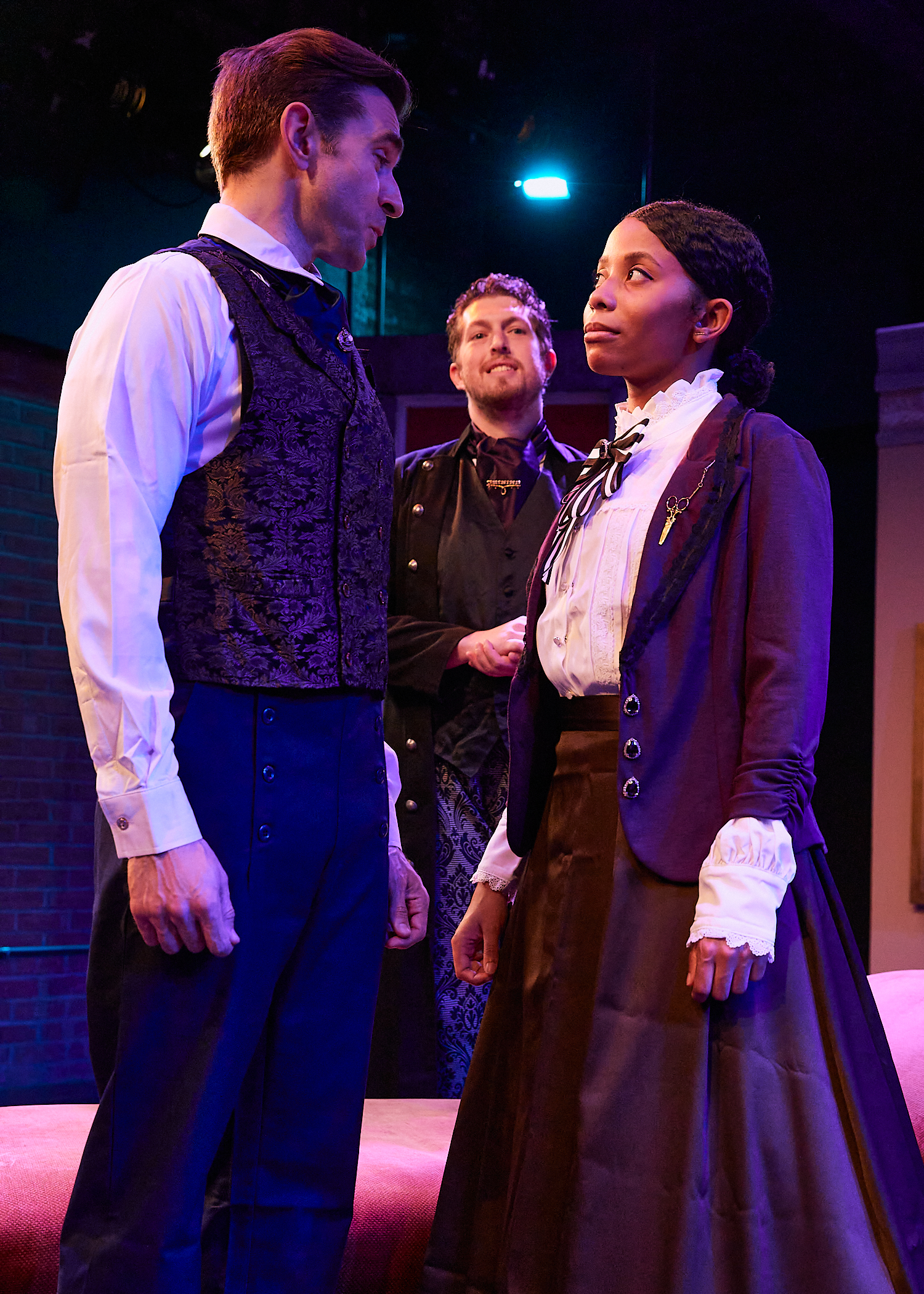
Lessons Learned: For The Strange Case of Dr. Jekyll and Mr. Hyde, I returned to the established routine—asking the company what they wanted, setting up those shots within the allotted hour, turning them over for press as soon as possible. I checked all the boxes and did as I was asked; the images were technically proficient and did what they needed to do. If I learned anything from Jekyll and Hyde, it was that I had begun to recognize my own sense of style or taste or vision or point of view, and I longed to find a way to express it.
Anecdotes: By the time I’d made production photos for The Strange Case of Dr. Jekyll and Mr. Hyde, I confess I’d started to feel restless with my limited theatre photography engagements. As I began to grow as a fantastical portrait photographer with The People of Light and Shadow, I felt like my theatre work was stagnating. With Distant Era as my main occupation, I began to think of ways to push the envelope and improve the production photography I’d been doing.
I had a vision for something I thought could be cool, but there was seldom a spare moment in the production schedule.
The Last Queen of Camelot (2023)
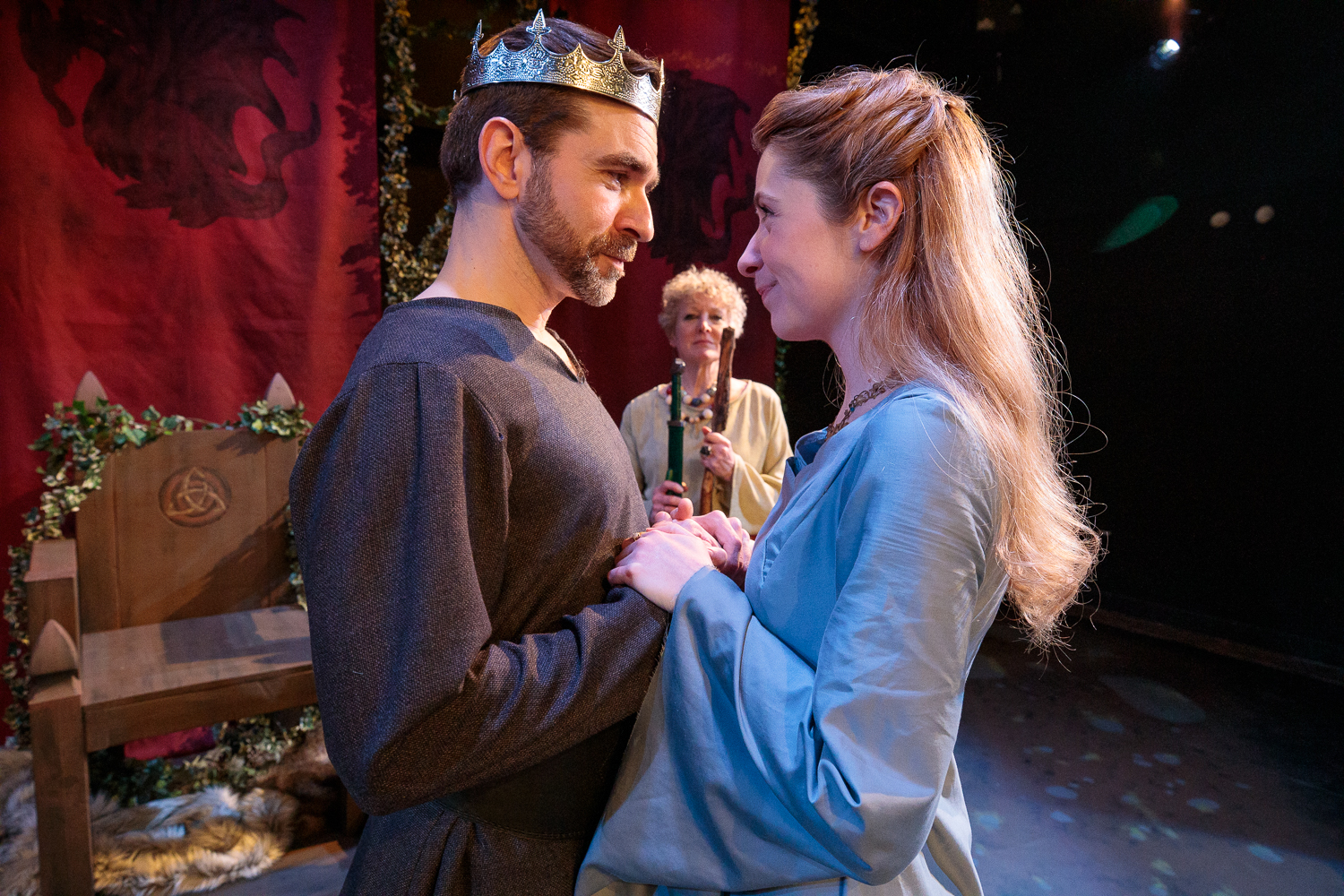
Lessons Learned: In The Last Queen of Camelot, I not only got more creative with the shots from our list (for instance, I took time to turn a green light into an attractive star shape by closing down my camera’s aperture) but began shooting and turning over a wider variety of images. Furthermore, I edited more carefully, probably thanks to all that time working on portraits.
Anecdotes: A new company—a new vision of Idle Muse—began to coalesce around The Last Queen of Camelot. Production design took a big step forward. The titular last queen, Caty Gordon, from my first production photography shoot way back in The Talking Cure era, moved back to Chicago from Los Angeles and joined Idle Muse again. Many of the 2026 core company worked on this show. It was clear that once again the company had a new energy and direction.
Jane: Abortion and the Underground (2023)
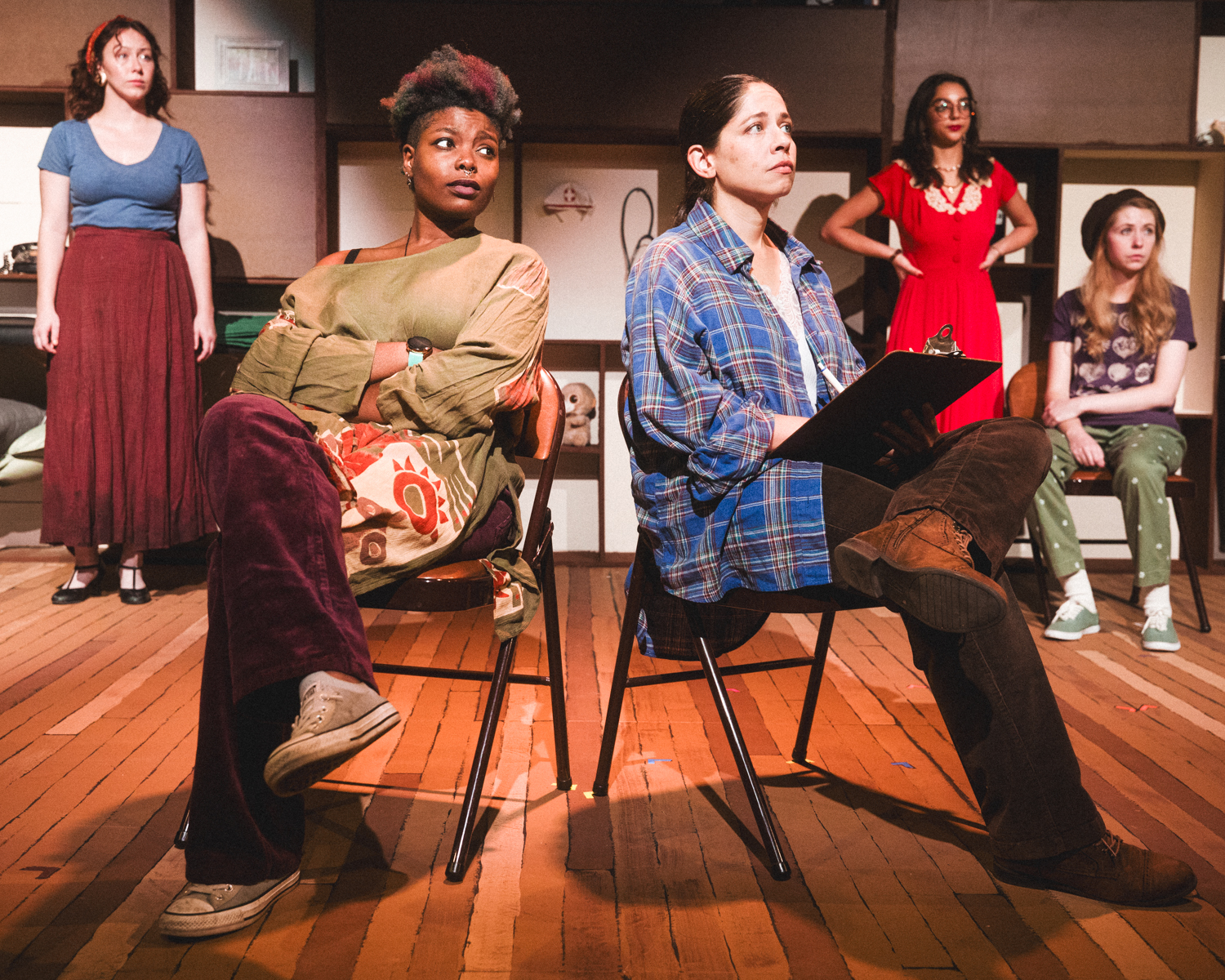
Lessons Learned: Jane: Abortion and the Underground took place primarily in the 1970s, so I made the production photographs with a haze filter to give the images a sense of time and place, and I edited them with digital filters matching old film stocks. I shot with a wide-angle lens as well. All of these elements contributed to lend the images a different look. Some of those choices I like, and some I think were too much. The only way to learn is to try something new.
Anecdotes: By the time I saw Jane, lighting designer Laura J. Wiley had created an incredible projection of CTA trains that hadn’t been ready for photo night. I resolved to find a way to somehow capture all those technical elements from now on, even if they weren’t ready during the shoot.
What the Weird Sisters Saw (2024)

Lessons Learned: I started brining extra light and reflectors to fill in shadows. I started communicating with the lighting designer (always Laura J. Wiley) to add more light here or there when necessary.
Something happened around this time that changed my perspective on my role as a theatre photographer. In the early days, I assumed everyone knew exactly what photos they wanted and it was up to me to make that happen. After doing this a long time, it dawned on me that I was the expert. This change of perception helped me guide photo sessions toward better images.
Anecdotes: What the Weird Sisters Saw was where all the pent up post-pandemic ambition to make better theatre photography finally manifested for the first time. I had wanted to make better, more compelling theatre photography, but I needed time to try it.
I credit Idle Muse company manager Kati Lechner for making that time. We ended up with two sessions for What The Weird Sisters Saw:
One for press during the mad rush of tech week.
Another to capture archival photography of all the designers’ work.
And a bonus experimental session with the weird sisters.
This is the dawn of a new era.
The Tempest (2024)
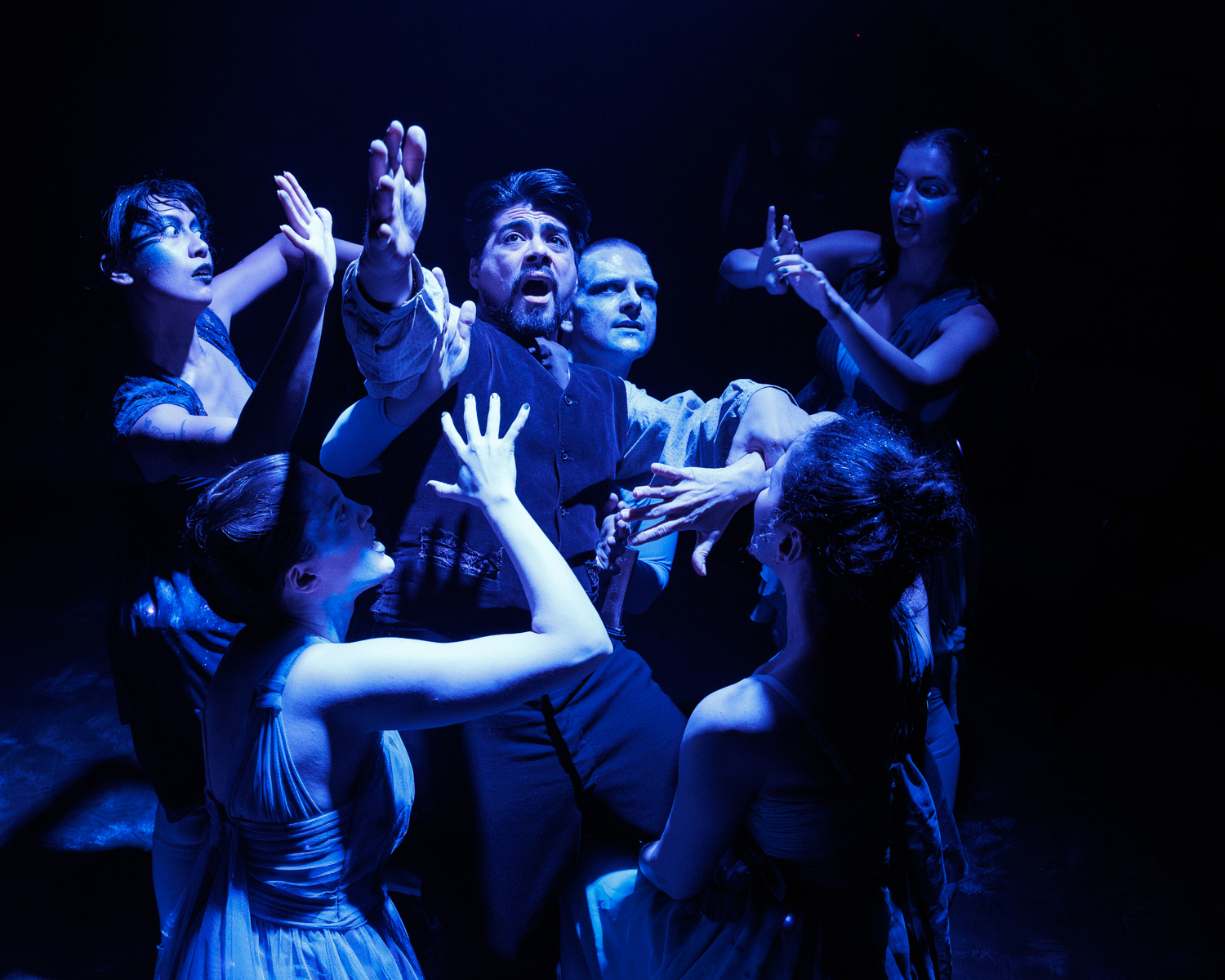
I bought my second professional (and first mirrorless) camera right before The Tempest. It also changed the way I photographed theatre, mostly because of its larger eyepiece that showed a bright, clear representation of the shot, and also because its improved focusing capabilities freed me to concentrate on capturing the image rather than squeeze the focus point on individual eyes while action moved about in the dark space.
Lessons Learned: LEDs will flicker, resulting in banding unless I dial in my settings so that my shutter speed syncs with the flicker rate of the LEDs. Additionally, my new camera’s through-the-lens metering was incompatible with my flash, requiring me to manually meter everything henceforth.
Perhaps most important, I finally met James Juliano of Shout Chicago, who told me how he prefers images to be formatted. From then on, I’ve delivered everything according to his specifications, which has made our entire process more efficient.
Anecdotes: In spite of having finally manifested what I had hoped to achieve with What the Weird Sisters Saw, in the months leading up to The Tempest, I had no other theatre work. Most of the other theatre companies I worked for had either moved on, gone on hiatus, or didn’t need or want photography. Idle Muse became the only theatre company I was working for. Things looked bleak. After The Tempest, the work began to come.
If What the Weird Sisters Saw was a prototype for what I wanted to do, The Tempest was the realization of that prototype into something that worked. Thanks to company manager Kati Lechner’s planning and collaboration by the cast and team, we created two sessions for The Tempest:
The Tempest production photography
The Tempest archival photography
which also included costumes for The Tempest
The School for Scandal (2025)
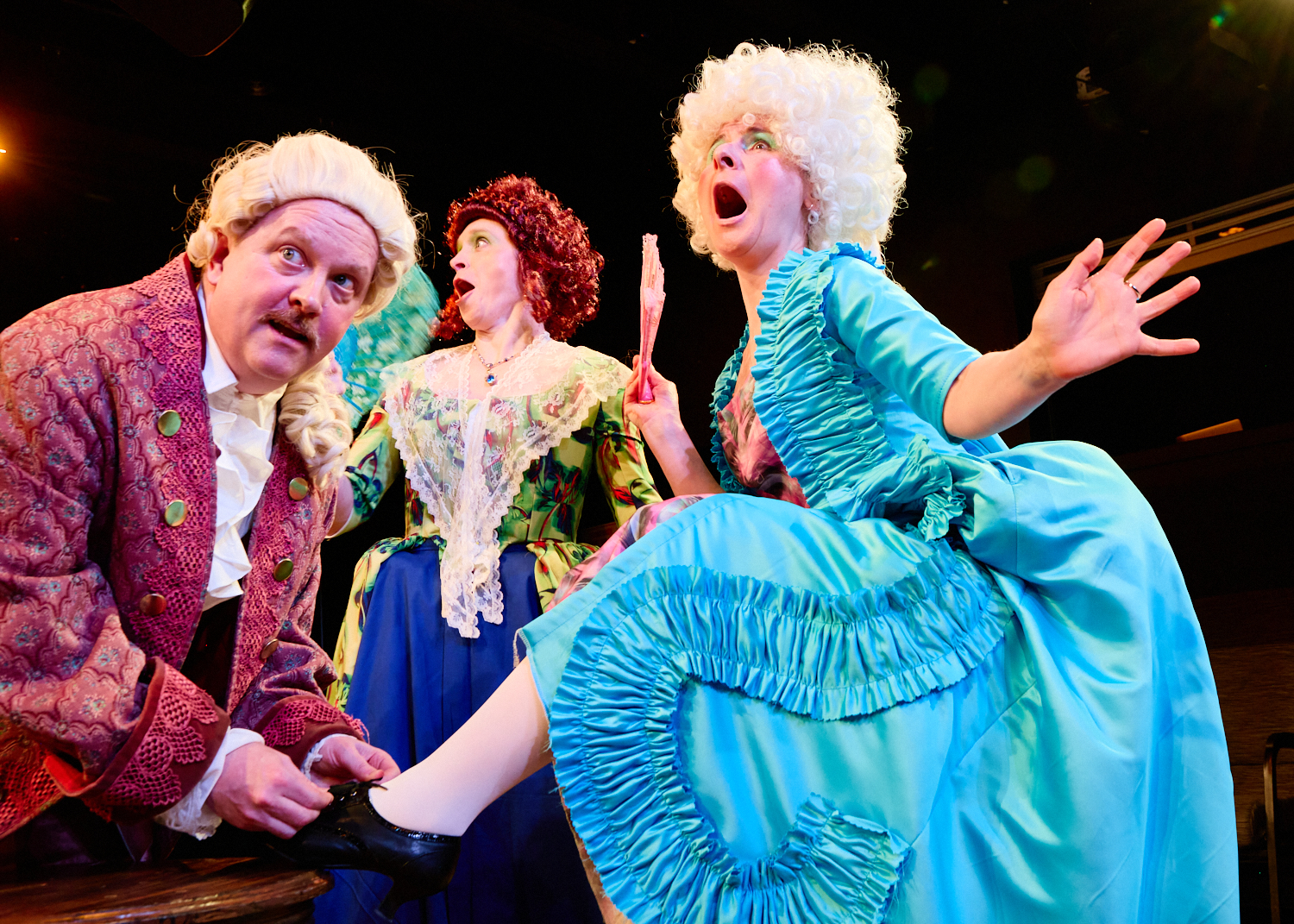
In The School for Scandal, we continued the trend of promoting and documenting the production with creative images. The cast got their hands on the production design images early and shared them everywhere. The School for Scandal received more awards nominations than any previous Idle Muse production.
Lessons Learned: The right cast with the right images at the right time can effectively promote a production.
Anecdotes: The image that sells a show might not be in the show.
The School for Scandal production photography.
The School for Scandal production design (archival) photography.
The Blood Countess (2025)
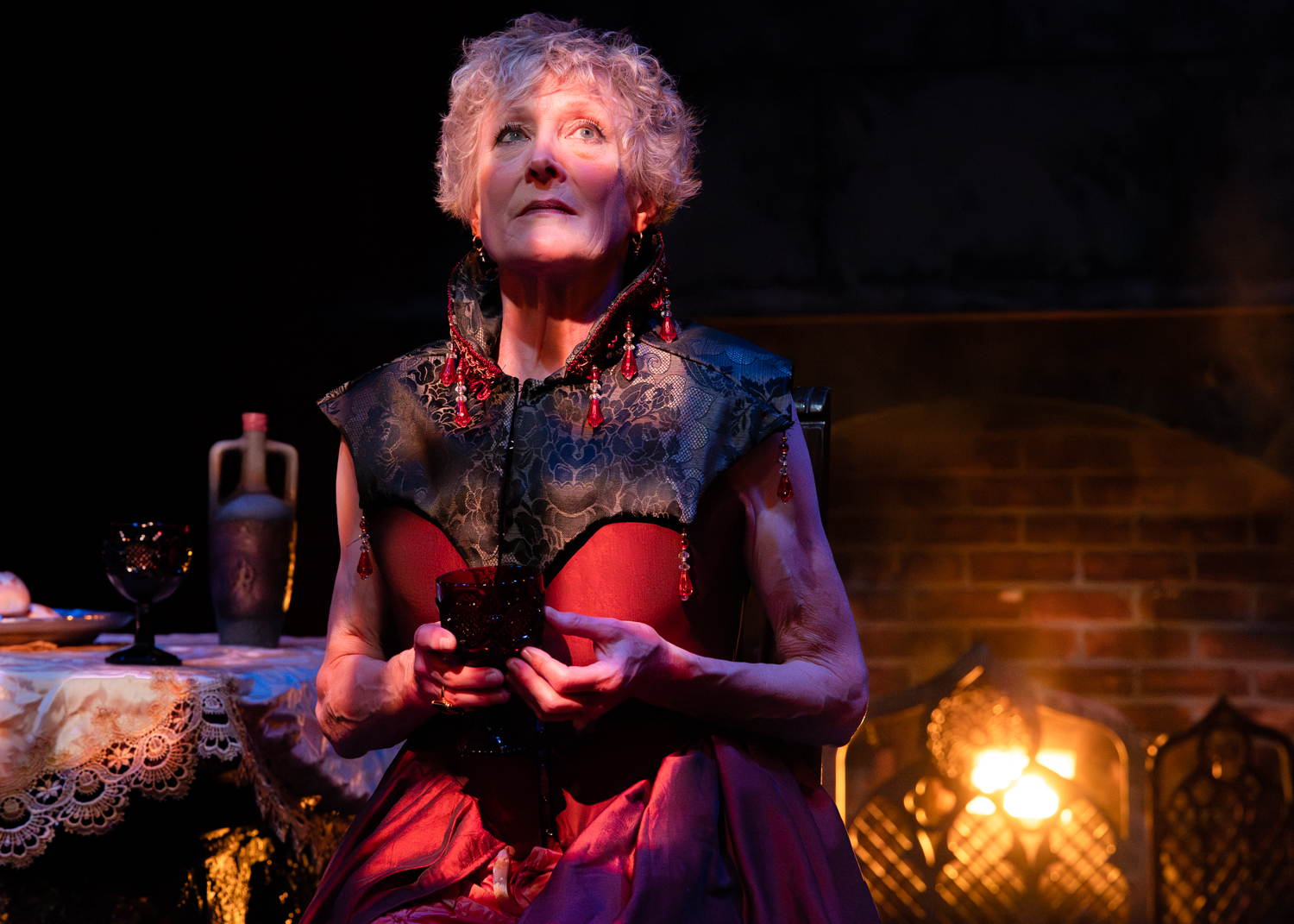
Lessons Learned: When we made production photos for The Blood Countess, the constraints of alley seating on two sides and an unfinished set on a third side made me get very creative with angles and positioning, even moving scenes away from distracting elements. Old lessons reapplied in new and different ways. This creative framing worked out, and Laura J. Wiley’s lighting made the production/press photos magical.
Anecdotes: During our production design photography, when it was time for the countess (Laura Jones Macknin) to be photographed, I moved the light behind her to emphasize the dark side of her character. It ended up being my best portrait of the bunch and encouraged me to change the light to show character whenever it makes sense and I have the time to do so.
The Blood Countess production photography.
The Blood Countess production design (archival) photography.
The Three Musketeers (2026)
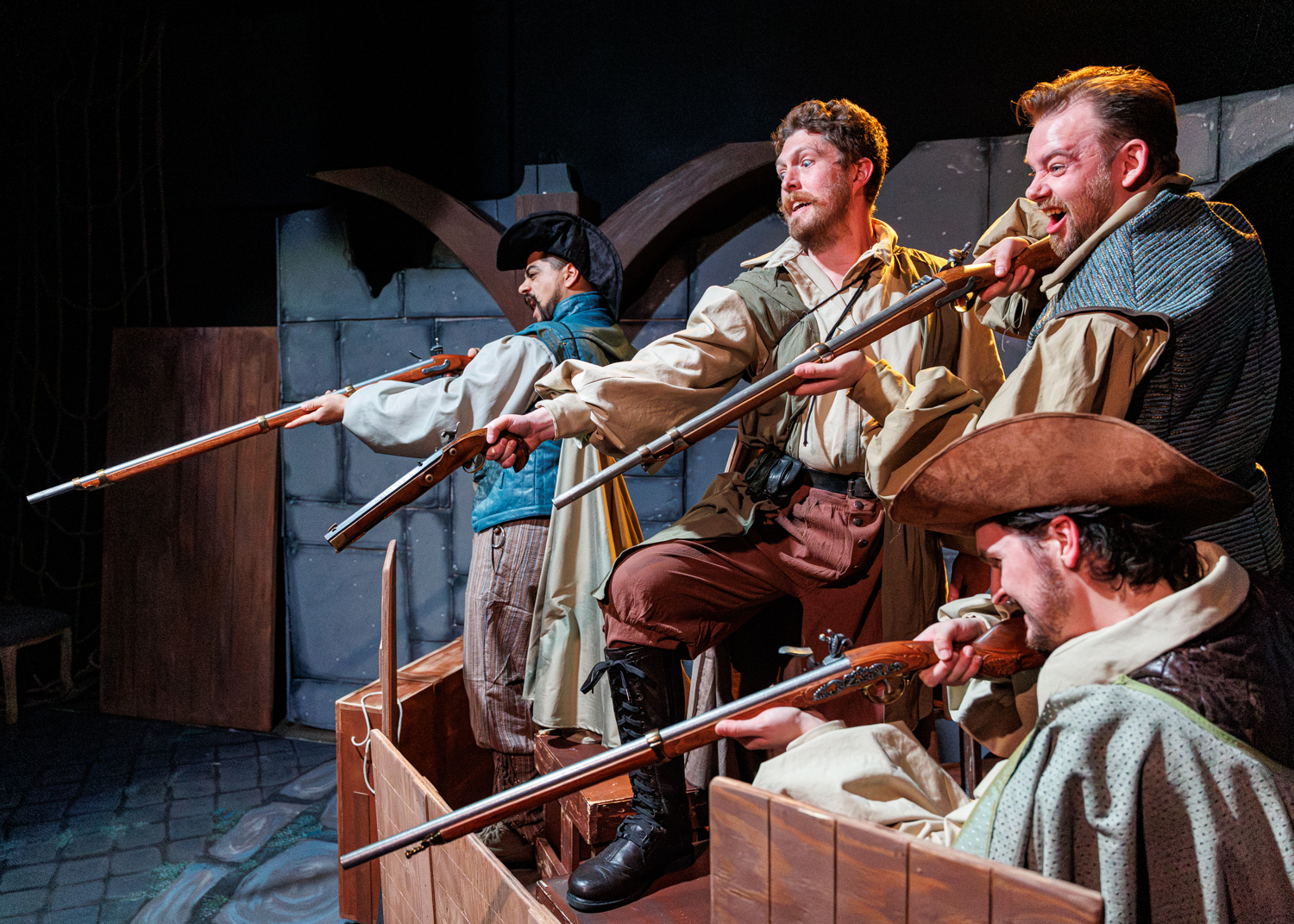
Lessons Learned: In our character portraits, I added a third light, which helped give depth to the portraits. As with The Blood Countess, I moved the light to emphasize character, when appropriate (the portraits for Rochefort, Milady, and Richelieu in the production design photography, for example).
Anecdotes: With The Tempest, The School for Scandal, and The Blood Countess, we had nailed definitive images that could describe the mood and feel of a show in a single frame. During the production photography session for The Three Musketeers, I wondered what this image would be and whether we’d get it. Then, near the end of the sesison, all of the musketeers played a scene firing with their muskets, and I knew at once that was our press image.
The Three Musketeers production photography.
The Three Musketeers production design (archival) photography.
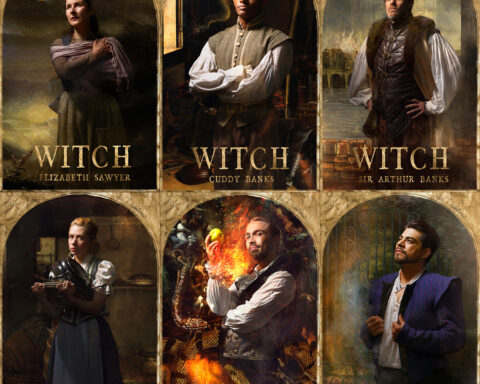
Witch (2026)
This play hasn’t happened yet. It’s coming this fall. I have plans for portraits of the characters that I hope to achieve, hopefully improving even more on what we’ve done these past eleven years.
Happy Twentieth Anniversary, Idle Muse
In 2009, Elizabeth and I became close friends with Evan Jackson, Mara Kovacevic, and Tristan Brandon at Idle Muse. Seventeen years later, we’re still fast friends. The company has grown and flourished, and our many collaborations have been a blessing. In the early days, those collaborations were an opportunity to experiment and make mistakes and learn. We’re still learning, still curious, still growing, and ever thankful to do so.
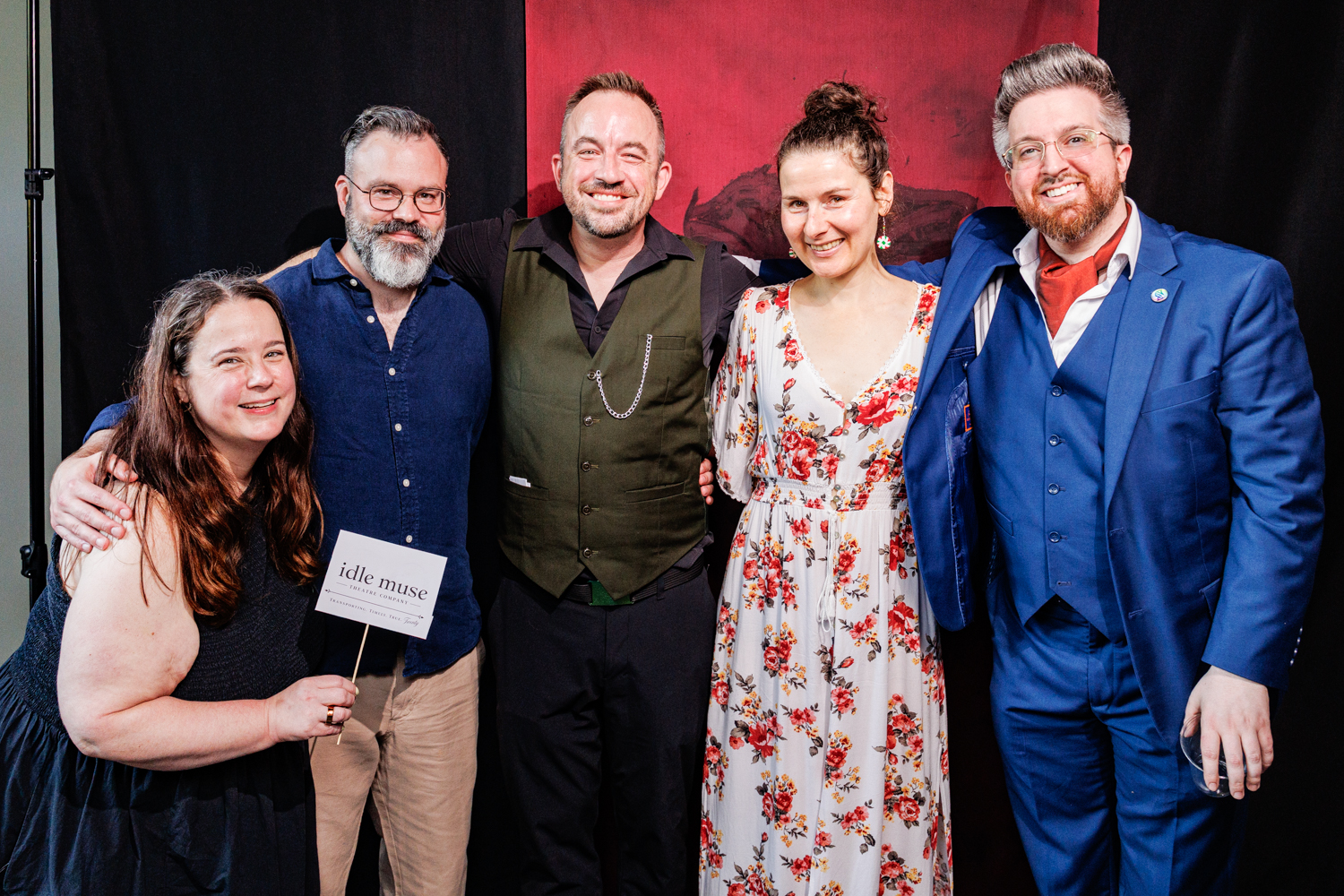
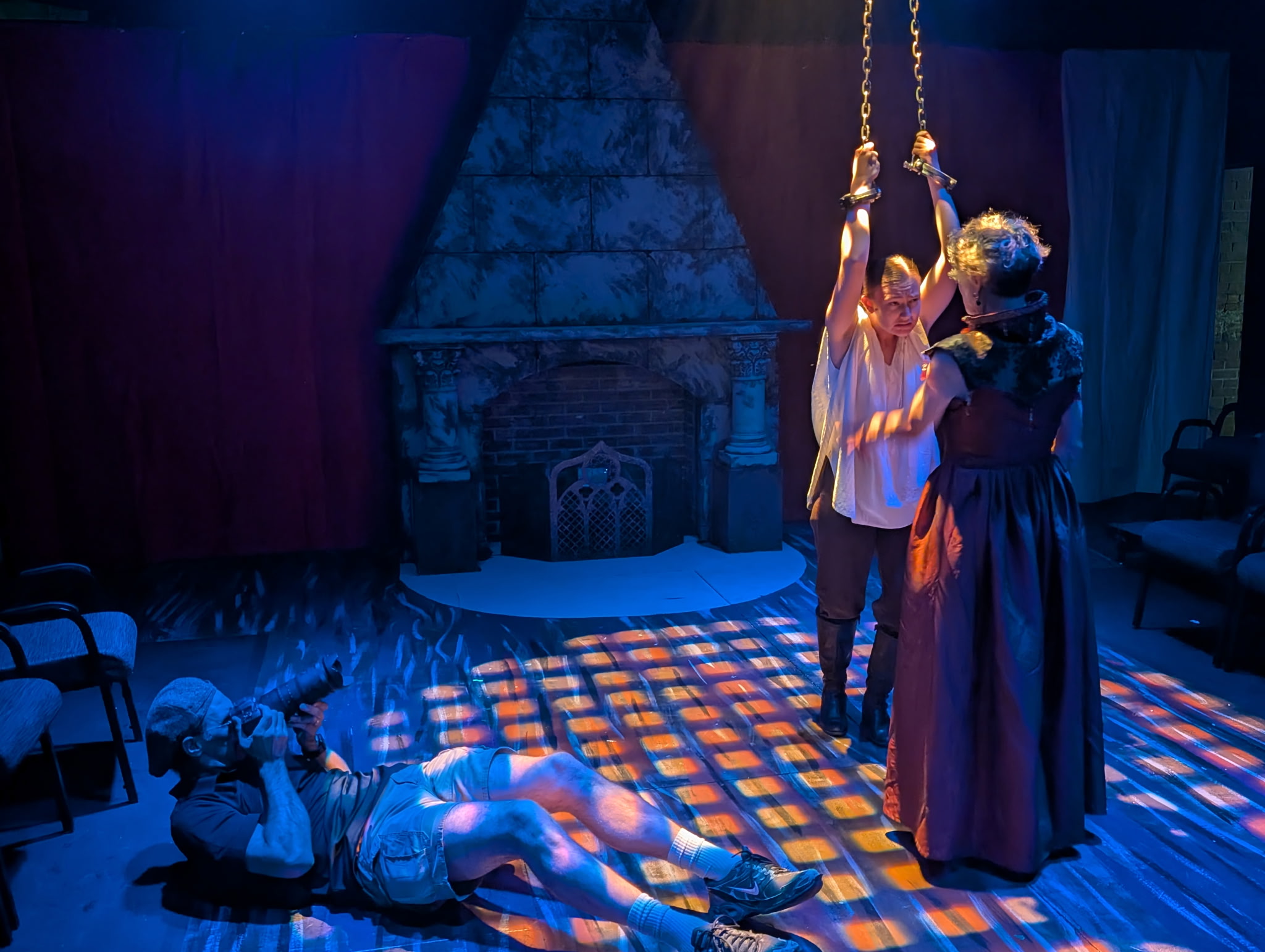
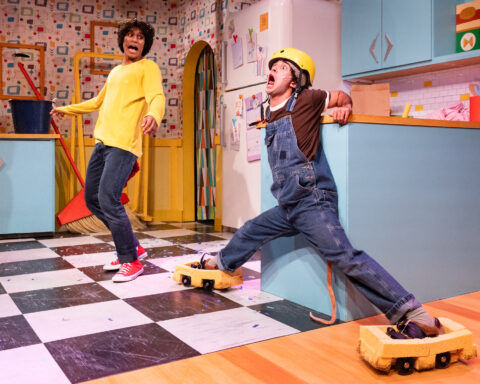
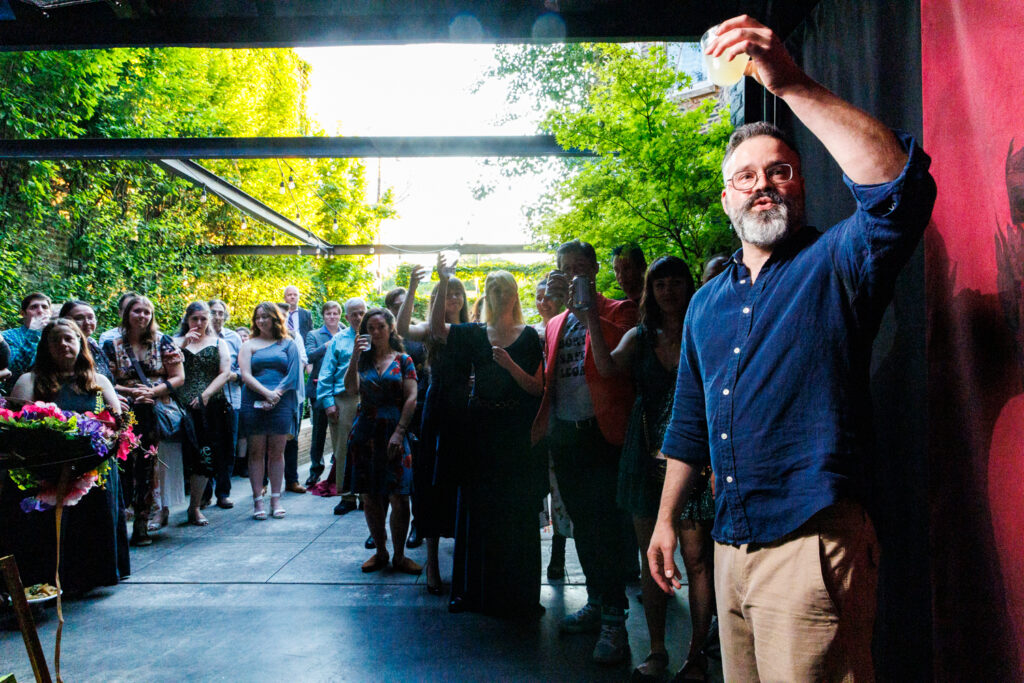
The behind-the-scenes production photo that serves as the cover image for this post is courtesy of Libby Beyreis, who was also present at the very first theatre shoot I ever did for Babes With Blades in 2010, and for whose assistance at IMTC shoots I am most grateful!


Follow Me