
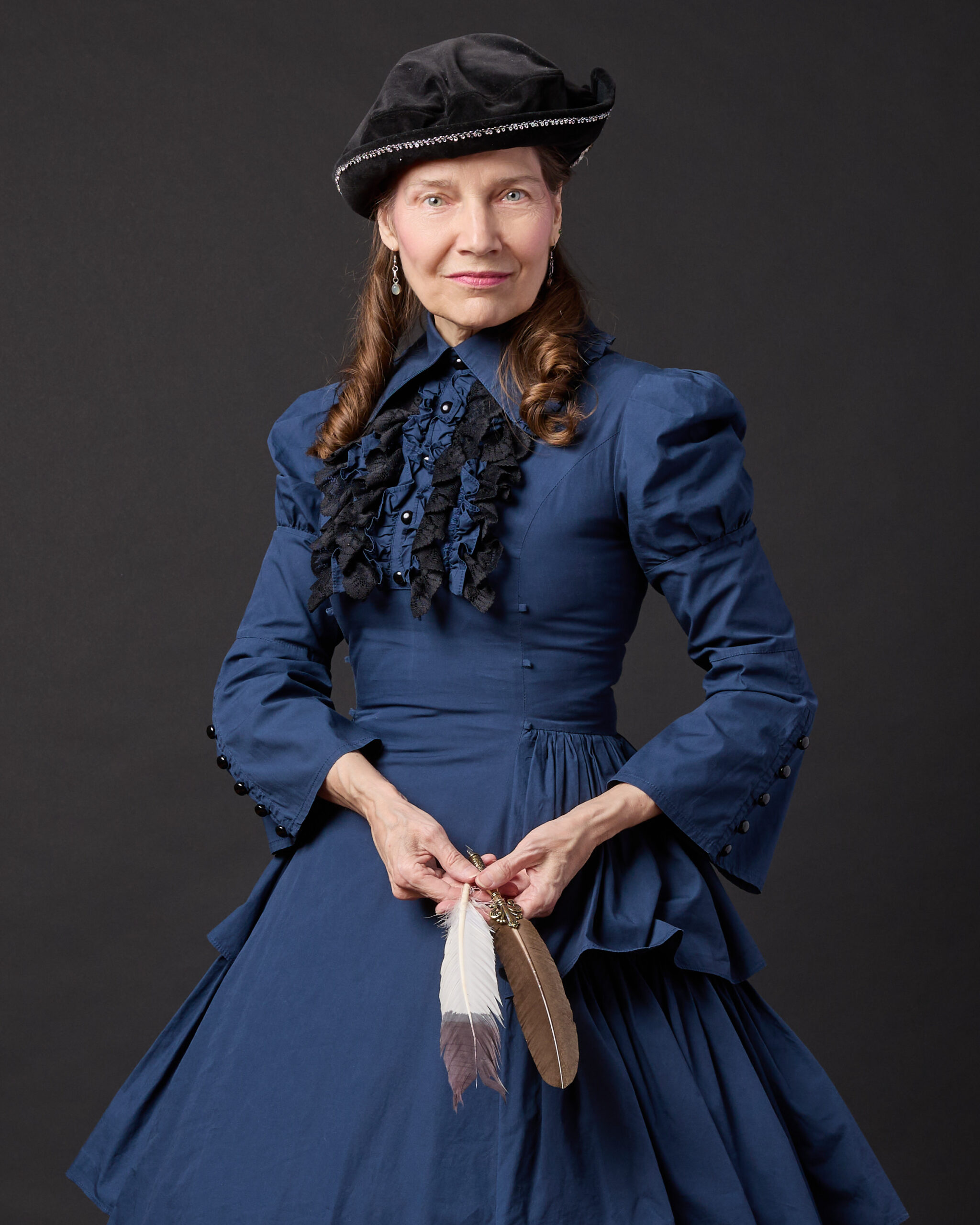
In February 2026, Distant Era photographed storyteller Megan Wells as Elizabeth Hamilton, wife of Founding Father Alexander Hamilton, as the next in Megan’s series of historical impersonations. As usual, we’ll start with a look back on the series so far.
The Work
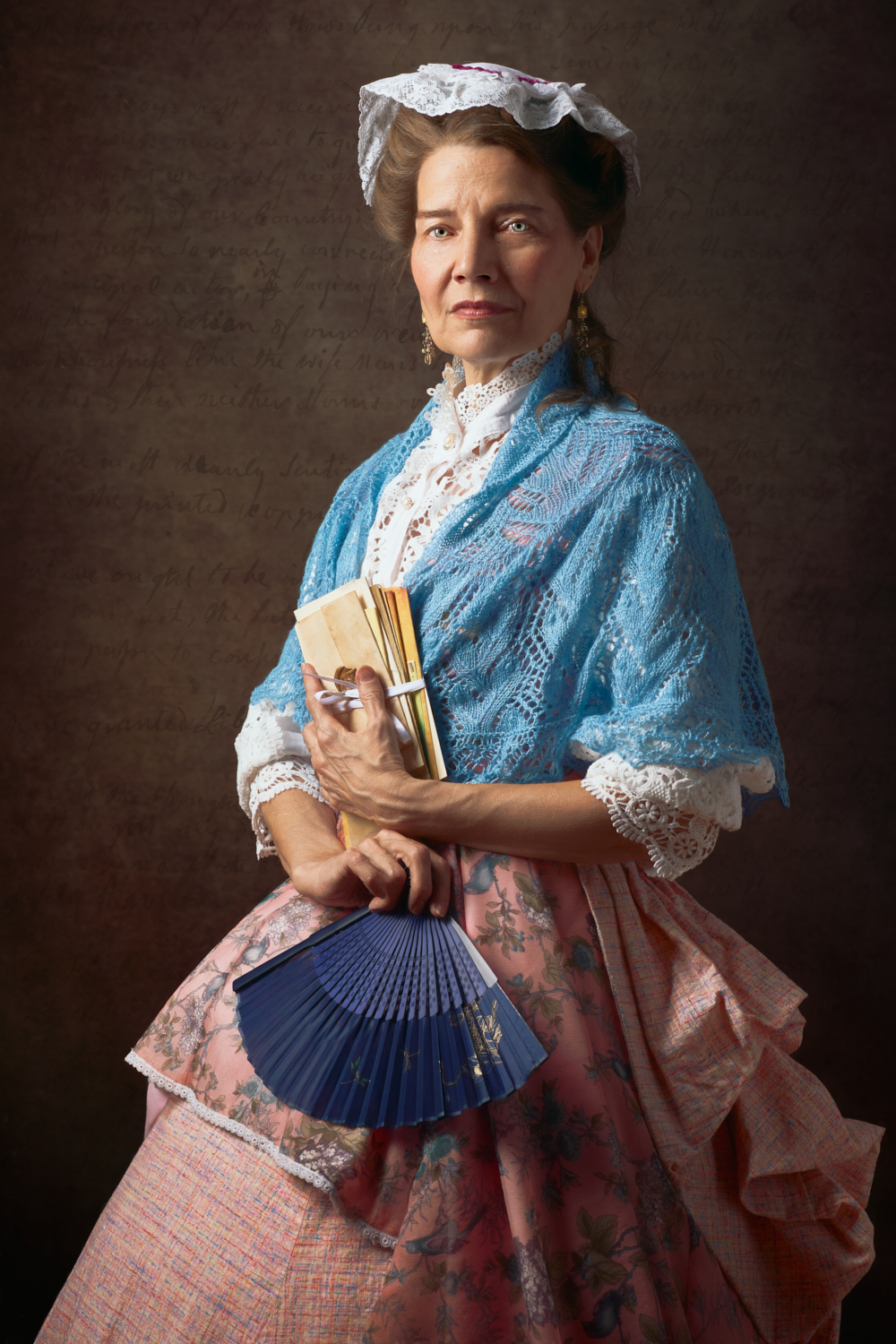
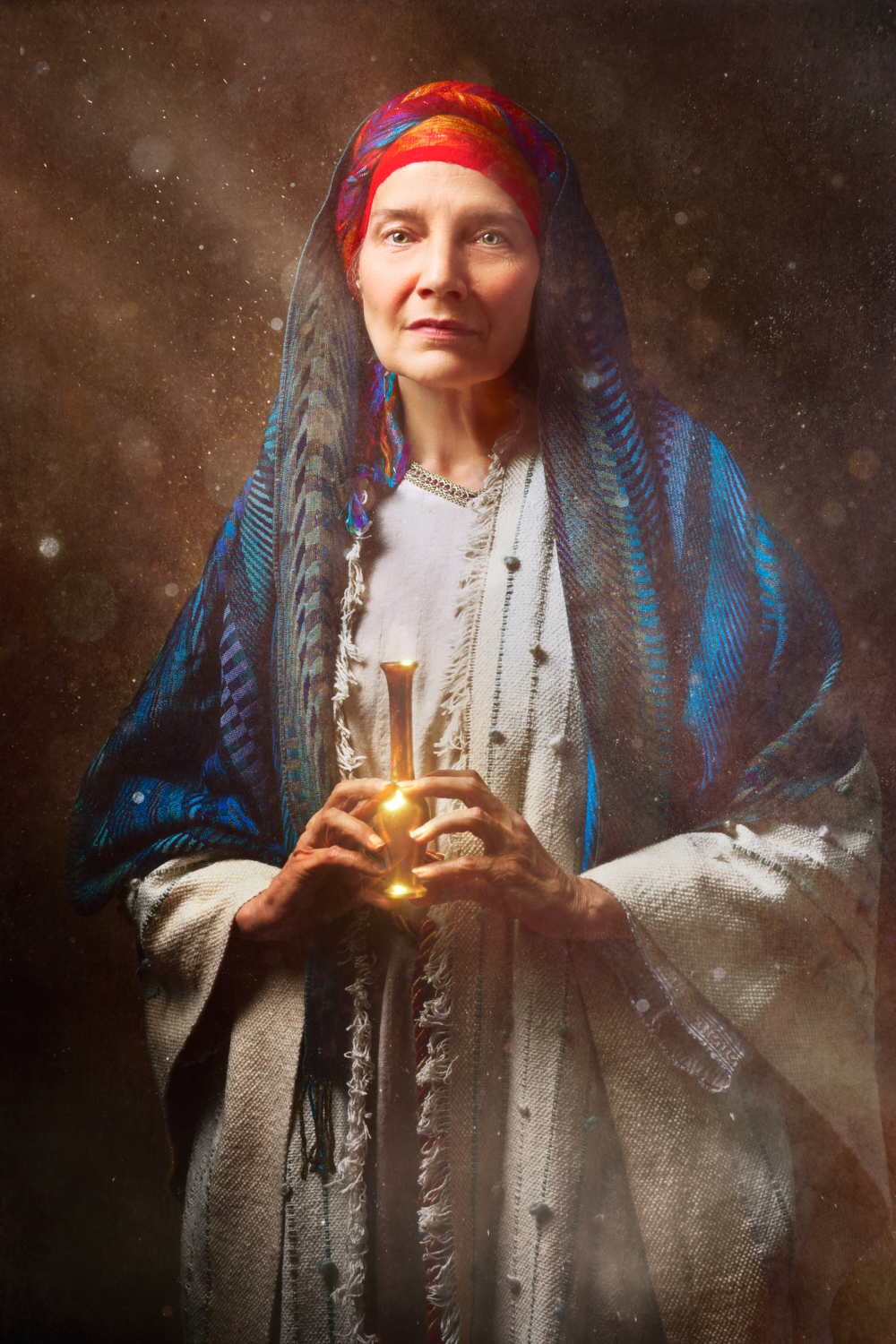
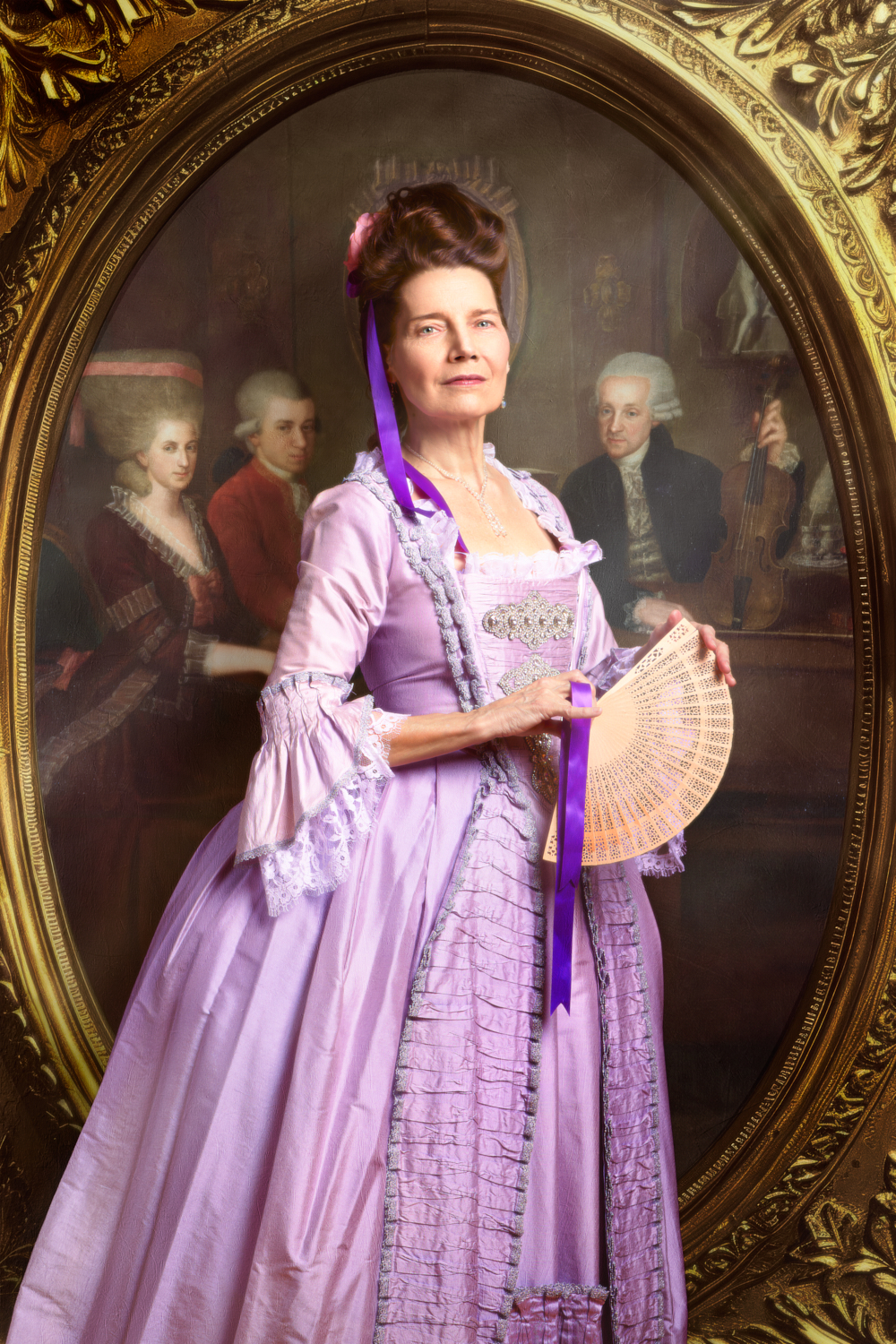
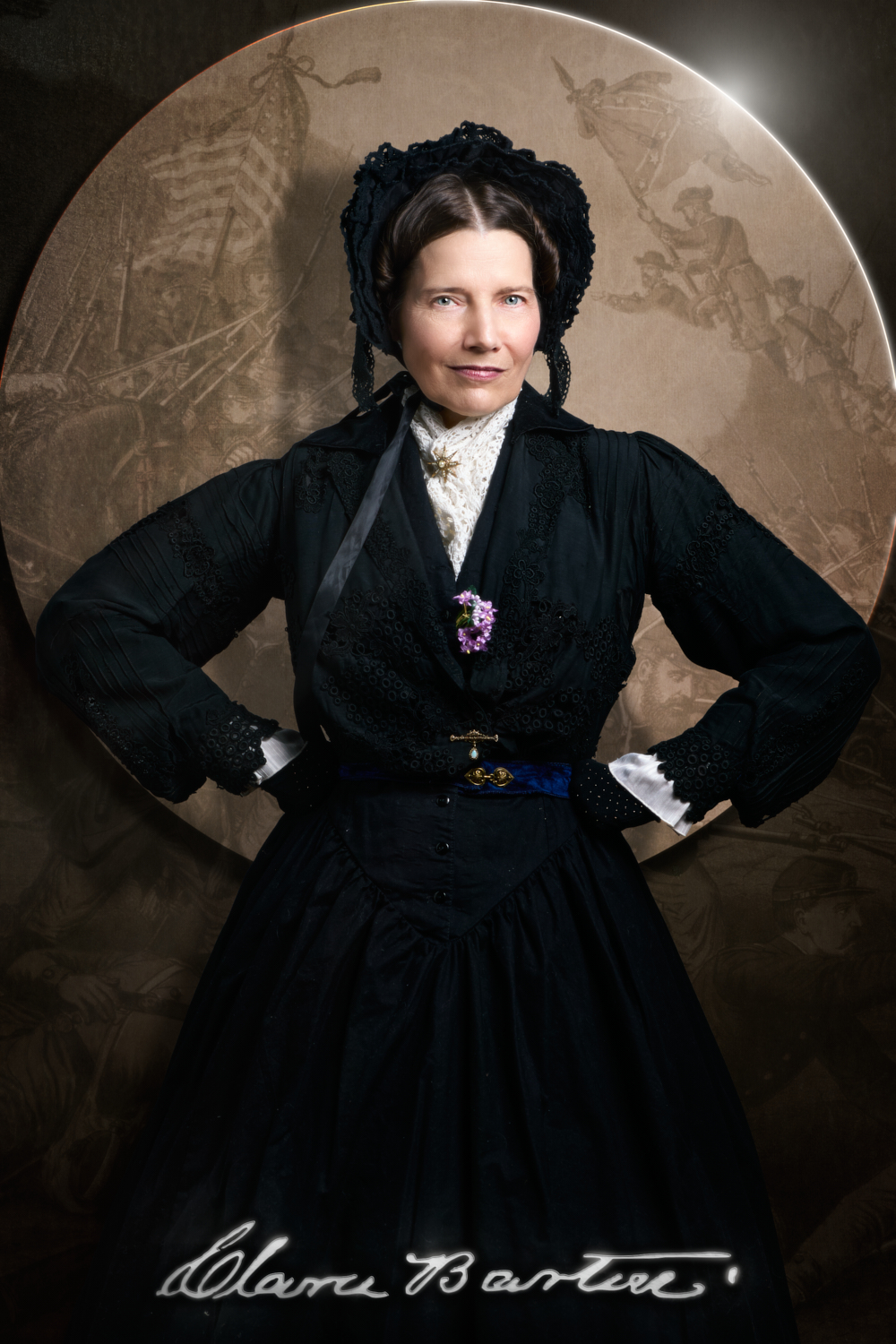
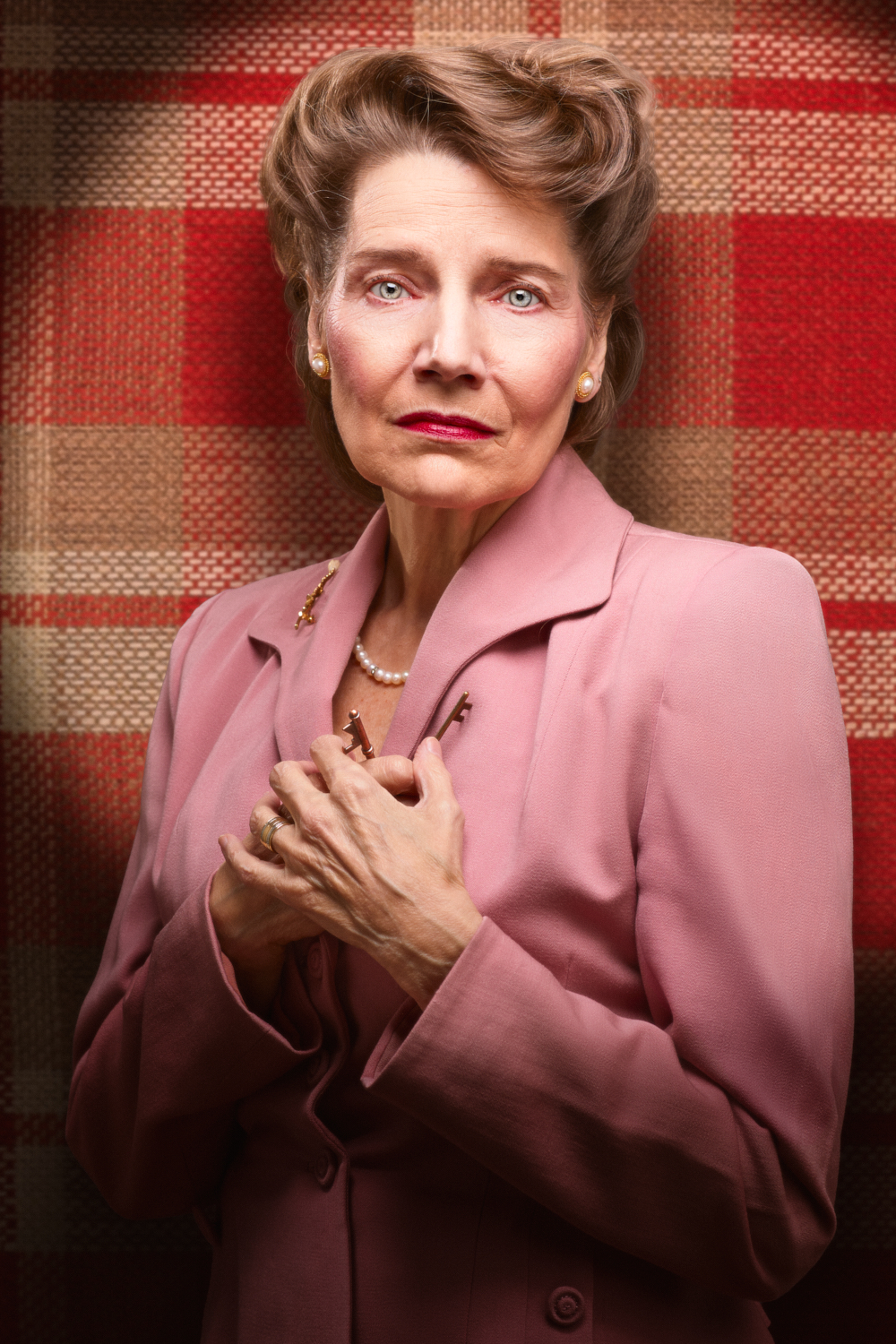
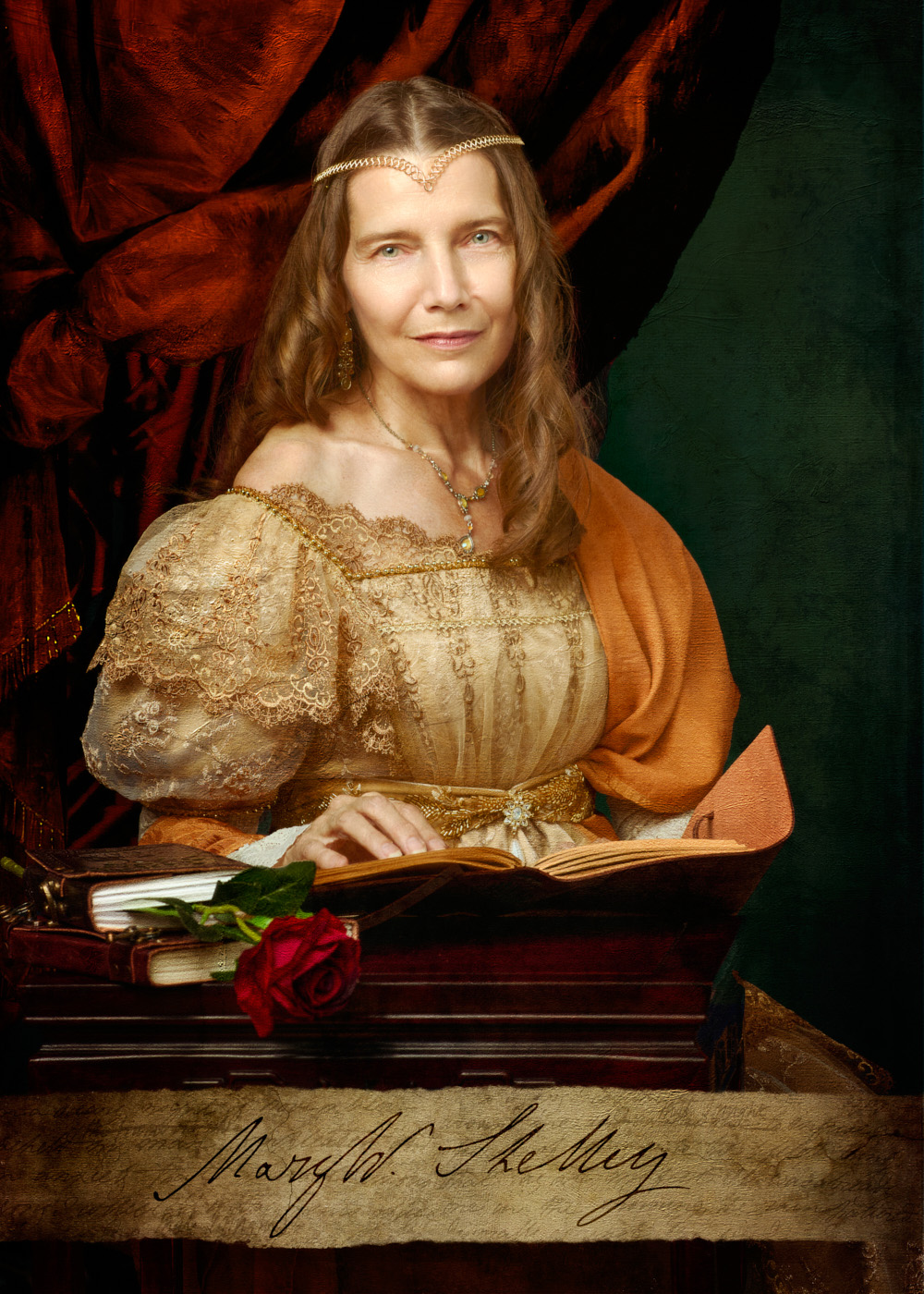
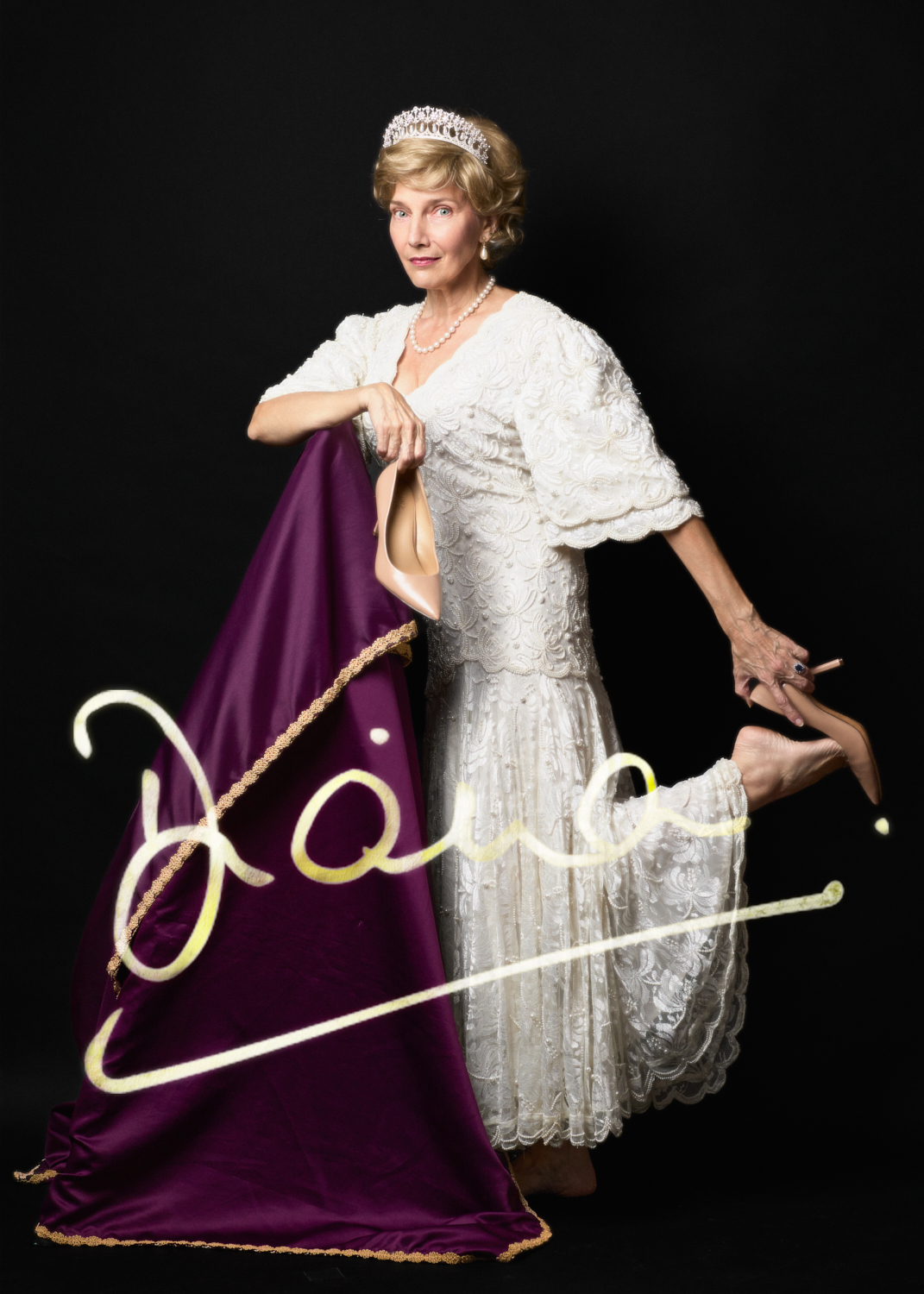
Megan first learned of Distant Era’s work when I photographed new portraits for my close friend (and roommate for my first thirteen years in Chicago), storyteller Joshua Safford. In early 2024, Megan and I set out to create a series of Distant Era portraits to show her as the characters she plays. Over the first eight months of 2024, we made portraits for Abigail Adams, Florence Nightingale, Eleanor Roosevelt, Mary Magdalene, Nannerl Mozart, Clara Barton, Miep Gies, Mary Shelley, and Princess Diana.


Planning Elizabeth Hamilton
When deciding the direction for the Elizabeth Hamilton portrait, Megan described the places Elizabeth Schuyler Hamilton grew up, in Albany and Saratoga, the daughter of wealthy Dutch landowners. She thought trees would be an important element in the portrait—possibly a never-ending horizon of trees.
Megan also spoke of the Schuyler family, describing Elizabeth as the quieter middle sister (of three). According to Megan, Elizabeth’s horsemanship inspired her father to select her to meet the chiefs of the Six Nations—the Iroquois—who honored Elizabeth with a name in their language and accepted her as part of their tribe.
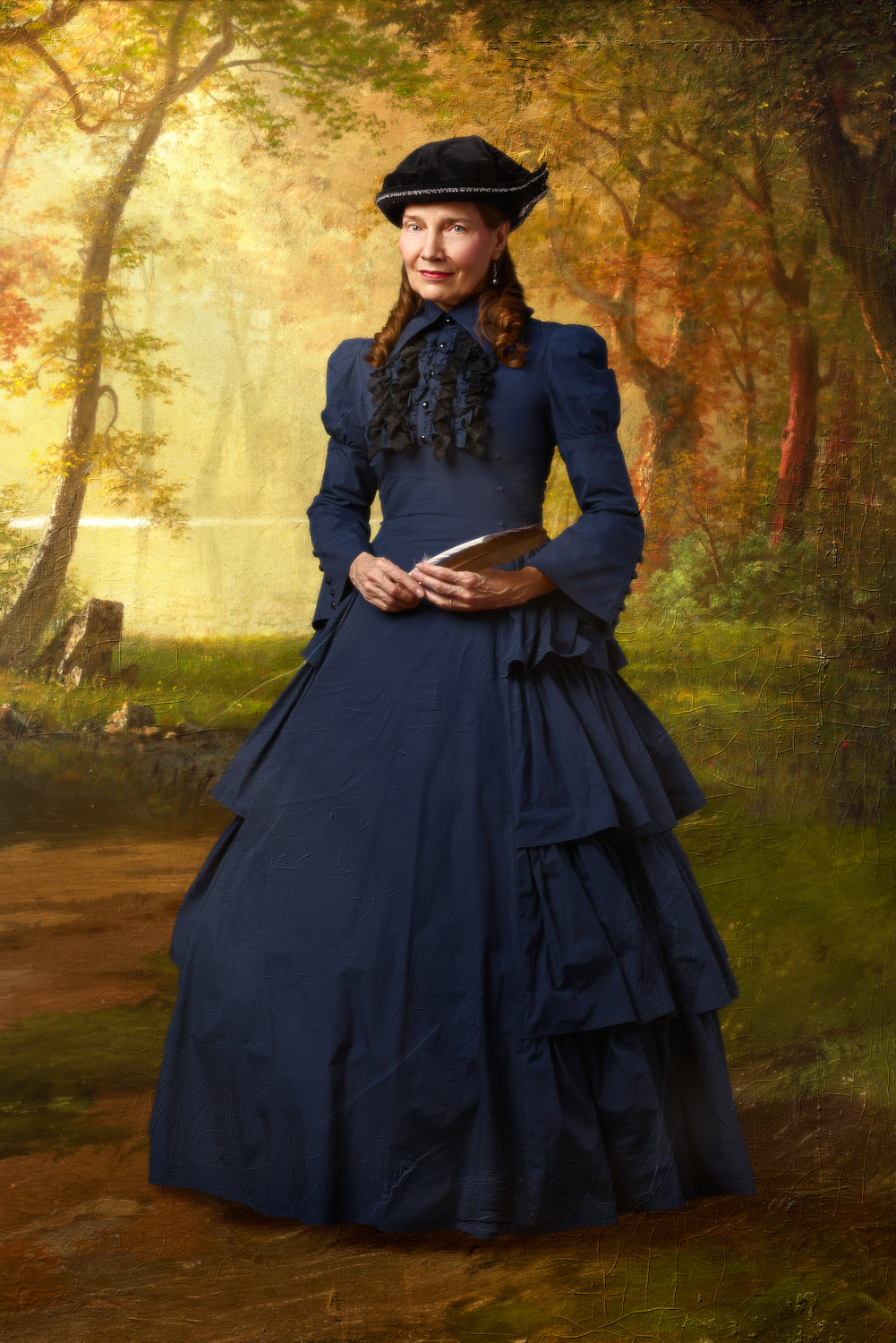
Megan represented this event in Elizabeth Schuyler Hamilton’s life with a feather she holds in the portrait.
As we discussed the portrait, we considered setting it in the forest, in soft light. We were thinking of a reflective expression, somewhat introverted.
Making the Portrait
Our discussions about the woodlands that were important to Elizabeth Hamilton made it clear that we’d be creating a forest background for the portrait. For this reason, I photographed Megan on a plain black background that would not only make compositing relatively straightforward but would make for nice, simple portraits of the character in costume. We used a big, soft, diffused umbrella as our main light, with enough reflection and fill to cover every part of the Elizabeth Hamilton costume, simple but effective. As usual, we photographed several variations, however we didn’t waste any time—we shot until we had our winning image, which matched the reflective, introverted expression Megan had described during our previous discussion.
The last portraits we had photographed with Megan—Mary Shelley and Princess Diana, in August 2024—marked the final session with my trusty Canon 5D MkIV, my first professional camera. Elizabeth Hamilton was photographed with my second, the Canon R5 MkII, though that makes no discernible difference between the images. The only meaningful difference is that the portraits were easier to take.
The final image was photographed at 40mm at f/6, ISO 100, 1/200.
Compositing the Portrait
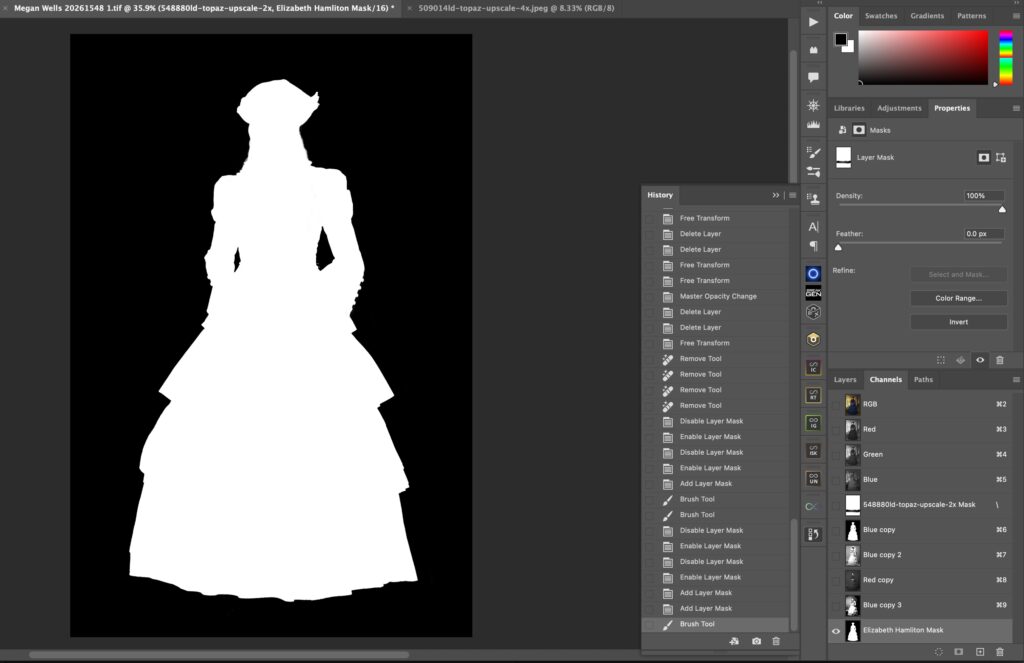
To create the forest background, I looked for classical depictions of the Hudson River Valley or paintings by Hudson River School artists, which I merged together. While unnecessary, I thought it would be a fitting homage to Elizabeth Hamilton’s home.
I kept the compositing simple, though I struggled with perspective for a time. Once I figured out where the horizon line needed to go (which correlated with the angle from which I took the photograph), things clicked into place.
I also struggled with a color issue, as the blue of the costume originally looked too saturated in the environment in which I’d placed it. My compositing mentor Chris Koeppen, who taught me how to use all these tools, not only gave advice on perspective but came to the rescue with color theory counsel about how blue interacts with warm yellow light. After some adjustments to the blues, the dress fit the background much better.
And that’s about it for Elizabeth Hamilton! This was a big step for our series. I’m grateful to Megan Wells for her care, craft, and artistry, and I’m grateful to Chris Koeppen for his mentorship and assistance.





Follow Me