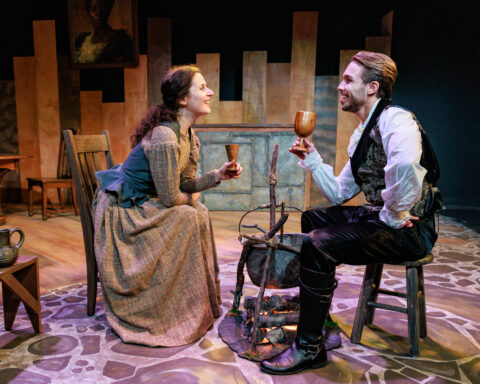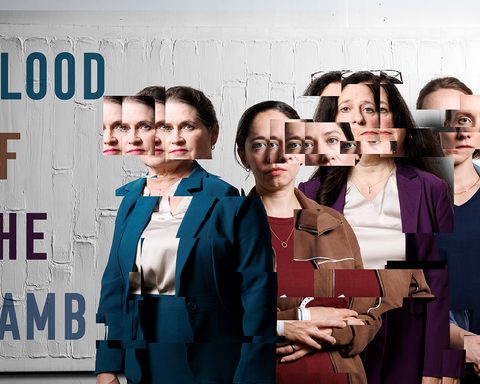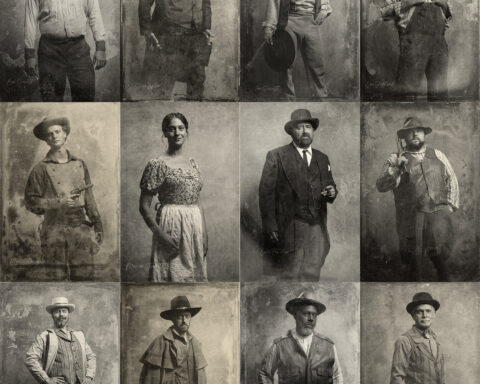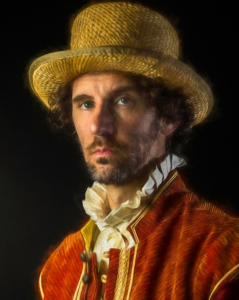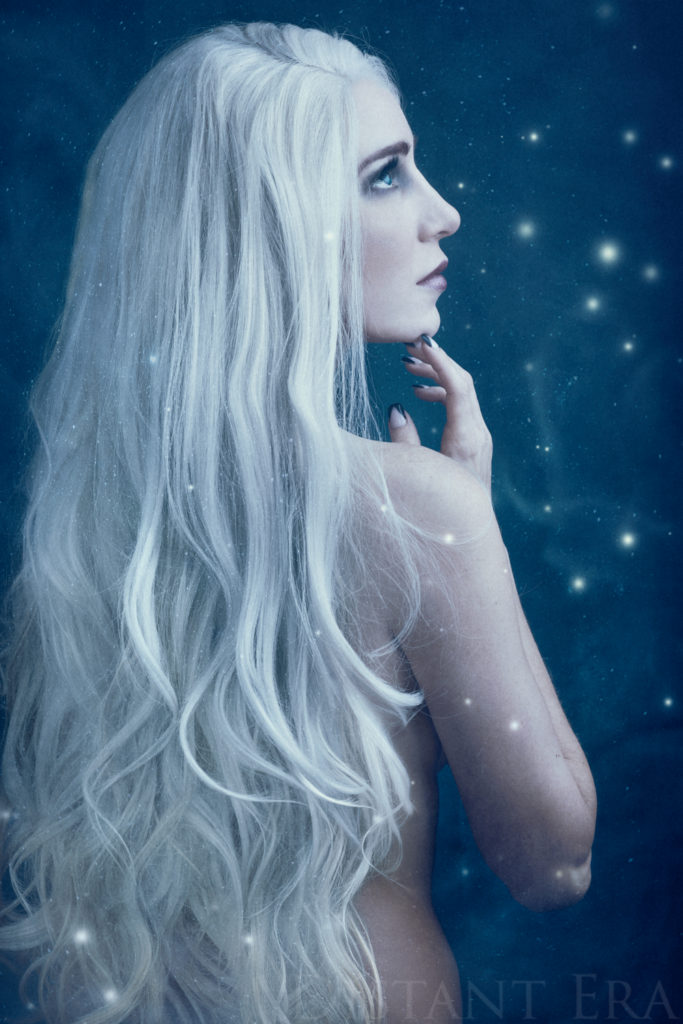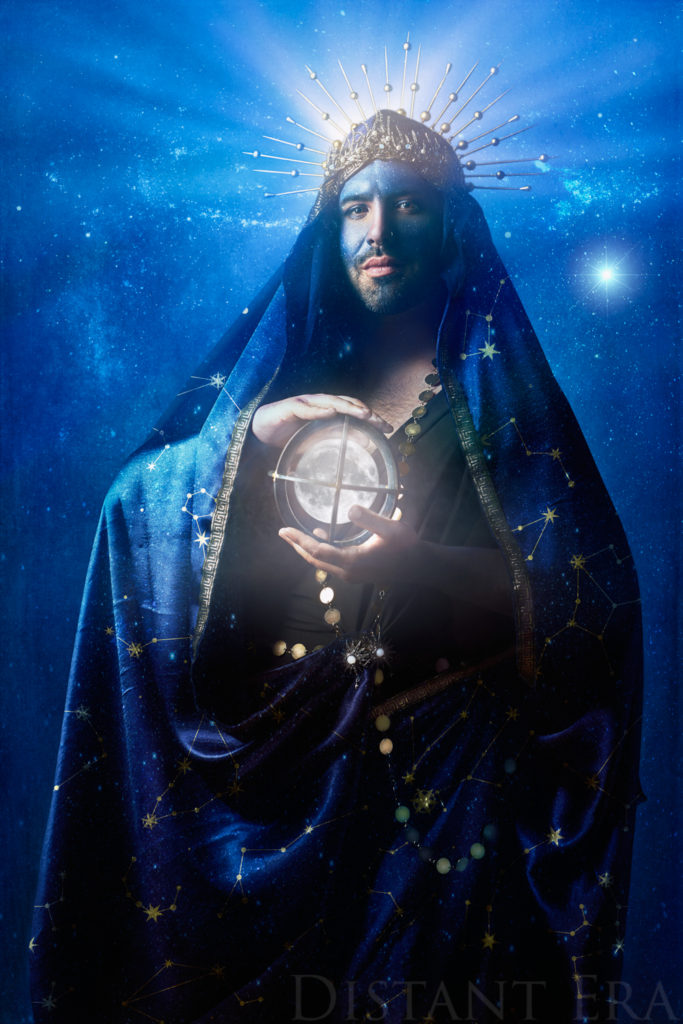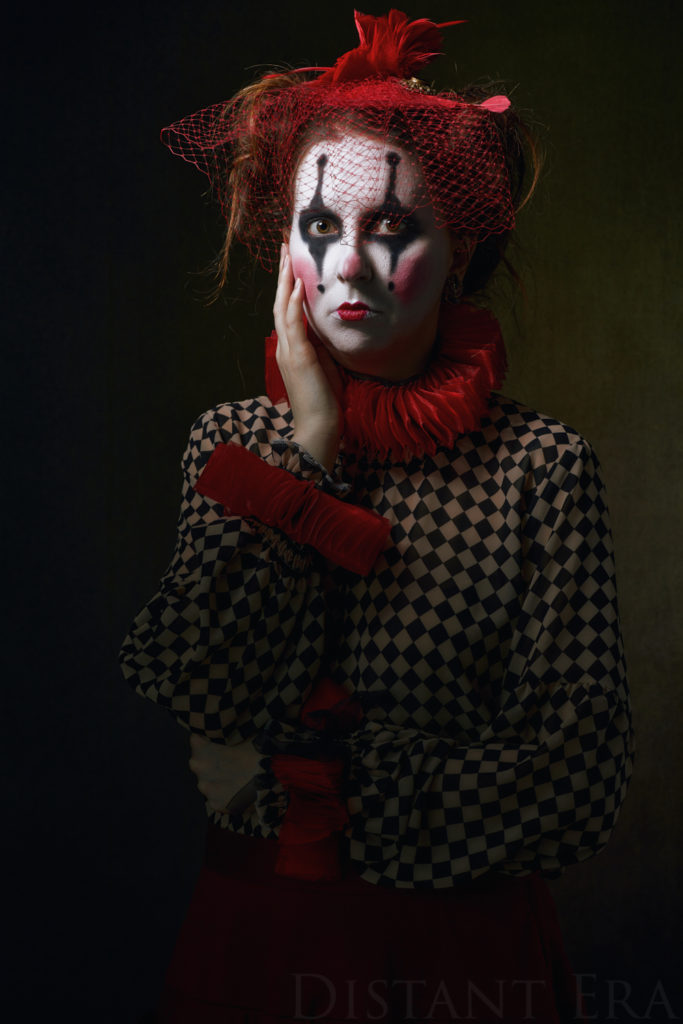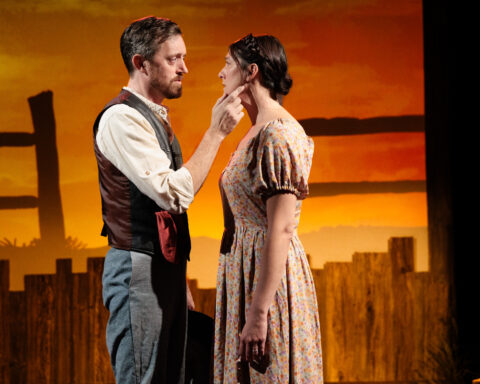
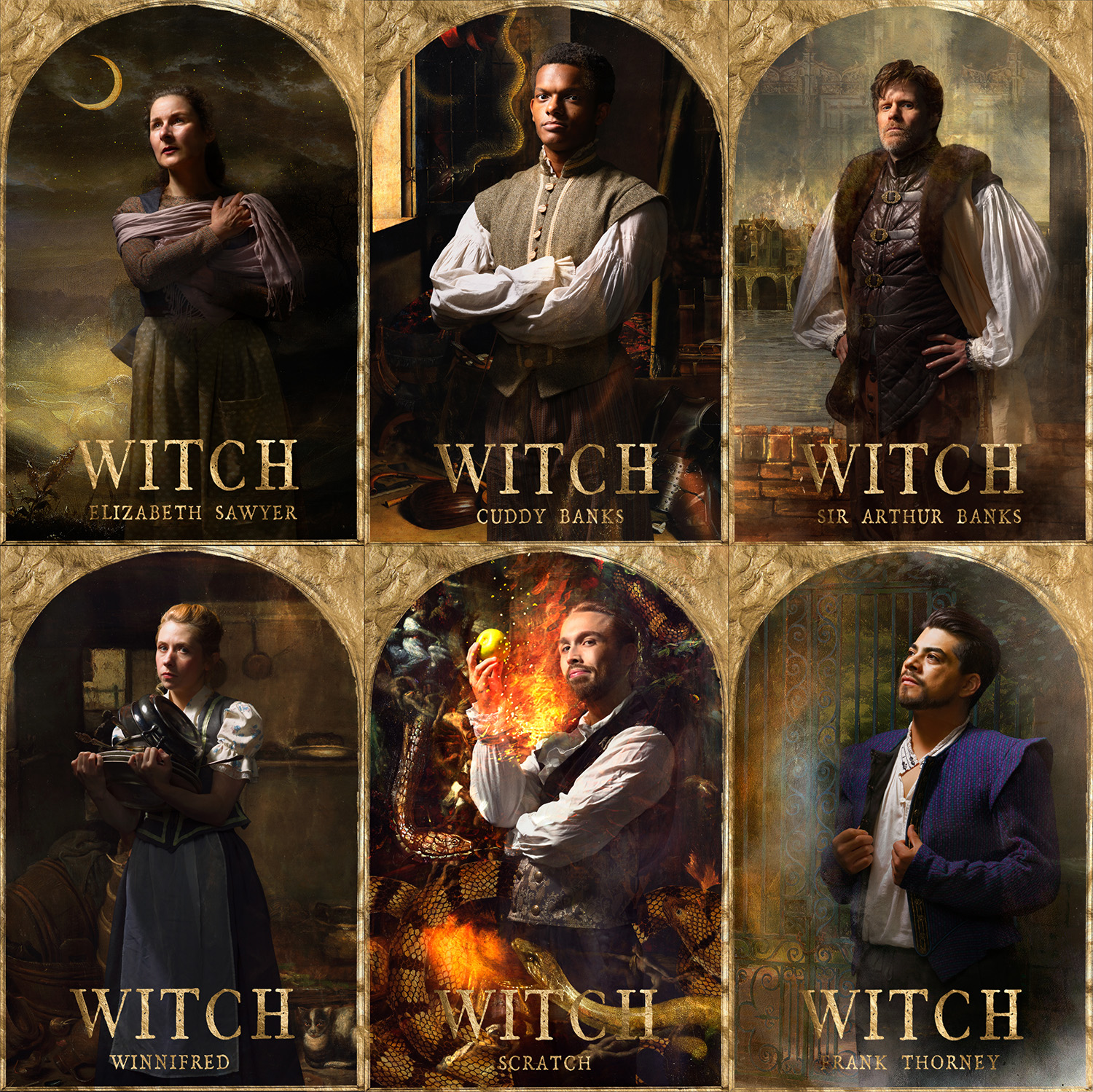
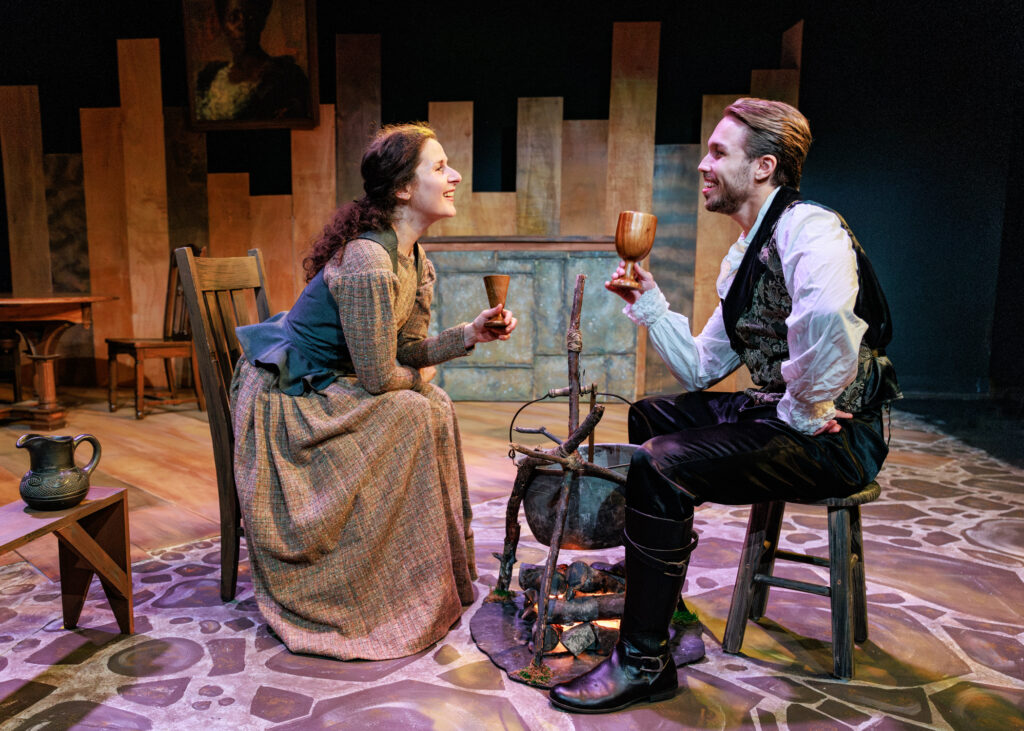
On September 9, 2026, Distant Era captured production photography for Idle Muse Theatre Company’s Witch, by Jen Silverman, directed by Libby Beyreis. The All Worlds Traveller entry detailing that production photography, released concurrently with this article, is linked to the picture below.
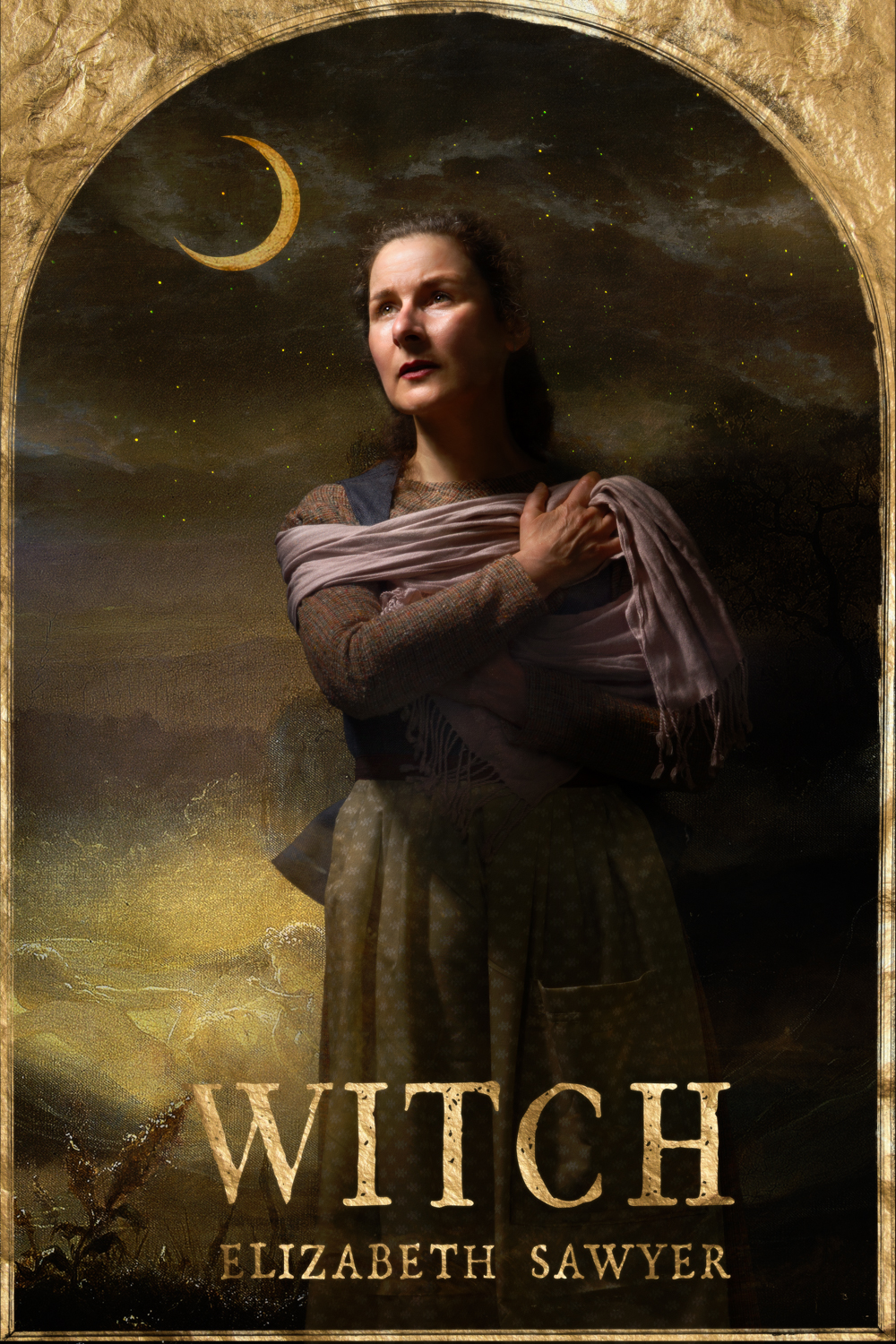
As a departure from normal procedure, Distant Era also photographed character portraits for Witch on the same day, and those character portraits are the theme of this entry.
These character portraits were made possible by mentorships, materials, and coaching from photographer-artist Chris Koeppen of An Ethereal Fire, to whom I am eternally indebted for his peerless instruction.
Furthermore, the costumes in these portraits are by Vicki Jablonski, with the assistance of Jennifer Mohr.
What Are Distant Era Character Portraits?
Earlier this summer, as Idle Muse celebrated their twentieth anniversary, I wrote a brief history of the production photography I’ve worked on with Idle Muse over the last eleven years. In the post-quarantine era, I described an idea I had to do something extra for the company that I thought would be cool, marrying Distant Era’s fine art fantastical portraiture and theatre offerings, and which company manager Kati Lechner found the time and space to implement. Since then, we’ve done more interesting work and offered the same to other close collaborators.
In summer 2026, after creating the Anne Bonny and Mary Read image from Babes With Blades Theatre Company’s yo ho session, I stopped thinking of what I did as two separate things—fantastical portraiture and theatre—and started thinking of them as the sum of past experience and present taste. In 2019, when I was creating Distant Era within Birch House Immersive‘s residency, I struggled to see how the fine art portraiture I wanted to do was compatible with the theatre work I wanted to continue. Birch House’s Lauren Fields and Janie Killips encouraged me to embrace both. Seven years later, in the summer of 2026, I can see it and this season I’ve looked for ways to express it in shows like Midsommer Flight’s As You Like It, Promethean’s Blood of the Lamb and City Lit’s Shane.
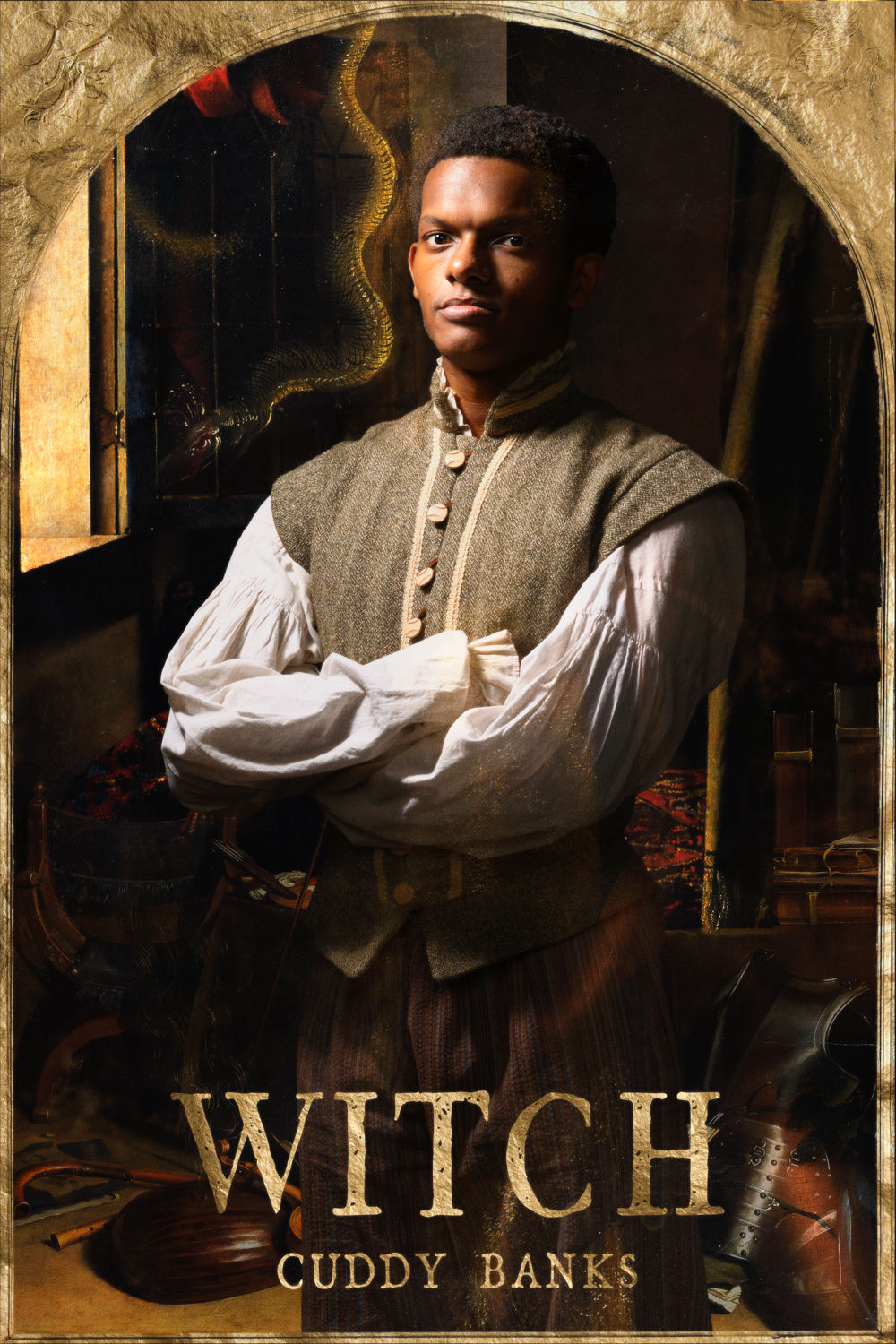
Idle Muse’s Witch portraits, however, are the most elaborate of these.
The Portraits, at Long Last
The day after the production photography session, I edited and turned over the press/production photos. The following day, I began on the character portraits and did almost nothing but that for the following three days.
Photography
For the character portraits, I brought a new modifier to the theater that was trying out for the first time, apart from a light test with Distant Era MVP Elizabeth. This modifier is a long reflector, different from anything else I own in that it’s white on the inside like a beauty dish, but it’s also very deep. As a result, the modifier throws a clear, defined beam of hard light that doesn’t yield the same specular highlights that a silver modifier would. This is neither good nor bad; I have a few silver reflectors and thought a white one might be interesting.
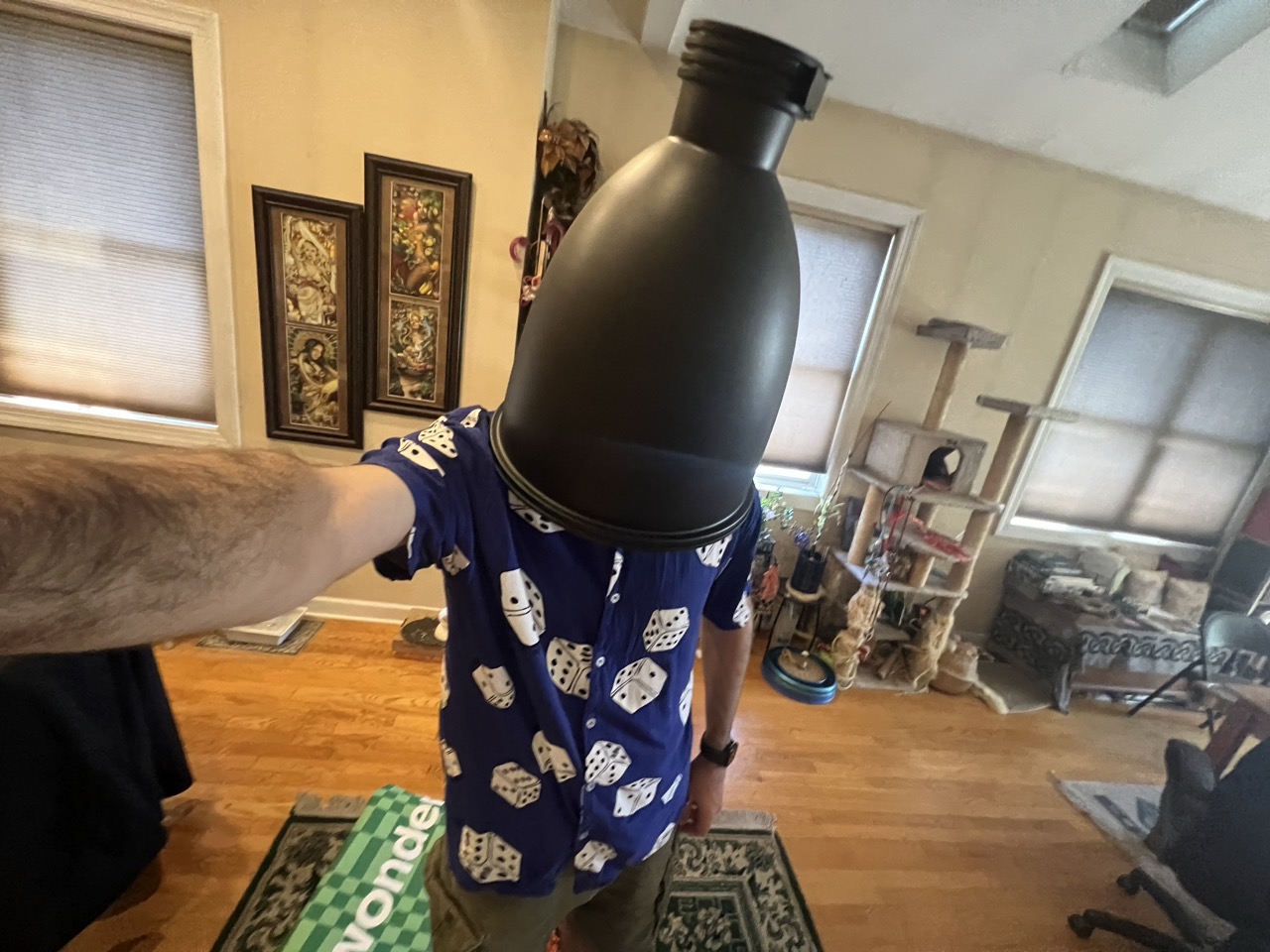
The last time I tried something like this, in the Anne Bonny and Mary Read image from earlier in the summer, I used a fresnel and gels. However, my gels were a bit off, and the fresnel is subpar on my flat-fronted battery-powered lights, not to mention bulky and heavy. My hope was that the long reflector would create a similar look while being a little more portable. I did get new gels but ultimately decided not to use them until I had more experience with the long reflector.
Ultimately, I went with a two-light setup: my key light used the long reflector camera left, and my fill light was a large umbrella with diffusion behind camera.
The camera settings were f/5.6, ISO 100, 1/200.
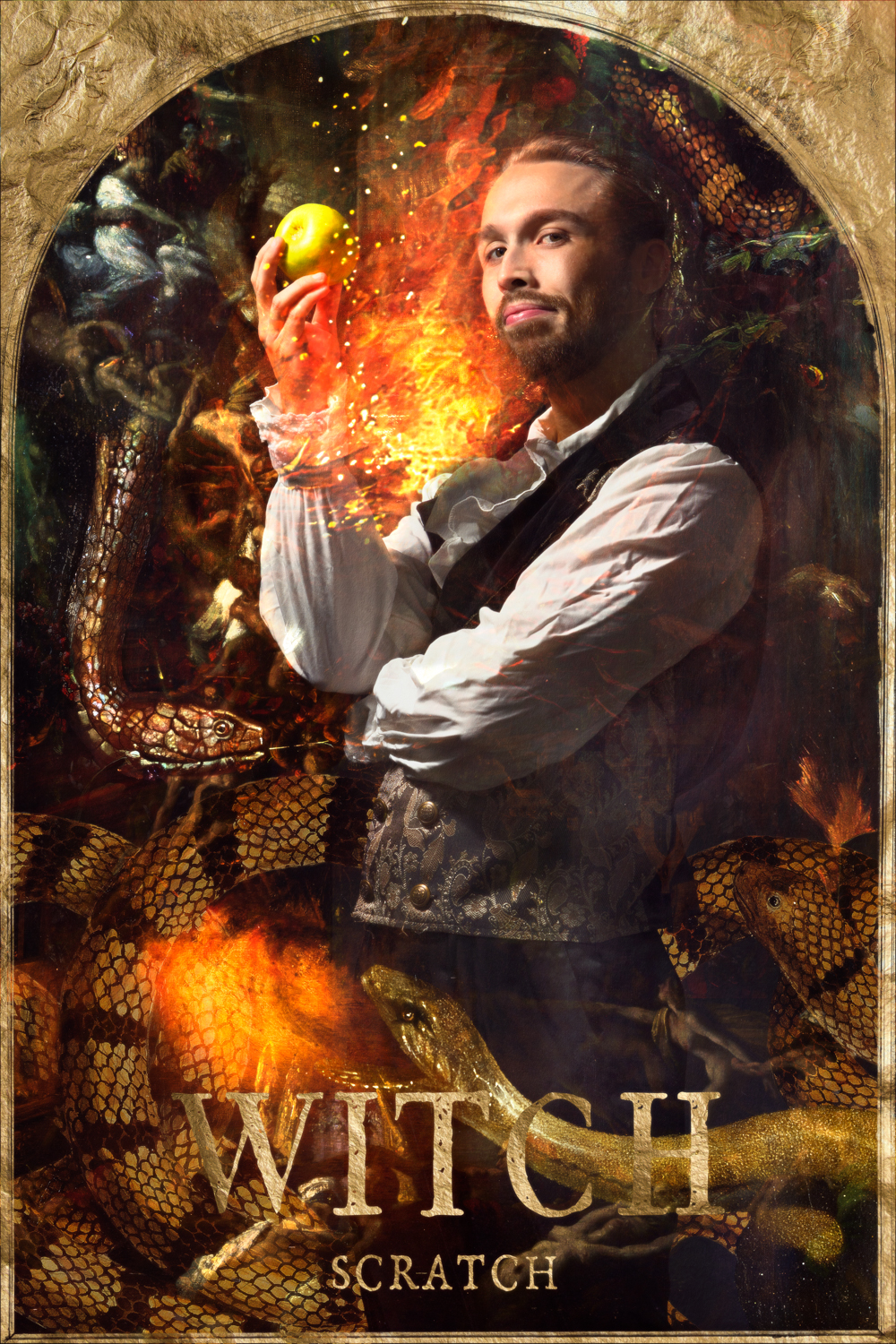
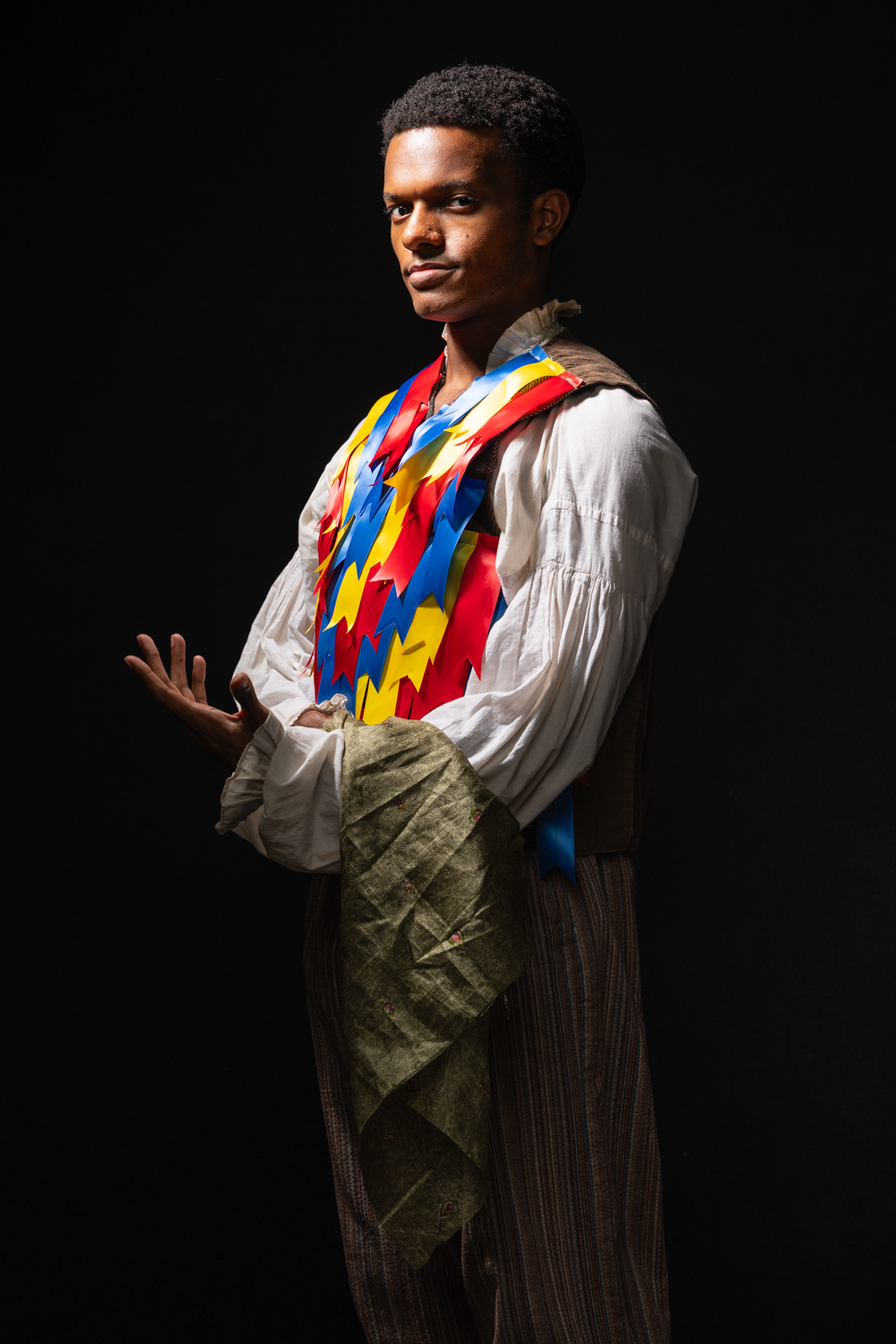
Scratch actor Nathaniel Kohlmeier arrived early and served as my test subject. These test shots were invaluable, as they showed me how the light worked on the subject and the black background I used to make the portraits.
Max Effort, Max Efficiency
Throughout the evening, I moved from my portraits setup to the stage as actors became available for scenes or character portraits. We usually don’t have time to do this during tech week, but stage manager Jo Chalhoub and the Idle Muse team ran an efficient tech, and we rotated flexibly from scenes to portraits and back again.
The goal for the portraits was pretty basic—I was looking for portraits with plenty of shadow and a mix of expressions either to camera or slightly off. We improvised our poses and expressions in the time we had available, and everyone did a fantastic job.
Compositing
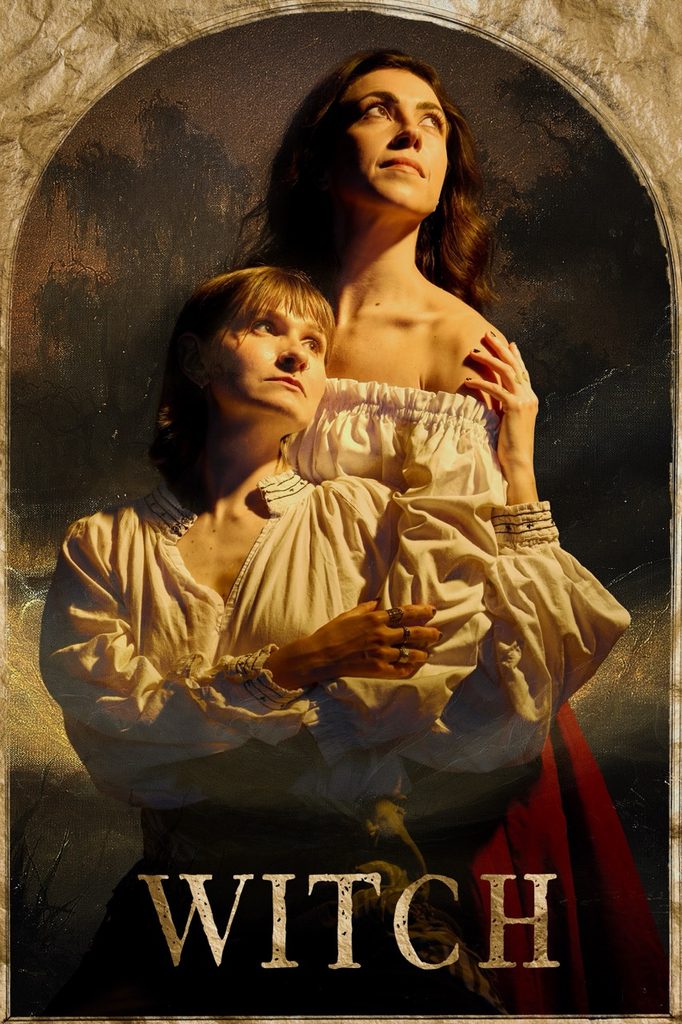
In early summer, soon after releasing the Anne Bonny and Mary Read image, I attended a production meeting for Witch where I expressed my hope to make some classy portraits for the show. I thought if we planned ahead of time, I could get the portraits made so that they could be used throughout the run.
It is difficult to explain what I wanted to do. The kinds of portraits I wanted to make are still challenging and time consuming. So I made a quick mockup in which I placed the subjects of the Anne Bonny and Mary Read image on a new background, placed a frame over it, and added text.
I proposed printing and selling these as well, but in the end it was all I could do to simply photograph and make them.
I did not plan any of the portraits when I photographed them. In fact, I had thought to use a few painted trees, similar to the mockup above. However, I couldn’t help trying something different with each, with Scratch’s portrait being the wildest.
The Work
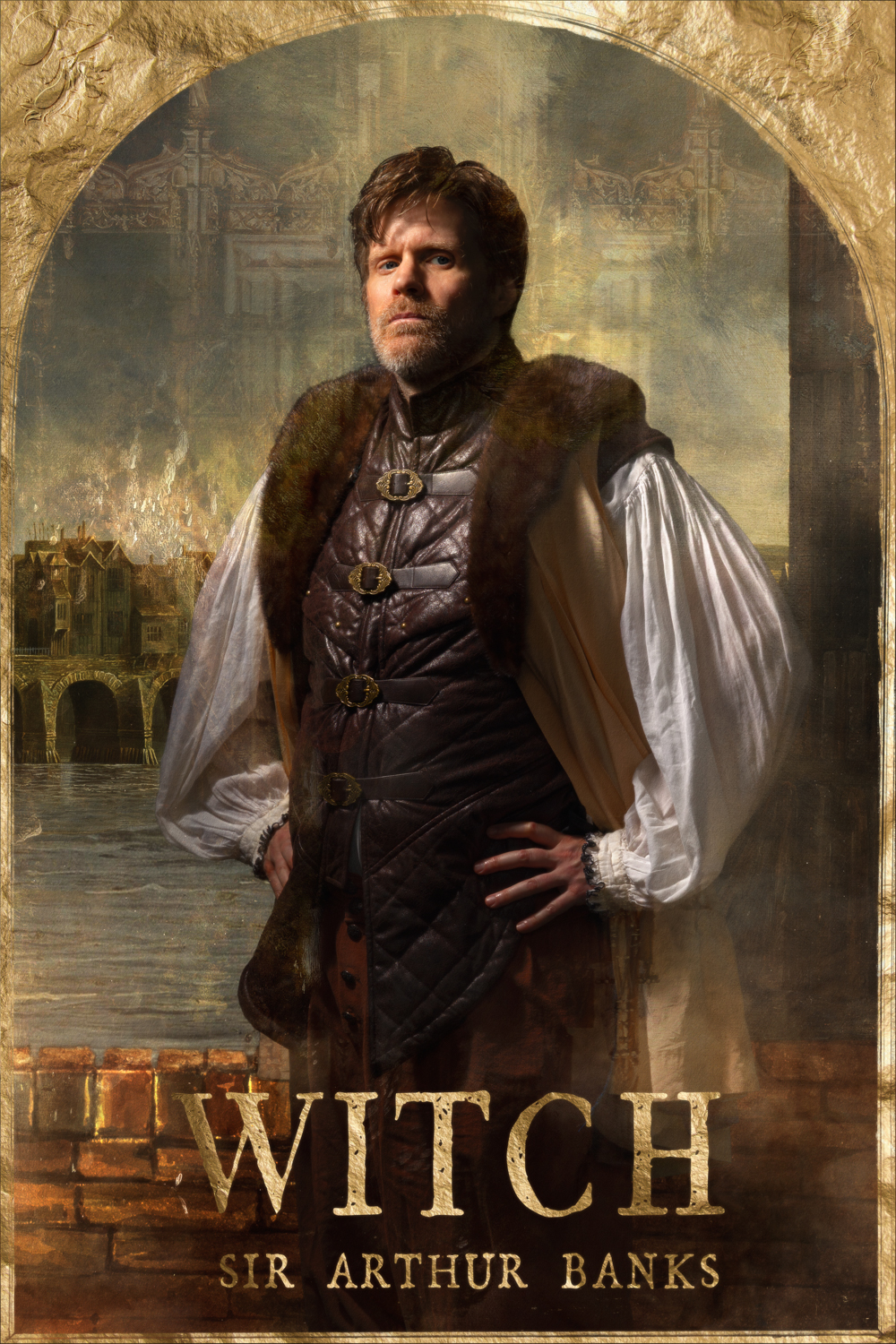
The best way to describe the work is to show it. Each portrait is made up of several elements, collaged. Here are two examples.
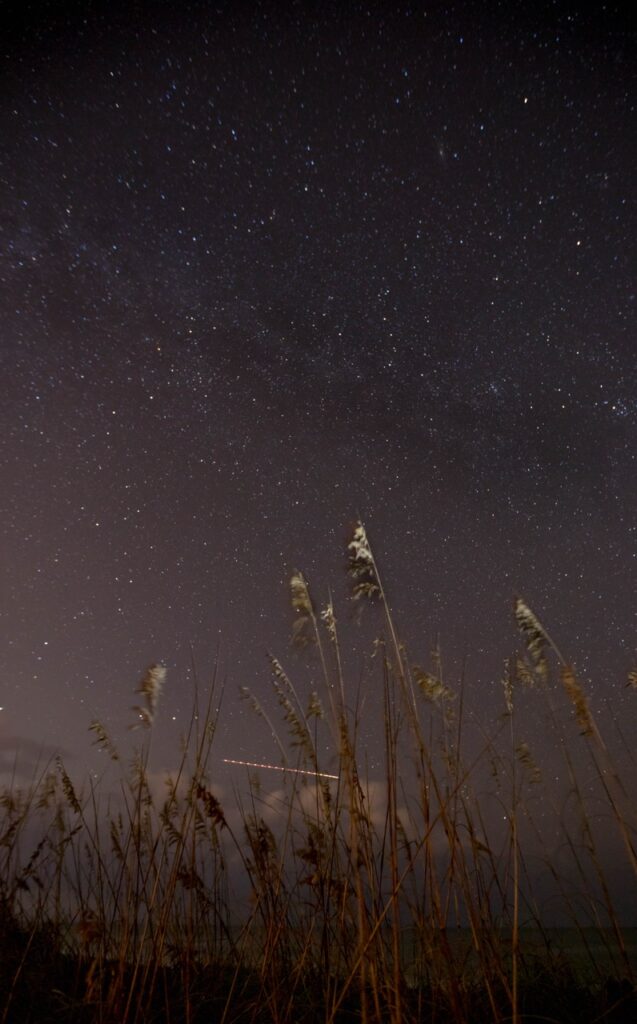
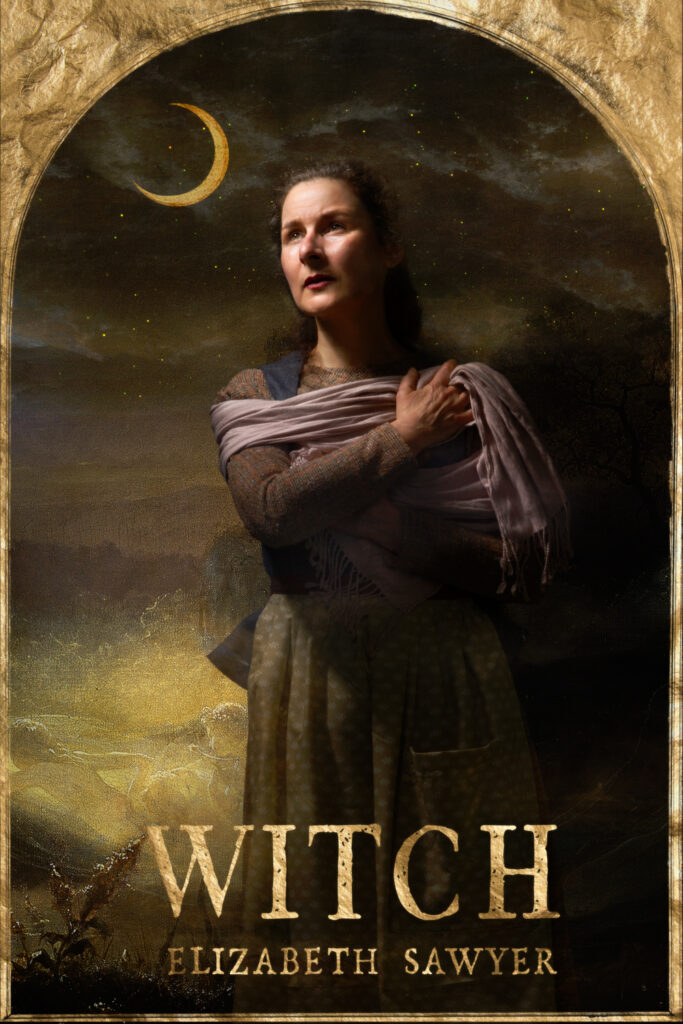
Right: The stars from the image on the left appear in the top of the Elizabeth Sawyer image on the right.
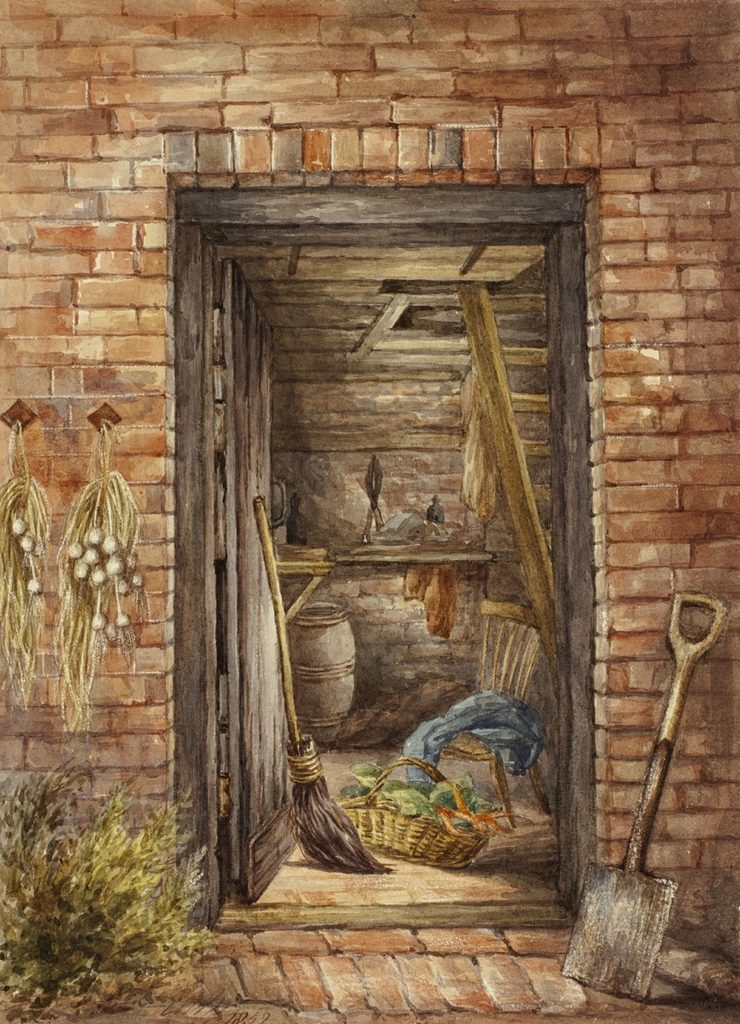
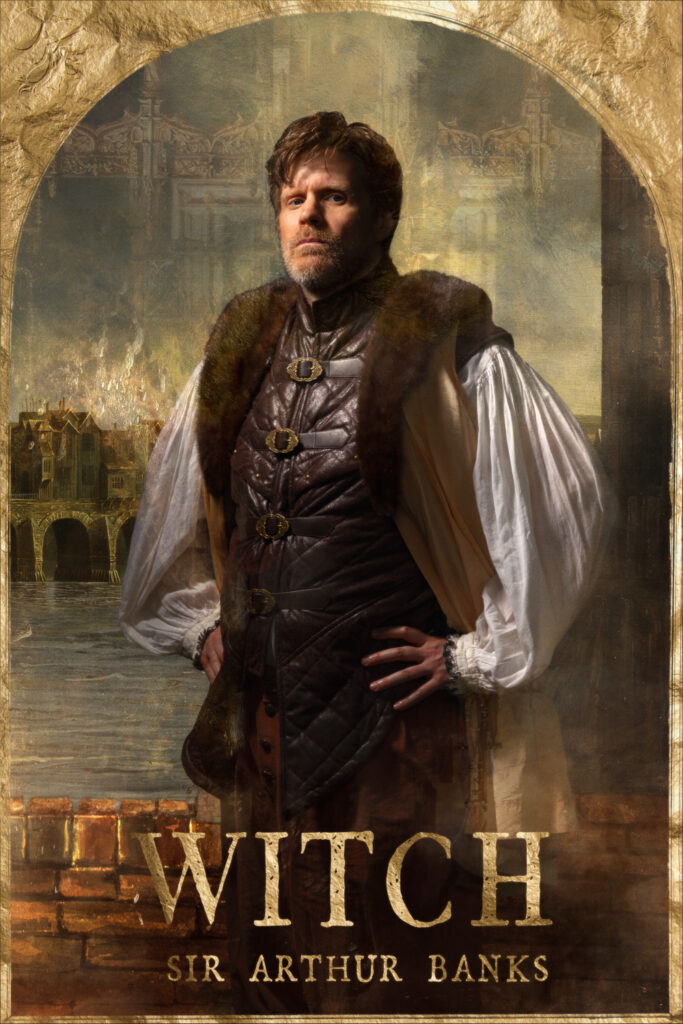
Right: The lintel of the brick wall painting forms the brick partition at the bottom of the Sir Arthur Banks image, repainted, masked, shadows painted in, etc.
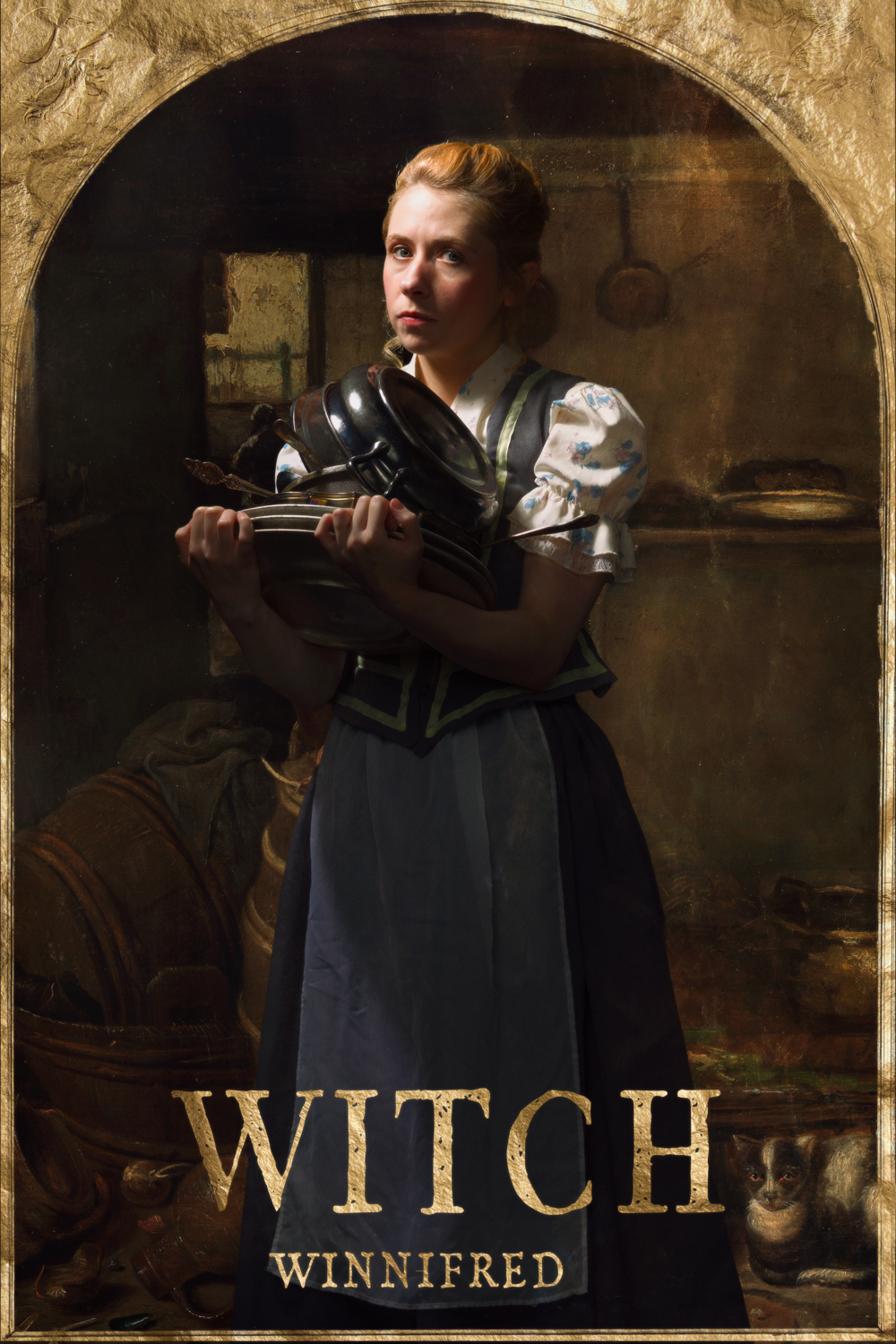
Each of the portraits above are collages of several different pieces from several different sources. The stars and the brick lintel are only singular elements from portraits that use many, many more. Distant Era’s ongoing Gods and Heroes of the Aegean series uses similar techniques, but whereas each of those took a year to collage, these six portraits did not. Apart from being smaller in scale, I had the benefit of a second 2026 mentorship with my teacher Chris Koeppen, as well as a colossal amount of failure and experience attempting these between 2023 and 2026. There is still an impossible amount to learn.
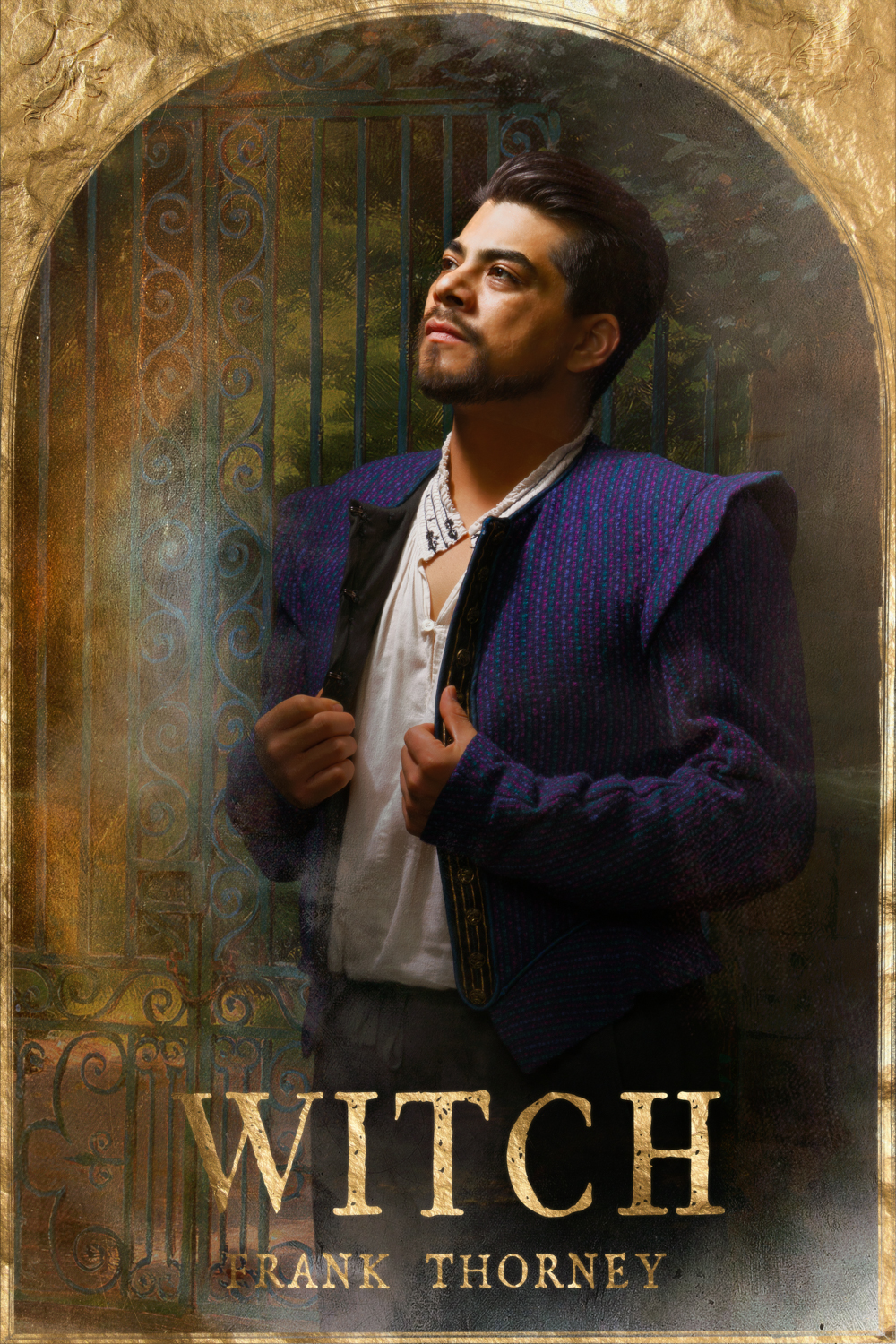
Gratitude
I’ll be the first to point out the many things I might have done better. Even so, this is the most polished/artistic/work intensive series of theatre portraits I’ve produced, and I learned a lot while making them.
Many thanks to Chris Koeppen, to Idle Muse Theatre Company, the cast of Witch, and to Vicki Jablonski for her excellent costume designs. Thanks again to company manager Kati Lechner, stage manager Jo Chalhoub, and director Libby Beyreis for making this possible and to Distant Era MVP Elizabeth for helping pack up.
I’ll leave with these two “unpainted” extras showing our lighting.
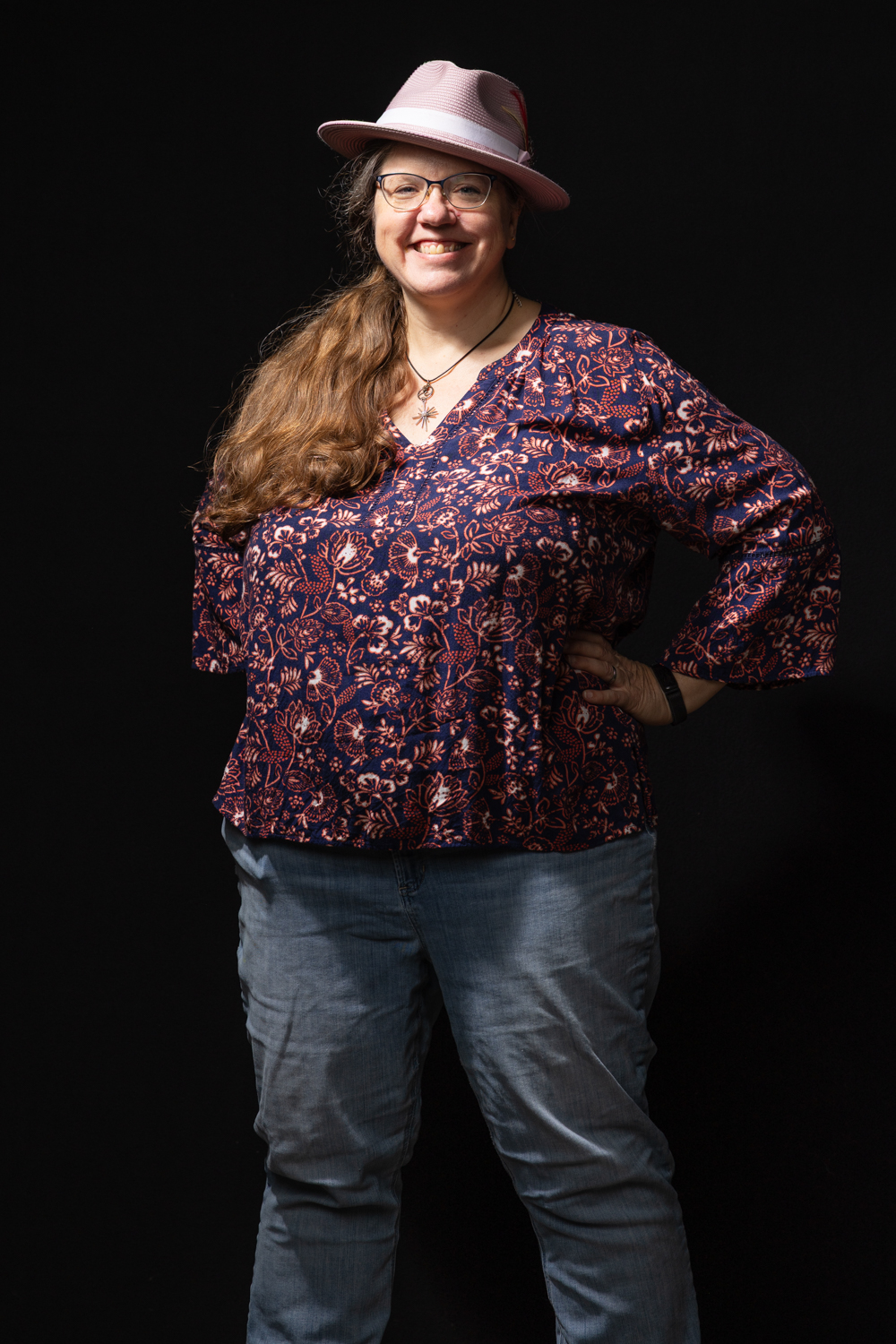
Right: Director Libby Beyreis as the last subject of the evening!